Israel is accelerating plans to construct a major new illegal settlement in a strategically critical part of the occupied West Bank, a move described by its own ministers as intended to 'bury the idea of a Palestinian state'.
A Tender for 'Irreversible Facts'
In a significant step towards breaking ground, the Israel Land Authority posted a tender in mid-December for the construction of 3,401 housing units as part of the long-contested 'E1' project. The document, discovered online by the advocacy group Peace Now, sets a deadline for construction companies to bid for the work by mid-March.
"This timeline suggests bulldozers could start work in less than a year," warned Yonatan Mizrachi, a co-director of Peace Now's Settlement Watch. He stated the tender reflects an accelerated push to create irreversible facts on the ground, a land grab the British government has previously labelled "a flagrant breach of international law".

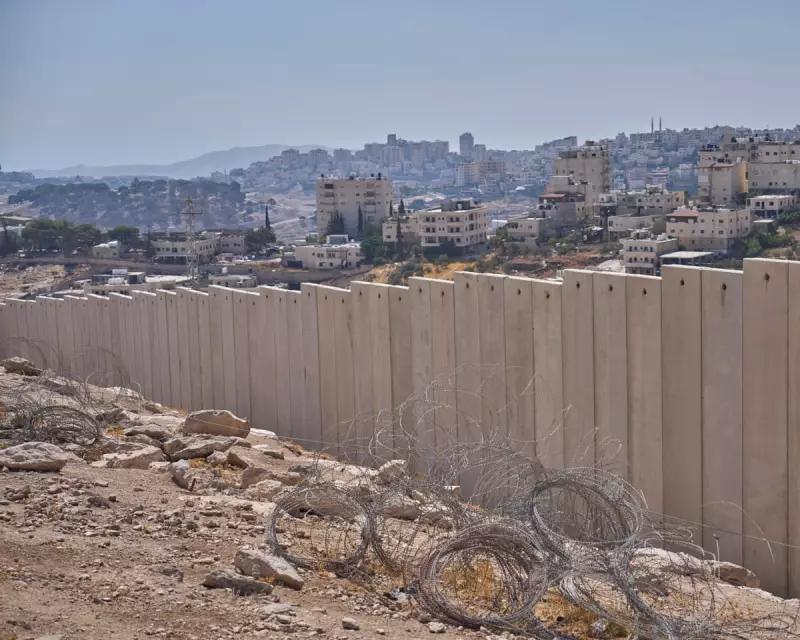
The E1 plan envisions building on a wedge of land east of Jerusalem, adjacent to the existing settlement of Ma'ale Adumim and next to the Arab neighbourhood of al-Eizariya. Experts and diplomats agree that realising the project would effectively sever the northern and southern halves of the West Bank, further isolating East Jerusalem and critically undermining the territorial continuity necessary for a viable Palestinian state.
Cross-Party Backing for a Controversial Plan
The concept of building in the E1 area is not new, having cross-party backing in Israel and initially being mooted in the 1990s by the late Prime Minister Yitzhak Rabin. For decades, successive US administrations and European allies blocked construction, viewing it as a fatal blow to the two-state solution.
This international restraint has evaporated under Israel's current far-right government. Prime Minister Benjamin Netanyahu and key ministers have fully embraced the project. Finance Minister Bezalel Smotrich, a settler himself who is under UK sanctions for inciting violence against Palestinians, declared last year that the plan would "bury" the idea of Palestinian sovereignty.
"Those in the world trying to recognise a Palestinian state will get an answer from us on the ground," Smotrich said. "Not through documents... but through facts. Facts of homes, neighbourhoods, roads."
Netanyahu echoed this at a September ceremony, stating, "We said there will be no Palestinian state, and indeed there will be no Palestinian state! This place is ours." At that event, an agreement was signed to fund infrastructure for E1 and the expansion of Ma'ale Adumim.
Rapid Progress Amidst Widespread Condemnation
The speed of the project's advancement is notable. Hagit Ofran, a settlement expert at Peace Now, pointed out that tenders are usually prepared six months to a year after planning approval. For the vast E1 project, this process took just four months following formal approval in August.
If similar speed is maintained in subsequent stages—selecting winning bids, finalising contracts, and securing municipal building permits—construction could begin before national elections due by October. "I am afraid we will see construction in coming months," Ofran said, noting the government's drive to create irreversible changes rapidly across the West Bank.
This acceleration occurs despite fierce international criticism. More than 20 countries, including allies like France, Canada, Italy, and Australia, condemned the August planning approval. Furthermore, the UN's International Court of Justice ruled in 2024 that Israel's occupation violates international law and must end "as rapidly as possible".
The E1 project is just one element of an aggressive settlement expansion agenda. In December alone, Israel approved plans for 19 new settlements in the occupied West Bank. According to Peace Now, the number of settlements is set to rise from 141 in 2022 to 210 once recently approved projects are built.
This push unfolds against a backdrop of heightened violence and displacement in the West Bank since October 2023, with hundreds of Palestinians killed and tens of thousands displaced from their homes.