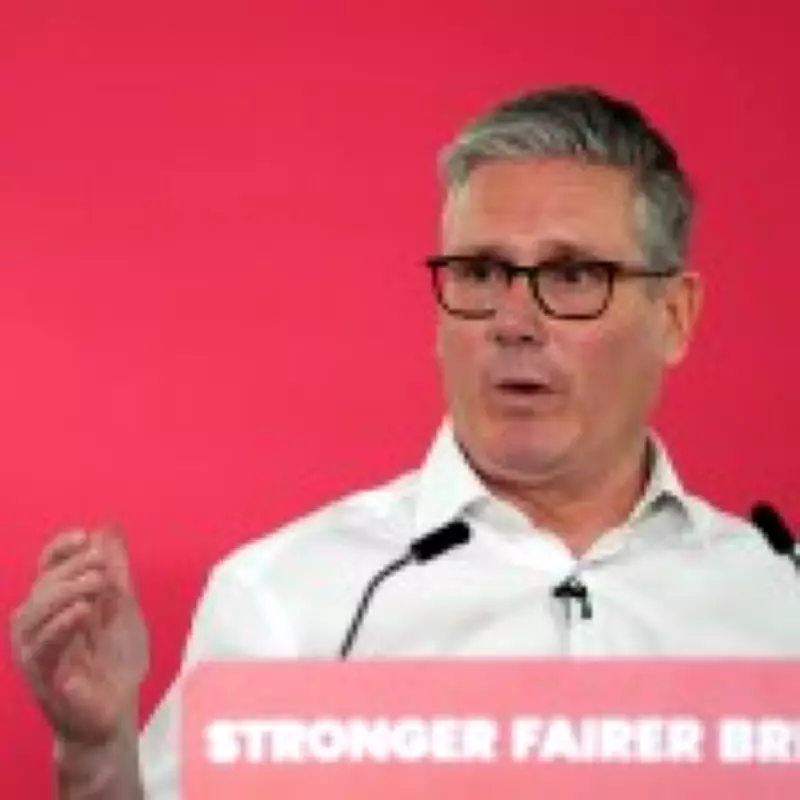
Calls for Keir Starmer to resign are intensifying after the Prime Minister oversaw a catastrophic performance for Labour in last week's local elections. The party lost more than 1,400 councillors across the country, a damning indictment of its popularity among voters.
Sir Keir is still holding onto power for now, stating earlier today: 'The Labour Party has a process for challenging a leader, and that has not been triggered. The country expects us to get on with governing. That is what I am doing and what we must do as a Cabinet.'
However, with more than 80 MPs now calling on Sir Keir to step down, and prominent figure Jess Phillips having resigned, his future at Number 10 appears increasingly uncertain. Several possible challengers for the top job have been identified, including Health Secretary Wes Streeting and Manchester Mayor Andy Burnham, though no one has formally come forward.

What Happens If Starmer Resigns as Prime Minister?
The United Kingdom must have a Prime Minister at all times. Consequently, if Starmer were to offer his resignation, he would likely continue to lead until a replacement is found. This would be accomplished through a Labour leadership election, which would be automatically triggered if Starmer were to stand down. This process can take several weeks, meaning the sitting PM may remain in office for a while even after he has quit his post.
The leadership contest occurs in two stages. First, Labour MPs will put themselves forward as Starmer's potential replacements. All Labour MPs will then vote to narrow down the options until two candidates remain. At that point, Labour Party members will vote to choose their new leader, who will automatically become Prime Minister.
Would There Be a General Election?
There is no rule stating that the new Prime Minister must call a general election. Following Labour's disastrous performance in last week's local elections, it is unlikely they would do so. Several PMs have taken office this way and chosen not to hold an election. These include Gordon Brown, who ran uncontested as Tony Blair's replacement in 2007 but was ousted in the subsequent general election three years later, replaced by David Cameron. Similarly, Theresa May came to power through a Conservative leadership election in 2016 after Cameron stepped down. However, she called a general election the following year to strengthen her position in Brexit negotiations.
When Is the Next General Election?
The next general election must be called by August 2029. However, the Prime Minister can choose to hold it sooner than this, known as a snap election. The UK has seen several snap elections over the years. May's 2017 snap election came just two years after the previous general election.