EU Leaders Condemn Hungary for Undermining Ukraine Support as War Enters Fifth Year
European Union leaders have launched sharp accusations against Hungary, alleging deliberate sabotage of support for Ukraine on the eve of the fourth anniversary of Russia's full-scale invasion. The diplomatic clash erupted after Viktor Orbán's government defiantly blocked fresh economic measures targeting Moscow, including a crucial €90 billion loan package intended to bolster Kyiv's military and financial capabilities.
Political Sabotage Allegations and Stalled Sanctions
Germany, France, and multiple EU member states failed to persuade Hungarian officials during tense negotiations on Monday. The blocked sanctions package represents the latest in a series of economic measures designed to pressure the Kremlin, while the frozen loan would provide vital assistance to Ukraine's embattled government. Poland's Prime Minister Donald Tusk did not mince words, characterizing Hungary's actions as "political sabotage" that threatens European unity.
The controversy threatens to overshadow carefully planned displays of solidarity between Ukrainian President Volodymyr Zelenskyy and his European allies. Several high-profile EU leaders, including European Commission President Ursula von der Leyen, are scheduled to visit Kyiv on Tuesday, marking the somber anniversary of Vladimir Putin's invasion.

War's Brutal Toll and Ukraine's Resilience
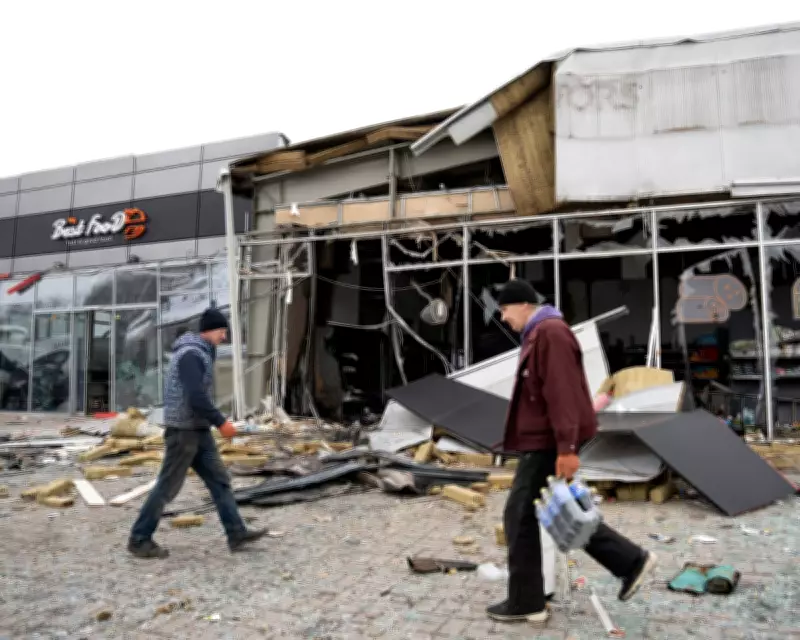
The anniversary arrives after a particularly brutal winter during which Russian forces systematically targeted Ukraine's energy infrastructure with drone and ballistic missile attacks. Millions of civilians in Kyiv, Odesa, and Kharkiv have endured extended power outages as a result of these sustained assaults. Despite these deteriorating conditions for ordinary Ukrainians, the mood in the capital remains surprisingly resilient.
In recent interviews, President Zelenskyy has maintained that Ukraine is "definitely not losing" the conflict, pointing to military gains including the recapture of approximately 400 square kilometers in southern regions since late January. Meanwhile, Ukrainian officials have indicated that another round of peace talks, brokered by the United States, may occur in Geneva later this week, though they acknowledge negotiations with Russia "aren't going smoothly."
Hungary's Demands and Regional Complications
Budapest has explicitly stated it will block further sanctions against Russia until Ukraine resumes oil deliveries through the Druzhba pipeline. Hungary and Slovakia, both heavily dependent on Russian oil imports and considered Moscow-friendly within the EU, have emerged as significant obstacles to unified European support for Ukraine. On Monday, Slovak Prime Minister Robert Fico announced he was cutting emergency assistance to Ukraine specifically citing the halted oil deliveries.
Ukraine maintains that Russia bears responsibility for the pipeline interruption, claiming Russian bombs damaged the infrastructure last month. In a related development, Ukrainian long-range drones reportedly struck an oil pumping station in Russia's Tatarstan region on Monday, targeting part of the Druzhba network.
Diplomatic Tensions and Historical Parallels
Arriving for meetings in Brussels, Hungarian Foreign Minister Péter Szijjártó complained that Ukraine was behaving in "a very hostile manner" toward Hungary and accused the European Commission of siding with Kyiv. Polish Foreign Minister Radosław Sikorski expressed particular dismay at Hungary's blockage of the €90 billion loan, calling it "shocking" given Hungary's own history of Soviet invasion in the 20th century.
Sikorski suggested Orbán's anti-Ukrainian rhetoric primarily serves domestic political purposes ahead of March elections, stating: "The ruling party has managed to create a climate of hostility towards the victim of aggression, and ... now is trying to exploit that in the general election."

European Solidarity and Reconstruction Challenges
Other European leaders emphasized continued support for Ukraine despite the diplomatic hurdles. German Chancellor Friedrich Merz, speaking at a pro-Kyiv event in Berlin, described the anniversary as marking "four monstrous years of war" and urged European partners not to relent in their assistance. French President Emmanuel Macron reaffirmed his country's "unwavering" commitment to Ukraine during meetings with Finnish leader Alexander Stubb.
The World Bank released a sobering assessment on Monday, estimating that Ukraine requires $588 billion for reconstruction following Russia's 2022 invasion—a figure 12% higher than last year's estimate. The frontline Donetsk and Kharkiv regions would need the most substantial investment, while Kyiv alone would require approximately $15 billion for recovery efforts.
As the conflict enters its fifth year with no clear resolution in sight, European unity faces significant tests from within, even as Ukraine demonstrates remarkable resilience against continued Russian aggression.