US House Inaction Prolongs Record DHS Shutdown Amid GOP Disarray
The US House of Representatives took no action on Thursday to advance a compromise measure that would end the partial shutdown of the Department of Homeland Security (DHS), raising serious concerns about how much longer this historic funding lapse will persist. This inaction comes despite a recent agreement between Republican congressional leaders, leaving the department without funding since mid-February and creating significant uncertainty for federal operations.
Background of the Funding Impasse
The shutdown began after Democrats refused to vote for DHS appropriations unless Republicans agreed to implement new guardrails on federal agents involved in immigration enforcement operations. Talks between the two parties remained deadlocked for weeks until last week, when a breakthrough seemed imminent. The Senate passed a measure funding most of the DHS, with key exceptions for Immigration and Customs Enforcement (ICE) and elements of Customs and Border Protection (CBP), agencies central to former President Trump's mass deportation campaign.
However, House Republicans rejected the Senate bill, instead passing their own legislation that would fund the entire DHS for 60 days. Senate Democrats quickly vowed to block this House bill using the filibuster, leading to a renewed stalemate. In a surprising turn, House Republicans appeared to concede on Wednesday when Senate Majority Leader John Thune and House Speaker Mike Johnson agreed to drop the House's bill and advance the Senate measure instead.

Recent Developments and Political Maneuvering
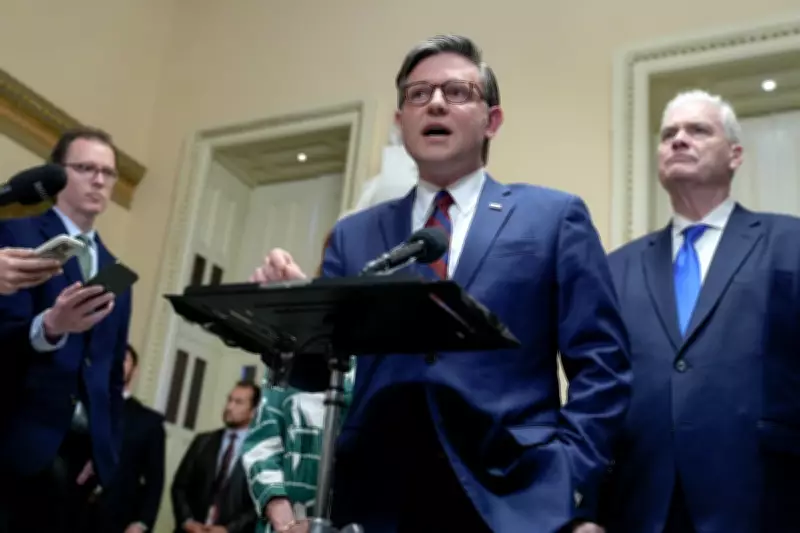
Both chambers of Congress are currently on recess through next week, but on Thursday morning, Thune appeared at a brief ceremonial session to formally reject the House measure and send the Senate's version back to the lower chamber. These motions were unanimous, as no lawmakers from either party were present to object. Later that morning, the House convened for its own pro forma session, which lasted just under three minutes, but notably did not take up the Senate-passed bill. It remains unclear when the Republican majority will address this critical issue.
Senate Democratic Minority Leader Chuck Schumer criticized the situation in a statement, saying, "House Republicans own the longest government shutdown in history. The deep division and dysfunction among House Republicans is needlessly extending the DHS shutdown and hurting federal workers who are missing another paycheck." This shutdown has now become the longest such funding lapse in US history, causing disruptions such as extended security lines at major airports when Transportation Security Administration agents went weeks without pay, though lines have shortened since Trump signed an order for them to receive paychecks last week.
Internal GOP Conflicts and Future Plans
Under the plan endorsed by Trump and agreed upon by Johnson and Thune, Republicans will collaborate with Democrats to pass the Senate's bill. Subsequently, they will begin drafting another measure to fund ICE and CBP unilaterally using the budget reconciliation process, which can circumvent the filibuster. However, Speaker Johnson faces internal party objections, particularly from rightwing lawmakers who oppose any legislation that does not include funding for the entire DHS.
Keith Self, a member of the House Freedom Caucus, expressed strong opposition on social media, writing, "Funding for ICE and CBP must never be separated from DHS funding. If Republicans isolate it, they're handing our border and ICE agents straight to the radicals who will defund and dismantle them every chance they get." This dissent highlights the challenges Johnson must navigate within his party.

Implications for Upcoming Elections
The forthcoming reconciliation bill is expected to be a major and potentially divisive undertaking for Republicans as they approach the November midterm elections, where they will defend their majorities in both the House and Senate. Lindsey Graham, who chairs the Senate budget committee and will play a key role in drafting the legislation, indicated that it may also include funding for the conflict with Iran and elements of the Save America Act, which would impose new identification requirements on voters. Trump has set a deadline, demanding the measure on his desk by June 1, adding pressure to an already tense political landscape.