Gerry Adams Denies IRA Involvement in High Court Testimony Over 1996 Docklands Bombing
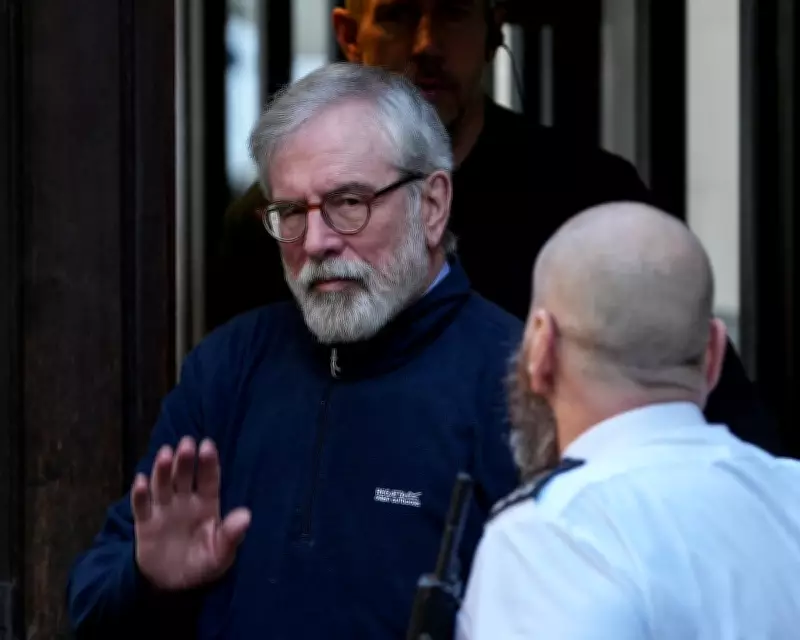
Gerry Adams, the former Sinn Féin leader, has taken the witness stand for his second day at the High Court in London, where he is facing a civil lawsuit seeking symbolic damages. Adams, 77, firmly denied any prior knowledge of the 1996 Docklands bombing and rejected allegations that he was at the operational nerve center of the IRA.
Adams Expresses Shock Over Docklands Attack
During intense questioning, Adams told the court he was stunned by the Docklands bombing, which targeted the commercial district of east London and shattered a 17-month-old ceasefire. "Those explosions brought an end to the IRA ceasefire and potentially the end to the peace strategy which I and others had worked on for 30 years," Adams stated, emphasizing his commitment to political resolution.
Max Hill KC, representing men injured in three bombings—the Docklands attack, the Manchester bombing in 1996, and the 1973 Old Bailey bombing—suggested Adams orchestrated the Docklands bombing to bolster Sinn Féin's political strategy. Hill quoted a 1993 British government note describing Adams as "at the nerve centre of the PIRA [Provisional IRA]." Adams countered, "That is not true. The British government had to come to terms that there was a possibility of peace and a political process."

Denials and Historical Context
When asked if he knew about the February 1996 explosion in advance, Adams replied, "No, of course not." He also denied being a member of the IRA or sitting on its army council, accusations central to the trial. Adams referenced Jonathan Swift, saying, "Falsehood flies, the truth comes limping after it," to explain his repeated denials of IRA involvement.
Adams expressed regret for the bombings, which killed three people and wounded others, but noted, "the folks giving this information have a vested interest." He concluded his evidence on Wednesday, with his counsel, Edward Craven KC, beginning closing submissions.
Defense Argues Lack of Evidence
Craven told Mr Justice Swift that the evidence against Adams is extremely limited and bordering on nonexistent. He pointed out that in a 6,000-page bundle, "there is not a single page that implicates Mr Adams in any of the bombings." Craven described the intelligence-based evidence from witnesses for the three claimants—who are seeking symbolic damages of £1 each—as "high-level assertions, unsupported by detail, uncorroborated by documents."
The trial continues as the court examines the central question of how, why, and by whom the bombings were authorized, with Adams maintaining his innocence and distancing himself from the violent acts attributed to the IRA.