Gavin Newsom's Presidential Ambitions: A Complex Portrait of a Democratic Contender
California Governor Gavin Newsom, often seen as the frontrunner for the Democratic presidential nomination in 2028, is actively reshaping his public image through a new memoir that reveals a life far more complex than his polished exterior suggests. In an exclusive interview, Newsom addresses accusations of elitism, his challenging upbringing, and his potential bid for the White House, positioning himself as a leader capable of uniting a divided nation.
Challenging the 'Prince Gavin' Caricature
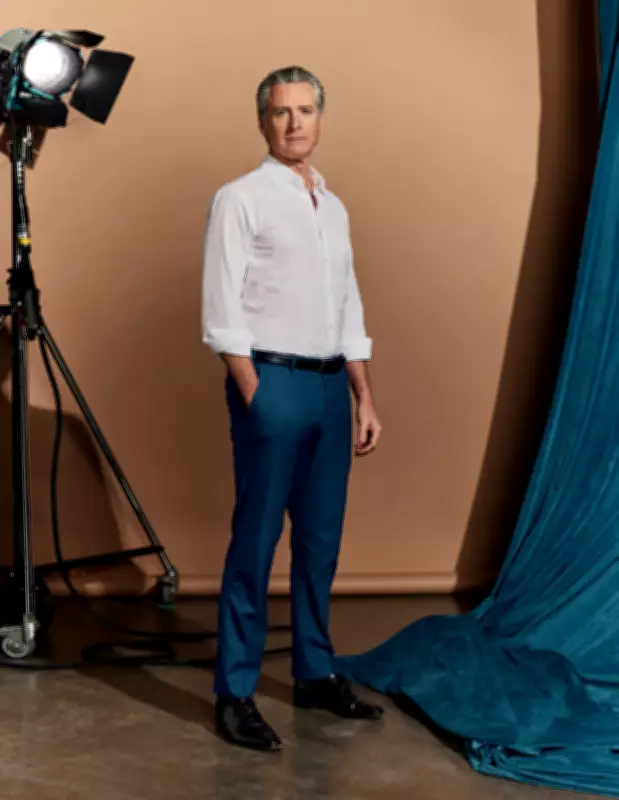
Newsom, with his movie-star looks and photogenic family, has long been dogged by perceptions of being "too ambitious, too slickly handsome, and too patrician-seeming." These labels stem from his association with the Getty family, where his father served as an advisor, leading to a childhood immersed in luxury. However, his memoir, Young Man in a Hurry, paints a starkly different picture. Newsom emphasizes that his father's role did not translate to wealth, stating, "To work for them doesn't make you them. My father passed with nothing."
Instead, Newsom describes a childhood marked by scarcity. After his parents' divorce, he was raised by his mother, who worked multiple jobs, including as a waitress, and took in lodgers to make ends meet. He and his sister were latchkey kids who shared a bedroom and often fended for themselves. The family history is further complicated by alcoholism and depression, with his grandfather, a former prisoner of war, tragically taking his own life after threatening his children.
Overcoming Dyslexia and Building a Work Ethic
A significant obstacle in Newsom's life has been severe dyslexia, which he calls a "learning disability." He struggled in school, facing bullying and believing he was stupid. Today, he reads laboriously, using a meticulous system of underlining, note-taking, and index cards. He cannot rely on an Autocue, forcing him to speak off-script—a trait he views as an asset in an era that values authenticity. "We would never be having this conversation if it wasn't for the gift of dyslexia," Newsom says, noting that it has honed his emotional intelligence and work ethic.
This work ethic is evident in his political career. Despite his playboy image from early tuxedo photoshoots, Newsom is a dedicated swot, studying intensively for meetings and commutes. He founded the successful PlumpJack business empire, which includes wineries, hotels, and restaurants, giving him entrepreneurial credibility that could appeal to voters across the political spectrum. "Part of being an entrepreneur is always casing other people's joints," he explains, applying that mindset to politics by seeking best practices regardless of origin.
A Duality of Progressive and Moderate Policies
Newsom's political record reflects a duality that may position him as a unifying figure. He proudly touts progressive achievements, such as authorizing same-sex marriages in 2004, implementing universal healthcare in California, and advocating for high minimum wages. He has also taken aggressive stances against Trump, pushing Proposition 50 to counter Republican redistricting efforts.
Yet, he has also angered the left with moderate moves, like the Care Not Cash program that reduced payments to homeless people to fund housing and services, and his podcast interviews with controversial right-wing figures. He has expressed concerns about transgender athletes in women's sports, citing fairness issues, which led to backlash from some Democrats. Newsom defends this approach, arguing against "purity tests" and emphasizing the need for dialogue across party lines.
Preparing for a Potential Presidential Run
While Newsom has not officially announced a presidential bid, he leaves little doubt about his interest. He cites a "shift" in his perspective following Trump's actions during California wildfires and the deployment of the National Guard in Los Angeles, which he views as threats to democracy. "If someone else doesn't have that fire, that sense of purpose and mission, then, yeah, I could see myself stepping into that void," he says.
Newsom's family life adds another layer to his appeal. With his wife, Jennifer Siebel, a documentary filmmaker who addresses issues like gender inequality, and their four children, he presents a picture that could resonate with both conservative and liberal voters. He emphasizes that his potential candidacy would not stem from a need for validation, unlike Trump, but from a desire to be "a solution to a problem."
Conclusion: A Leader for a Divided Era
Gavin Newsom is crafting a narrative that challenges simplistic labels, blending a troubled past with political savvy. As he prepares for a possible 2028 run, he aims to present himself as a leader who can both fight aggressively against Trumpism and build bridges across America's political divides. His memoir and public statements suggest a candidate ready to leverage his unique background and policy expertise in a bid for the highest office.