In a significant development that has raised eyebrows across political circles, Tulsi Gabbard, the Director of National Intelligence, is conducting her own comprehensive review into the 2020 presidential election. This parallel inquiry operates with the explicit approval of former President Donald Trump, functioning separately from the ongoing Justice Department criminal investigation despite Gabbard's recent presence at an FBI raid in Georgia.
Controversial Presence at Georgia Raid
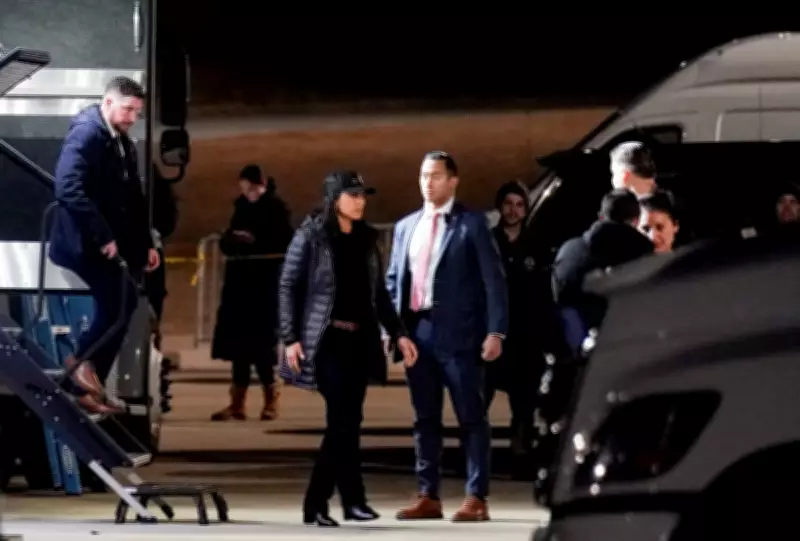
Gabbard's appearance at the Fulton County election hub and operation center in Union City, Georgia, last week has drawn sharp criticism from Democratic lawmakers and former intelligence officials. These critics question why the nation's top intelligence officer, whose role typically focuses on overseeing intelligence agencies without domestic law enforcement powers, would be present at the scene of an FBI search operation.
The raid itself was overseen by Deputy FBI Director Andrew Bailey, who was also dispatched to Georgia by Trump. According to administration officials familiar with the matter, Trump specifically directed Gabbard to travel to Fulton County to observe the FBI executing their search warrant on Wednesday.

Separate Investigations with Presidential Focus
The existence of these parallel investigations into the 2020 election underscores how election integrity has returned as a priority for the former president. Gabbard's involvement demonstrates particular interest in voting machine manipulation claims that Trump has frequently cited as evidence supporting his stolen election narrative.
The review conducted by the Office of the Director of National Intelligence (ODNI) has been authorized on the basis of assessing election integrity. For several months, this investigation has concentrated on potential vulnerabilities in voting machines and the possibility of foreign interference in American elections.
ODNI's Evolving Investigation
Initially, the ODNI review was overseen by the Director's Initiatives Group (DIG), a taskforce that Gabbard established within her agency. According to sources familiar with the matter, this group focused specifically on vulnerabilities with voting machines used during the 2020 election.
However, the DIG was dissolved late last year after it misidentified the individual responsible for placing pipe bombs outside Democratic and Republican party headquarters before the January 6 Capitol riot. The Justice Department subsequently charged a different person in connection with these incidents in December.
Continued Review Amid Departmental Separation
Despite the dissolution of the DIG taskforce, Gabbard has continued the ODNI review even as the Justice Department proceeds with its separate criminal investigation. Officials maintain that the ODNI review remains within Gabbard's statutory authority, citing executive orders extended by both President Biden in 2022 and former President Trump in 2025.
These executive orders task the Director of National Intelligence with assessing foreign interference in federal elections. In a statement addressing the review, Olivia Coleman, a spokesperson for the Director of National Intelligence, emphasized that the office "knows through intelligence and public reporting that electronic voting systems have been and are vulnerable to exploitation."
Political Reactions and Congressional Scrutiny
The controversy has prompted Georgia's Democratic lawmakers to formally question Gabbard's presence at the raid. On Tuesday morning, Senator Raphael Warnock, along with Representatives Lucy McBath and Nikema Williams, sent a letter to Attorney General Pam Bondi inquiring about the circumstances surrounding Gabbard's involvement.
Their letter specifically asks "whether the Trump administration is investigating a legitimate foreign intelligence nexus, which would legally require immediate Congressional briefing." This political response highlights the tension between intelligence gathering and domestic law enforcement operations.

Broader Political Context
Gabbard has devoted considerable time to political projects aligned with Trump's interests. Most recently, she has been involved in separate efforts promoting claims that former President Barack Obama and senior officials sought to create a false narrative about Russian interference in the 2016 election.
An Obama spokesperson dismissed these efforts as "bizarre," noting that a bipartisan Senate report had affirmed the findings of US intelligence agencies regarding Russian interference intended to benefit Trump's 2016 campaign while harming his rival, Hillary Clinton.
Investigation Parameters and Limitations
The specific lines of inquiry that ODNI is pursuing remain unclear, though sources indicate the review was not examining Fulton County voting machines until the FBI raid occurred. Officials have clarified that ODNI is not expected to receive direct access to evidence gathered through the criminal investigation.
According to media reports, Gabbard has been briefing Trump and senior White House advisers every few weeks as part of her review. The search warrant executed in Georgia authorized agents to seize extensive amounts of voter data from Fulton County, including:
- All physical ballots from the 2020 election
- Voting machine tabulator tapes
- Images produced during the ballot counting process
- Complete voter rolls from that election year
The target of the criminal investigation remains unclear, with spokespeople for both the Justice Department and FBI declining to comment on either the investigation or Gabbard's role in recent events.
Elevated Standing Amid Controversy
This ODNI review has elevated Gabbard's standing within the administration after she was previously sidelined from several national security decisions, including operations related to capturing Venezuelan President Nicolás Maduro. The episode occurs as Trump continues to focus on the 2020 election nearly six years after his loss to President Joe Biden.
Media reports indicate that Gabbard patched Trump through on her cellphone to FBI agents following the raid, further illustrating the unusual intersection of intelligence operations and domestic law enforcement activities in this controversial review of election integrity concerns.