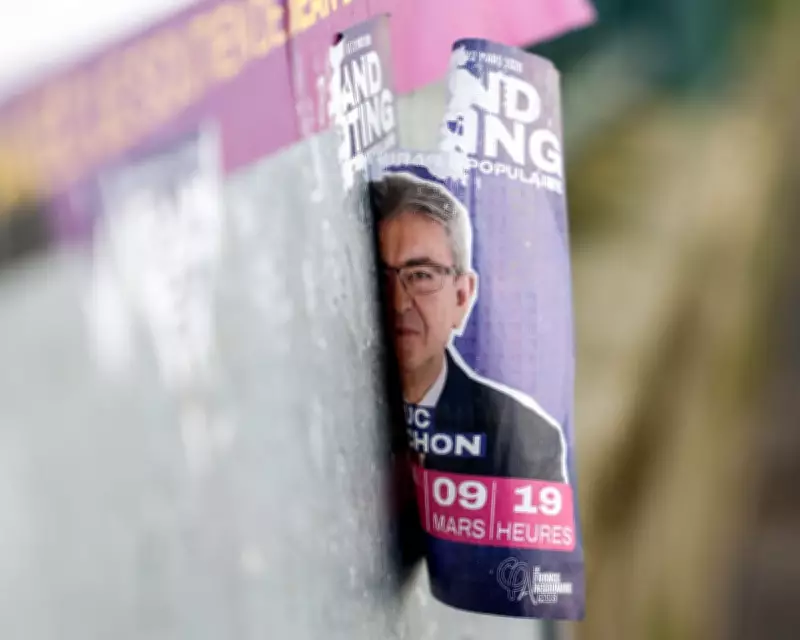
France's Radical Left Defies Ostracism in Local Elections Amidst Controversy
As the results of the French local elections settle, a critical reflection emerges on the shifting moral boundaries that defined the campaign. In the lead-up to the first round on 15 March, criticism against the radical-left party La France Insoumise (LFI) and its confrontational leader, Jean-Luc Mélenchon, reached unprecedented intensity, positioning him as the "bad guy" of French politics.
Electoral Resilience and New Municipal Control
Despite this, the radical left has achieved a historic milestone, gaining control of several cities, including Saint-Denis, the second-largest municipality in the Paris region, and Roubaix, one of France's poorest cities, previously held by the right. This demonstrates the movement's resilience and growing electoral foothold.
The Lyon Tragedy and Political Fallout
The campaign was inflamed by the killing in Lyon of Quentin Deranque, a 23-year-old far-right activist, during clashes involving an anti-fascist group linked to LFI. Deranque's death sparked national shock waves, with LFI leadership, particularly Mélenchon, facing attacks for not explicitly condemning the group. This event fueled debates over political violence and accountability, with accusations that LFI has contributed to a "brutalisation" of French political life through abrasive rhetoric and populist polarisation.

Antisemitism Allegations and Mélenchon's Provocations
Allegations of antisemitism have long plagued LFI, partly due to its support for Palestinian rights. Mélenchon exacerbated this during a campaign rally in Lyon by making a tasteless joke about Jeffrey Epstein's name, implying media avoidance of his Jewishness. In a country with a traumatic Holocaust history, such remarks reactivate historical wounds and echo antisemitic tropes, leading to accusations of "intolerable antisemitism" from Socialist party figures.
Political Isolation and Failed Strategies
The mainstream left adopted a policy of rejecting tactical alliances with LFI, labeling it as "extremist." Socialist candidates who collaborated with LFI faced voter backlash, indicating that for many moderate left voters, the party is now radioactive. Government officials, such as spokesperson Maud Bregeon and minister Aurore Bergé, framed voting for LFI as morally culpable, with Bergé stating that "antisemitism in France was spelled L-F-I."
Far-Right Hypocrisy and Normalization
Curiously, much of the outcry against LFI was driven by Marine Le Pen's far-right National Rally (RN), despite its own history of antisemitism and neo-Nazi ties. RN's claims of detoxification are unconvincing, yet it has become increasingly normalized, while LFI faces calls for a "cordon sanitaire"—a strategy historically used against the far right.
Lessons from the Elections
The local elections reveal that years of marginalizing LFI have failed as a strategy. Instead, it has consolidated the party's voter base, allowing it to gain more cities and council seats than ever before. However, a clearer demarcation now exists between the two lefts, making them increasingly incompatible. Mélenchon, despite his polarizing and unacceptable statements, leads a party that embodies anti-fascist and anti-racist values for its supporters, resonating strongly with a younger electorate.
In conclusion, while it may be time for a new generation to lead LFI, ostracising France's radical left has proven ineffective. The political landscape cannot redefine itself by casting LFI as toxic while normalizing the far right, highlighting the need for a more nuanced approach to political discourse and alliances in France.