Mining company Fortescue has been ordered to pay $150 million in compensation to traditional owners over cultural losses caused by the multibillion-dollar Solomon Hub iron ore mine – the largest compensation payout in native title history.
The mine, which has extracted millions of tonnes of iron ore and generated an estimated $80 billion in revenue for Fortescue since operations began in 2013, was approved by the Western Australian government without the consent of the Yindjibarndi traditional owners.
The Yindjibarndi Ngurra Aboriginal Corporation (YNAC) launched the compensation claim in 2022 and sought $1.8 billion, including $1 billion for cultural damage, $678 million for economic loss, $34.85 million for the destruction of sites, and $112.13 million for social disharmony allegedly caused by Fortescue. The company sought to cap the compensation at $8 million, while the WA government argued that between $5 million and $10 million would be appropriate.

On Tuesday, Federal Court Justice Stephen Burley ruled in favour of YNAC and calculated the value of the cultural loss to traditional owners at $150 million, with their economic losses at just $100,000.
Dozens of community members made the journey from the Pilbara down to Perth to witness the decision. The courtroom was packed with elders, community members, children and babies, with more than a thousand people also watching the federal court livestream.
It is the culmination of a decades-long fight by Yindjibarndi traditional owners, who first filed the native title claim in 2003. The Yindjibarndi people were awarded exclusive native title rights to their land, including the area where the Solomon Hub mine sits, in 2017. The compensation case was lodged in 2022 after Fortescue's failed appeal of their native title claim. YNAC's chief executive, Michael Woodley, is the chief applicant.
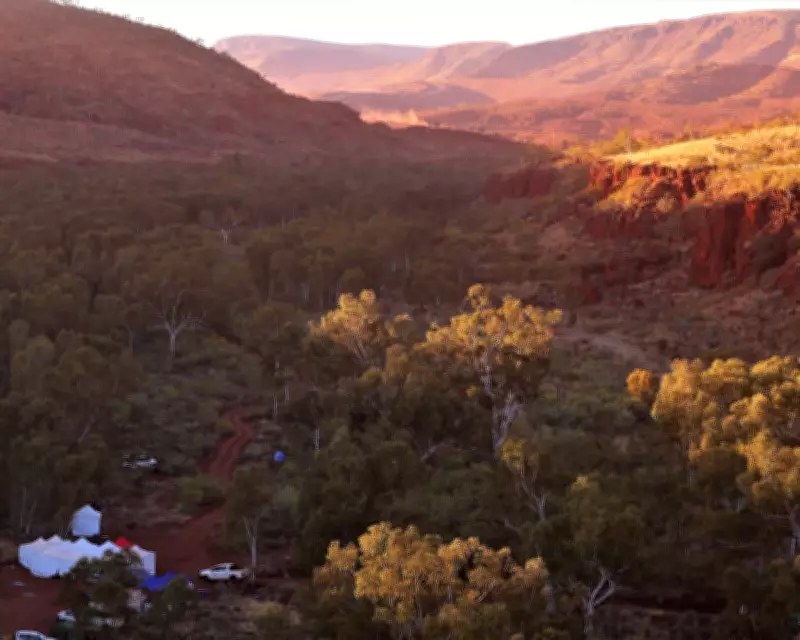
Justice Burley travelled to the Pilbara, about 1,500 kilometres north of Perth, for an on-country court hearing to hear from Yindjibarndi community witnesses in 2023. Elders told him in those hearings that the land had become “barren” from mining activities. Burley was also invited to view culturally significant sites. The court heard that 240 heritage sites had been relocated off country, with 140 cultural sites “completely destroyed”.
In his 350-page judgment, Justice Burley found the Yindjibarndi suffered both tangible and intangible losses, and recounted that elders told the court their “Nurra, soul and spirit [were] destroyed”. He said “significant damage had been done” to hundreds of cultural sites and artefacts and others had been “destroyed completely”.
“All was duly approved under government processes. However, none was done with the approval of YNAC,” Burley told the court. He said he had heard “moving” evidence from senior elders and community members about the trauma, harm and suffering they had experienced as a result of the large open pit mines and associated infrastructure. “The connection is deep and visceral … [to the] effect that their spirit or will is destroyed when they see harm done to their country as a result of the mining are plentiful and un-contradicted,” Burley said.
Lawyers for YNAC had argued that the community suffered profound cultural and spiritual harm not only from the mining operations, but also due to the rupturing of long-held community and family ties after the mining giant funded a “breakaway group” of traditional owners to secure land use agreements for their operations. Fortescue did a deal with breakaway group Wirlu-Murra Yindjibarndi Aboriginal Corporation after YNAC refused their royalty offer, paying people $500 each to attend a meeting that voted in favour of the offer in 2010.
Fortescue argued in its closing submissions that much of YNAC's evidence of the non-economic loss detailed “social disharmony allegedly caused by FMG” during negotiations, and said that such losses were not able to be compensated under current native title laws.