FEMA Officials Express Alarm Over Potential Cuts Under Trump's DHS Nominee
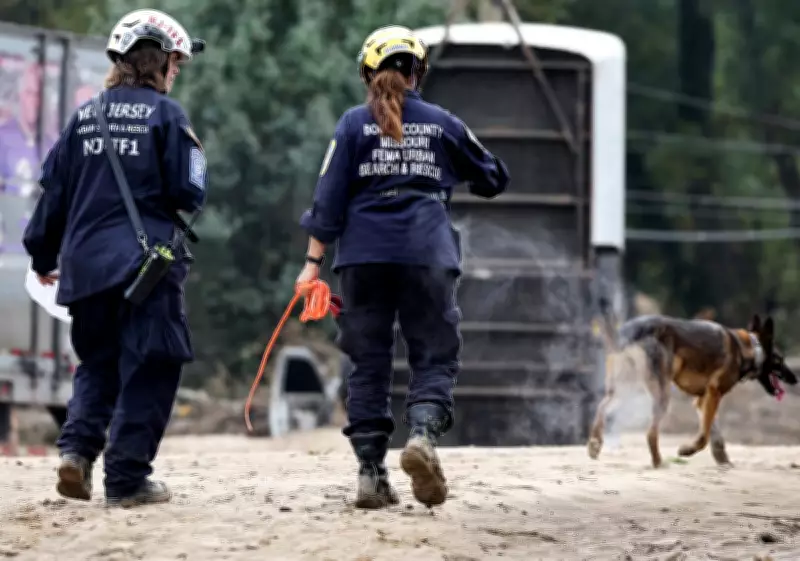
In the aftermath of Hurricane Helene, which devastated Asheville, North Carolina in early October 2024, Federal Emergency Management Agency personnel conducted search operations in flood-damaged areas with specialized canine units. This critical disaster response work now faces uncertainty as Donald Trump's nominee for Secretary of the Department of Homeland Security, Markwayne Mullin, undergoes confirmation hearings that have raised significant concerns among emergency management professionals.
Restructuring Plans and Staffing Concerns
During his confirmation hearing, Mullin, a Republican senator from Oklahoma, addressed questions about the future of FEMA under his potential leadership. While he pledged to revoke former DHS Secretary Kristi Noem's policy of personally reviewing all FEMA expenditures exceeding $100,000, calling it "micromanaging," he stopped short of committing to reverse staff reductions implemented during Noem's tenure.
"I'd welcome real meaningful reform talks, but I do not get warm fuzzies that's what we are going to get," revealed one longtime FEMA manager who requested anonymity. "Mullin could be a step up from Noem, but that's not exactly saying much."

The anonymous manager expressed particular concern about Mullin's suggestion that some government agencies have become "very bloated" in recent years. This comment came despite a September Government Accountability Office report indicating that FEMA's "limited workforce capacity" was compromising national disaster preparedness.
Historical Context and Climate Crisis Stance
Mullin's record on climate change and disaster response has drawn scrutiny from environmental experts and emergency management professionals. As recently as 2019, the nominee questioned the existence of the global climate crisis, despite overwhelming scientific consensus. During Wednesday's hearing, he was not asked about these previous statements.
The Oklahoma senator has also suggested that states should lead disaster response efforts rather than federal agencies, publicly questioning whether FEMA should have any role in disaster preparedness. "FEMA was designed to be the assistance to the states when the disaster reaches certain levels," Mullin stated during the hearing.
This perspective drew criticism from experienced FEMA officials. "He either doesn't understand how emergency management works, which he should given he's a senator from Oklahoma, or he's just parroting the narrative from the White House," said the anonymous FEMA manager. "The foundation of American emergency management is already locally led, state managed, federally supported. FEMA only comes in when a state or tribe asks."
Disaster Relief Voting Record Raises Questions
Mullin's legislative history includes votes against significant disaster relief measures, including opposition to a 2024 attempt to provide $20 billion to FEMA's disaster relief fund. He also repeatedly voted against aid packages for Hurricane Sandy survivors, including a $60.2 billion assistance measure, despite acknowledging at Wednesday's hearing that FEMA "saw a lot of problems" after the 2012 superstorm.
A second longtime FEMA official, who also requested anonymity, expressed skepticism about Mullin's understanding of post-Sandy reforms. "I would hope that anyone coming in would have a rudimentary understanding that many reforms have been passed over the last 20 years since Sandy," the person noted. "If we were serious about those fixes, the head of DHS would be giving us more support to implement them and improve, not just say we've failed."
Leadership Vacuum and Future Preparedness
Throughout Trump's second term, the Senate has not confirmed a permanent leader for FEMA. In response to questioning from New Jersey Senator Andy Kim, Mullin pledged to find a qualified head for the agency. "We're already looking at some in the case we do get confirmed," he said. "I'm going to find somebody that is capable of doing the job."

Michael Coen, former FEMA chief of staff during the Obama and Biden administrations, offered cautious optimism about some of Mullin's statements but emphasized the need for concrete action. "A nominee for FEMA and the reduction of DHS micromanagement of FEMA will minimize the risk of our federal government not being prepared for extreme weather and other significant risks," Coen said. "The nation's emergency management community and FEMA employees will await his actions after confirmation."
Monica Medina, former principal deputy undersecretary at the National Oceanic and Atmospheric Administration, expressed concern about Mullin's potential approach. "If he is appointed, I expect Mullin to draw from the same playbook as Secretary Noem when leading FEMA," Medina warned. "And we are heading into the worst of severe weather – high heat, fires, storms, floods and coastal inundation."
The anonymous FEMA manager highlighted the tangible impact of recent staff reductions, noting that the agency lost 10% of its workforce in the first half of 2025. "We were already short-staffed, and a headcount doesn't really capture the damage of losing senior-level staff that had years of knowledge and experience that is not easily replaced," the manager explained. "That knowledge is gone. We cannot hire our way back to that."
As the confirmation process continues, emergency management professionals remain watchful, balancing hope for meaningful reform against concerns about further erosion of disaster response capabilities during an era of increasing climate-related emergencies.