Nigel Farage Foresees Potential Referendum Movement in Outer London Boroughs
Reform UK Leader Nigel Farage has made a striking prediction that several outer London boroughs may soon seek to hold referenda to determine whether they wish to remain part of the capital city. During a recent visit to Bromley, Farage articulated that there exists a "very real debate" regarding whether certain boroughs should formally separate from London's administrative structure.
The Historical Context and Modern Discontent
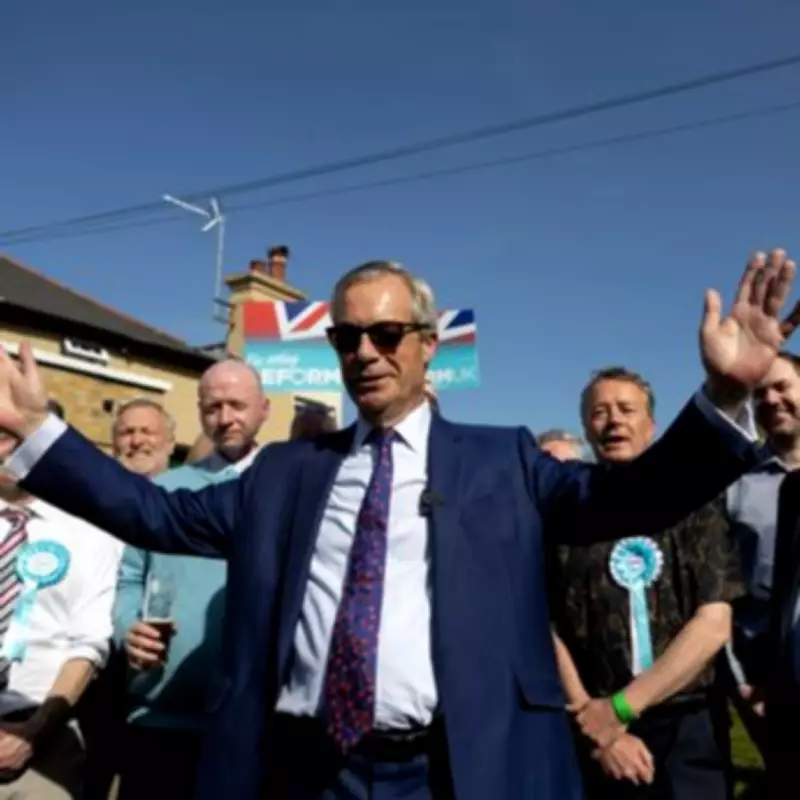
The concept of removing fringe boroughs from the jurisdiction of the Greater London Authority (GLA) was initially proposed by Alan Cook, who became Reform's first directly elected council member in London last year. Farage engaged with this idea while meeting Cllr Cook and other party supporters at the Bird in Hand pub in Gravel Road on April 8.
"Sitting here now with all these blokes in the pub, does this feel like London? Not to me it doesn't," Farage remarked from the pub garden. He elaborated by referencing his birthplace in TN16 3AA, describing it as sheep farming territory, and questioning how Mayor Sadiq Khan could govern such areas. Farage pointed to the "massive land grab" of 1965 when the Greater London Council (GLC) was established, absorbing parts of Essex, Hertfordshire, Kent, and Surrey to create the 32 London boroughs that exist today.

ULEZ Expansion as a Catalyst for Separation Sentiment
Farage identified the 2023 expansion of the Ultra Low Emission Zone (ULEZ) to cover all of London as a significant factor prompting residents in car-dependent boroughs like Bromley, Bexley, and Havering to reconsider their affiliation with the capital. He argued that many residents, particularly in Bromley, might prefer to rejoin Kent.
"For zero environmental benefit, all we have done is we've basically taxed the poor," Farage criticized. "I don't pay ULEZ because I've got a big income and a nice new car so I'm exempt, but my next door neighbours that are nearly 80 can't afford a new car and they have to pay £12.50 [a day]. It's monstrous. It's absolutely monstrous, a tax on the poor introduced by Sadiq Khan in Greater London and I think that's led to the debate getting bigger and bigger."
Specific Areas and Political Implications
Farage estimated that if a sudden referendum were held, 90 percent of Biggin Hill residents would vote to return to Kent. Cllr Cook noted that this sentiment is widespread in Biggin Hill, where residents feel particularly disadvantaged by the ULEZ expansion due to the absence of a train station.
When questioned about whether Reform London Mayoral candidate Laila Cunningham would advocate for a GLA split if elected in 2028, Farage responded cautiously: "I won't predict what she's going to say, but I think there is a possibility of the outer London boroughs at some point in the next few years having a referendum on deciding on what they want their future to be."
He further emphasized the cultural disconnect, stating, "this does not feel like London, it never did and the same goes for Havering and Dagenham and hey, what about the old county of Middlesex? That was literally abolished. I promise you this is a debate for the future, and a very interesting one."
Legal and Political Hurdles
Currently, no legal mechanism exists for a London borough to secede from the GLA, as such an event has never occurred before. Any attempt would require an Act of Parliament to facilitate the separation.
London Mayor Sir Sadiq Khan previously dismissed the notion when Cllr Cook first suggested it last year. His office reaffirmed that the Mayor remains committed to working "tirelessly" for all 32 boroughs of the capital, underscoring the administrative and political challenges inherent in any potential split.