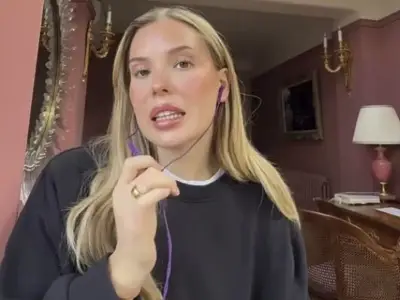
Falkland Islands resident Michael Poole, a lifelong islander and CEO of Sea Fish Falklands, says life for the 3,500 residents is far less dramatic than headlines suggest. Speaking after Argentina's World Cup win against England, where a banner declaring 'The Falklands belong to Argentina' sparked a FIFA investigation, Poole dismissed political claims.
'It is incorrect to suggest they would be recovering anything,' he said. 'The islands had been populated by Britain before Argentina existed. This rhetoric doesn’t really cause us concern but is a frustration for sure.'
Daily life on the islands
Poole, born and raised in Stanley, describes a close-knit community where a five-minute commute is normal and families gather for lunch. 'I might be biased because it’s home, but the pace of life here is lovely,' he said. Wildlife is part of everyday life, with penguins, whales, and beautiful beaches just minutes from town.
His wife Christine works in tourism, helping 80,000 cruise passengers each summer visit penguin colonies and historic battlefields. The islands cover a vast area, with flights between islands on a local airline.
Community and safety
'Everyone knows everyone,' Poole said. 'You drive down the road waving at people and they wave back.' The sense of safety is extraordinary: 'Our son has just turned 14 and we’ve never worried about him walking around by himself, day or night.'
However, small communities have downsides. 'There’s not much privacy. We joke that it’s like living in a goldfish bowl,' he said. Young people often leave at 16 to study in Britain, but around three-quarters eventually return. 'There are plenty of jobs here and lots of opportunities.'
Cost of living and football passion
Imported goods can cost more than double UK prices, but locally produced beef, lamb, and fish are cheaper and fresher. Football is a major passion; Poole has spent 15 years running grassroots football for about 100 players. He watched England's semi-final against Argentina in a pub, describing the silence when Argentina equalised: 'Everyone simply slumped in their seats.'
Politics and identity
Despite the sovereignty dispute, Poole says day-to-day life is peaceful. The islands are home to more than 70 nationalities, including a small Argentinian community. 'Everyone just gets on,' he said. 'I’ve never witnessed any problems.'
Poole identifies as a Falkland Islander first and British second, but values remaining a British Overseas Territory. 'For me personally, yes, I want us to remain British because that’s how I’ve grown up. Our family links are with Britain.' He emphasises self-determination: 'Ultimately, it should always be the people who live here who decide our future.'
War legacy and perspective
The Falklands War ended before Poole was born, but his parents lived through it. His father was detained by Argentine forces. 'For years they hardly spoke about it,' he said. Anniversaries and documentaries still bring difficult memories. Today, Poole hopes people see the Falklands as a community, not a headline. 'We appreciate that people take an interest in the Falklands. We just hope they understand we’re a community, not just a headline.'