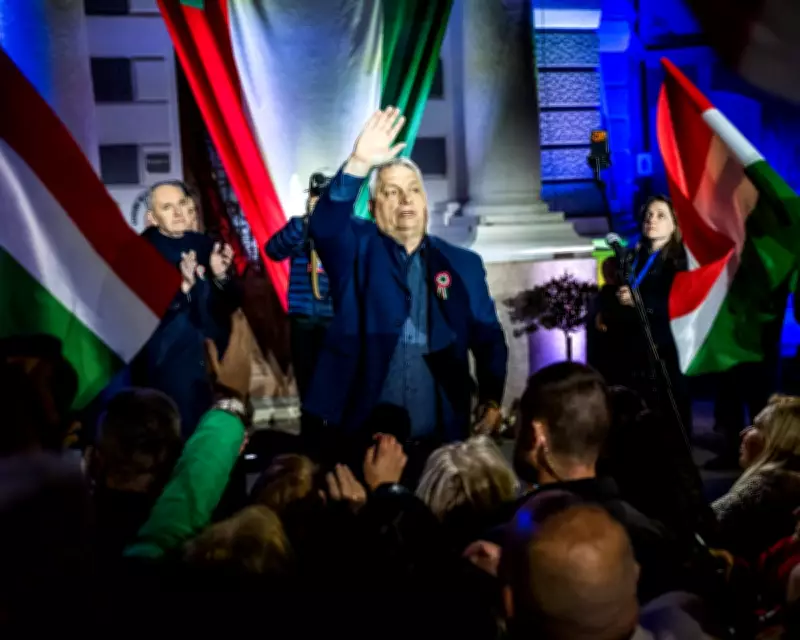
EU's Persistent Hungary Challenge Extends Beyond Orbán's Political Fate
The European Union's ongoing difficulties with Hungary will not be resolved even if Prime Minister Viktor Orbán loses the upcoming April election, according to political analysts and EU diplomats. While Orbán has become the bloc's most prominent disruptor, the structural problems he has created during his 16-year rule will likely persist regardless of the election outcome.
Summit Disruption and Ukraine Aid Blockade
EU leaders gathering in Brussels this week face yet another summit partially hijacked by Orbán's political maneuvers. The Hungarian prime minister has blocked a crucial €90 billion EU loan package for Ukraine that all 27 member states agreed upon unanimously last December. This obstruction strikes at the heart of EU decision-making processes and demonstrates Orbán's willingness to leverage Hungary's position for political gain.
As Brussels correspondent Jennifer Rankin explains, "Reneging on a deal agreed by heads of state and government undermines the fundamental principles of how the EU operates. There's little enthusiasm among member states for creating alternative financial arrangements for Ukraine simply because one leader refuses to honor previous commitments."

Disproportionate Influence and Systematic Obstruction
Despite Hungary representing just 1.1% of the EU's GDP and 2% of its population, Orbán has created outsized challenges for the bloc through systematic obstruction. According to the Center for Strategic and International Studies (CSIS), Hungary has repeatedly threatened to veto sanctions against Russia and aid to Ukraine to extract concessions from Brussels, particularly regarding frozen funds withheld over democratic backsliding concerns.
The country continues substantial purchases of Russian oil and gas, and Orbán has met with Russian President Vladimir Putin at least four times since Russia's full-scale invasion of Ukraine. A Euractiv analysis reveals Hungary currently blocks not only the Ukraine loan but also accession talks with Kyiv, new Russian sanctions, measures against violent Israeli settlers, and actions targeting Georgia's ruling party.
Electoral Uncertainty and Structural Challenges
While polls show Orbán trailing his center-right challenger Péter Magyar by 9-11 percentage points, several factors complicate the electoral picture. Orbán's Fidesz party has spent four terms modifying electoral rules to amplify their parliamentary advantages. In 2014, the party secured nearly 70% of parliamentary seats with just under 45% of the popular vote, demonstrating how the system can distort electoral outcomes.
The prime minister's campaign employs classic populist rhetoric, positioning himself as defending Hungary's "island of security" against chaos and war allegedly represented by his opponent, whom he portrays as an agent of Brussels and Kyiv. This strategy proved successful four years ago and could potentially work again despite current polling trends.
Potential Post-Election Scenarios
Even if Orbán loses, particularly by a narrow margin, he could refuse to relinquish power, creating what the European Policy Centre describes as "an unprecedented situation: an illegal and illegitimate government sitting at the EU table." Analyst Eric Maurice warns that Orbán could rely on captured courts and the outgoing parliament to obstruct power transition through constitutional manipulation.
Should Magyar's Tisza party secure victory and Orbán accept defeat, the new government would face monumental challenges. German Green MEP Daniel Freund notes that after 16 years in power, Orbán has appointed loyalists throughout Hungary's public media, judicial system, state agencies, and central bank. These appointees could potentially obstruct the new government's agenda, possibly forcing snap elections within a year.

Limited Policy Shifts Expected
Even with a new government, experts anticipate only gradual changes in Hungary's EU relations. Freund suggests that while a Tisza-led administration would seek to avoid isolation and reduce veto threats, "nobody should expect a complete policy shift" on contentious issues like Ukraine or immigration. The experience of Poland's Donald Tusk, who struggles to reverse eight years of nationalist reforms, suggests Hungary's transformation would be even more challenging given Orbán's longer tenure.
Long-Term Implications for EU Unity
The EU currently expresses confidence about eventually securing Hungary's approval for Ukraine's vital €90 billion loan package. One senior diplomat maintains that "a deal is a deal," suggesting Orbán would cross unprecedented boundaries by maintaining his obstructionist position. However, the fundamental tensions between Hungary and the EU extend beyond any single leader or election.
Orbán has positioned himself as the "poster child for Europe's illiberal movement," cultivating alliances with similarly EU-critical leaders like Slovakia's Robert Fico and the Czech Republic's Andrej Babiš. This network suggests that even if Orbán departs, the ideological challenges he represents will continue influencing European politics.
The April election represents the most consequential European vote this year, but its outcome will not magically resolve the complex web of political, institutional, and ideological challenges Hungary presents to the European Union. The bloc must prepare for continued difficulties regardless of who occupies the prime minister's office in Budapest.