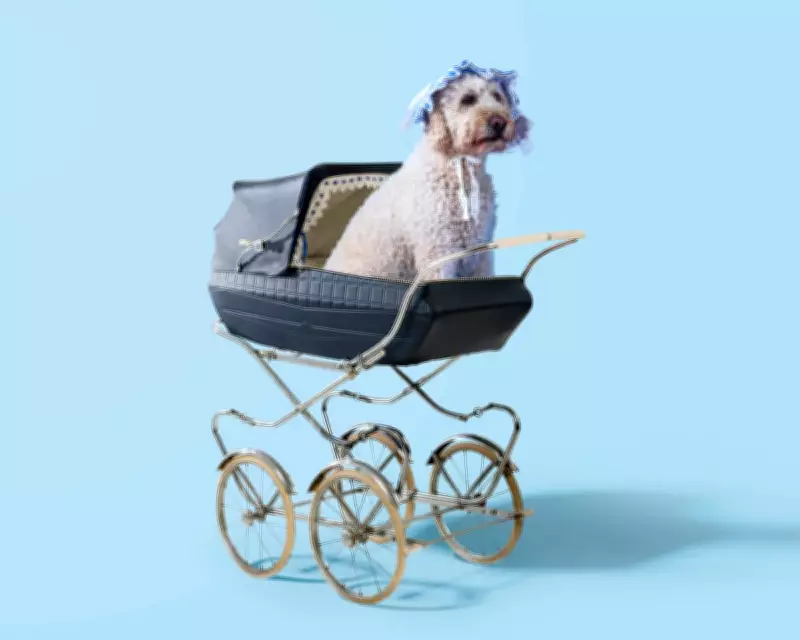
The Rise of Dinkwads: How Dogs Are Replacing Children for Modern Couples
In a world where birthrates are plummeting, a fascinating inverse trend is taking hold: couples are increasingly choosing to lavish care and money on pets rather than children. Known as Dinkwads—dual income, no kids, with a dog—this demographic is growing rapidly, reshaping societal norms and family dynamics across the United Kingdom and beyond.
A New Kind of Family: Dogs as Furry Children
Bryan Bell experienced a heart-stopping moment when his one-year-old miniature dachshund, Patti, collapsed with a seizure. "It was quite a traumatic experience because I didn't know what was happening," recalls the 40-year-old PR professional. After a diagnosis of epilepsy, Patti's monthly medication costs £180, plus £60 for high-quality food. "But our friends with kids talk about monthly nursery bills of £800," Bell notes, highlighting the financial appeal of pet ownership over parenthood.
This sentiment is echoed by many dog owners who see striking similarities between raising a four-legged friend and caring for a young child. From medical scares to behavioral issues, the responsibilities can feel remarkably parallel. Yet, as birthrates in Britain hit a record low in 2024, the number of dogs is soaring, with an estimated 13 million canines in the UK—just two million shy of the total number of children.

The Dinkwad Phenomenon: A Lifestyle Choice Goes Viral
The term Dinkwad has exploded in popularity, particularly on social media platforms like TikTok, where the hashtag has garnered nearly 135 million views, according to pet insurers Everypaw. Originating from the 1980s yuppie era with the acronym Dink (dual income, no kids), the modern iteration includes a canine companion, reflecting changing priorities and lifestyles.
Mary Skinner, a 27-year-old content creator from Edinburgh, exemplifies this trend. She and her husband celebrated their golden retriever Fergus's second birthday with party hats, a dog-safe cake, and a little vest with a bow tie. "I grew up assuming that having a baby was the only path to take," Skinner says. "It wasn't until I got older and started meeting people who weren't having children and realized, 'Oh, I don't have to have kids if I don't want to.'"
Why Dogs? The Science Behind the Bond
The human-dog relationship dates back millennia, with evidence from ancient burial sites showing humans curled protectively around puppies. Over thousands of years, selective breeding has produced dogs highly attuned to human body language and facial expressions. "They're really good at reading body language and communicative signals that no other species can read," explains Laura Gillet, a researcher in ethology at Eötvös Loránd University in Budapest.
Today, younger owners are more likely to view their dogs as children. Data from the Dogs Trust reveals that two-thirds of dog owners aged 25 to 34 see themselves as their pet's parent, the highest proportion among all age groups in the UK. This shift in attitude is driven by rising living costs, changing lifestyles, and a desire for companionship without the overwhelming demands of human offspring.
From Dinkwads to Parents: A Stepping Stone or Final Destination?
While many Dinkwads embrace their child-free lifestyle, some find that dog ownership opens the door to reconsidering parenthood. Moira Davies, a 28-year-old model from Lancashire, initially felt put off by the sleepless nights with her border collie, Finn. "I thought, 'Imagine this going on for years!'" she recalls. However, as Finn matured, Davies and her fiancé began feeling the pull toward having a human baby. "We both developed a relationship with Finn and realized, 'Oh, he's our baby!' Maybe it changed things for us."
Dr. Bethan Greenwood, a research officer at the Dogs Trust, emphasizes that while dogs offer a more achievable way to build companionship, they still require significant time, money, and commitment. "With rising living costs alongside changing lifestyles and expectations, some people feel that welcoming a dog into their home is a more achievable way to build companionship and routine," she says.

The Future of Pet Ownership: A Global Trend
International trends indicate a clear rise in pet ownership, even in regions like Africa and South America. As Gillet notes, "The phenomenon will not stop." For couples navigating the high costs and pressures of modern life, dogs provide a nurturing outlet that balances emotional fulfillment with practical feasibility.
Whether as a stepping stone to parenthood or a lifelong choice, the Dinkwad lifestyle underscores a broader societal shift. In a world where one in three postcodes in England now has more dogs than children, the howl of a basset hound may soon become more familiar than the sound of kids playing—a testament to evolving definitions of family and care.