
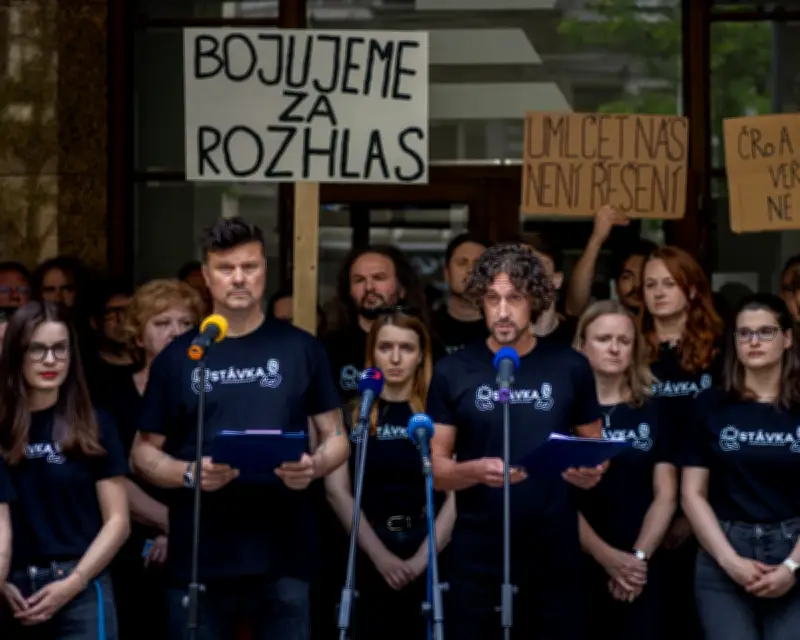
Public broadcasters walk out in protest
Staff at Czech Television and Czech Radio walked out on Monday, launching an indefinite strike over government plans to overhaul the public broadcasters' funding and governance. The industrial action is the first joint strike by the two institutions in three decades, according to union representatives.
Government proposals spark controversy
The government of Prime Minister Petr Fiala has proposed replacing the current licence fee system with a state budget allocation, which critics say would undermine editorial independence. The plan also includes reducing the number of governing council members and giving the government more say in appointments.
“This is a direct threat to the independence of public service media in the Czech Republic,” said Martin Štoll, chairman of the Czech Television trade union. “We cannot allow the government to control what we report.”
Strike details and impact
Around 1,200 employees from both broadcasters joined the strike, halting most news and current affairs programming. Czech Television replaced regular news with a looped message explaining the strike, while Czech Radio broadcast pre-recorded music. The strike is expected to continue until the government withdraws the proposal.
According to a statement from the unions, the strike affects approximately 70% of scheduled programming. Viewers and listeners have expressed mixed reactions, with some supporting the broadcasters and others frustrated by the disruption.
Government defends its plans
Prime Minister Fiala defended the proposals, arguing that the current system is outdated and that the changes would modernize public broadcasting. “We want to ensure that public service media are efficient, transparent, and accountable to taxpayers,” he said in a press conference. He also emphasized that the government has no intention of interfering with editorial content.
The government estimates that switching to state budget funding could save 1.5 billion Czech koruna (approximately €60 million) annually. However, opponents argue that this would make broadcasters vulnerable to political pressure.
Broader context and concerns
The strike comes amid growing concerns about media freedom in Central Europe. In recent years, governments in Poland and Hungary have faced criticism for tightening control over public broadcasters. Czech journalists and media watchdogs fear that the proposed changes could set a precedent for similar moves in the region.
The European Broadcasting Union has voiced support for the Czech broadcasters, urging the government to safeguard their independence. “Public service media must be free from political interference to fulfill their democratic role,” said EBU Director General Noel Curran.
What happens next
The strike continues as negotiations between the government and union representatives remain deadlocked. The unions have called for a public debate on the future of public broadcasting and have urged citizens to support their cause. The government has not indicated any willingness to back down, raising the prospect of a prolonged industrial dispute.




