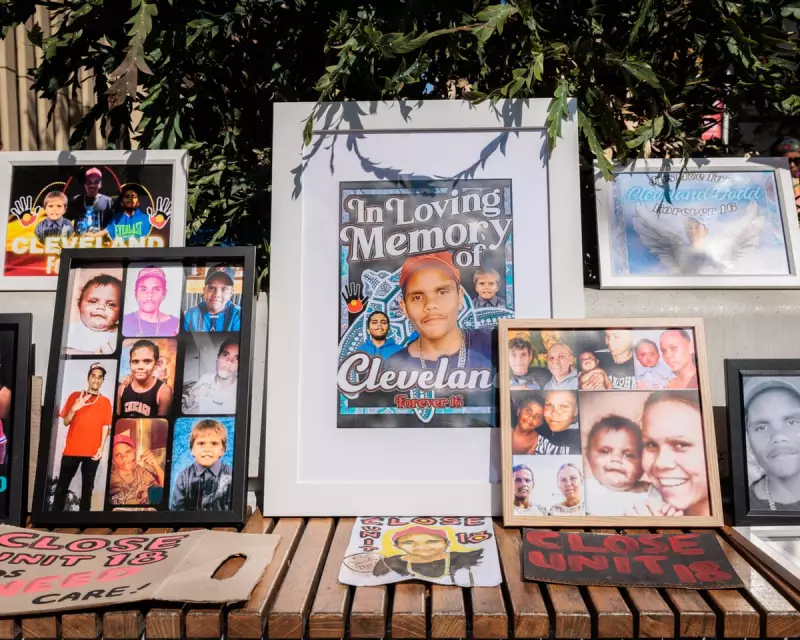
A West Australian coroner has issued a scathing indictment of the state's youth justice system, finding that "long-standing deficiencies" directly caused the death of 16-year-old Indigenous teenager Cleveland Dodd in a detention unit.
Coroner Calls for Urgent Closure of 'Trouble-Plagued' Unit
Coroner Phil Urquhart, delivering his findings on Monday, stated that Unit 18 – the youth wing within the high-security Casuarina adult prison south of Perth – should be closed as a matter of urgency. He further recommended a special inquiry with greater powers than the coroner's court to investigate how the unit was ever established.
"No child in detention deserves to be treated in the way Cleveland and the other young people in Unit 18 were treated at the time he decided to end his life," Urquhart said.

Cleveland Dodd was found unresponsive in his cell in the early hours of 12 October 2023. He was rushed to hospital in a critical condition but died a week later on 19 October, becoming the first juvenile to die in a Western Australian detention facility.
A Litany of Systemic Failures and 'Cruel' Treatment
The coroner's report painted a grim picture of the conditions inside Unit 18. He detailed that prolonged solitary confinement, isolation, intense boredom, eating meals alone, and a lack of access to healthcare, education, and running water were the norm for detainees.
In the 12 days leading up to the incident, Cleveland spent only between one and two hours each day outside his damaged and unfurnished cell. Former Department of Justice director general Adam Tomison conceded under cross-examination that such treatment was "cruel, inhuman and degrading".
The coroner's 15 adverse findings included that Cleveland was subjected to excessive solitary confinement, was not properly monitored, and was denied access to counselling services despite repeated requests and threats of self-harm. His cell contained a known hanging point that had not been repaired.
"Cleveland's death was not because of human error by those working on the floor … it was because of serious longstanding deficiencies in the system," Urquhart concluded.
Delayed Response and 19 Recommendations for Reform
The inquest heard that after Cleveland self-harmed at approximately 1.35am, staff did not open his cell door to render aid for more than 15 minutes. Paramedics arrived a further 15 minutes later. Although partially revived, the teenager suffered a fatal brain injury due to oxygen deprivation.
Alongside his findings, Coroner Urquhart made 19 recommendations for systemic change. A key proposal is the establishment of a forum to explore whether the Department of Justice should have sole management over youth justice in the state.
The Western Australian government has previously stated that many improvements have been implemented since Cleveland's death and that a purpose-built facility to replace Unit 18 will be completed within three years.