Candidates with paramilitary ties face off in Colombia's runoff
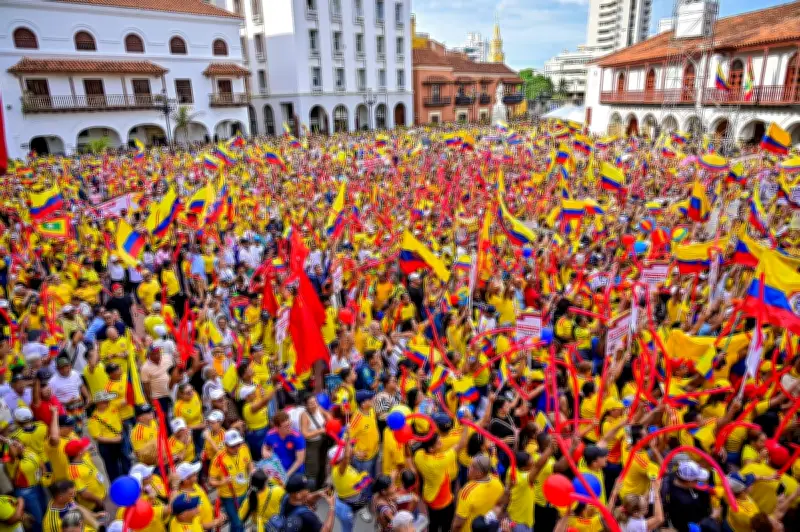
Colombians will vote on Sunday in a presidential runoff between Iván Cepeda and Abelardo de la Espriella, two men whose lives have been deeply shaped by the country's paramilitary forces. These private armies, originally formed by rightwing landowners, drug traffickers, and politicians to fight leftwing guerrillas, have been central to a decades-long conflict that killed nearly half a million people.
De la Espriella, 47, is a far-right admirer of Donald Trump who began his legal career defending paramilitary leaders. Cepeda, 63, is a leftwing senator whose father was assassinated by army officers linked to paramilitaries, and he built his career as a human rights activist exposing their crimes. The winner will take office on August 7, inheriting the worst violence since the 2016 peace agreement with the Revolutionary Armed Forces of Colombia (FARC).
Opposing strategies for crime surge
De la Espriella, who has led polls since defeating Cepeda in the first round, advocates a return to full-scale military confrontation. Cepeda, backed by current President Gustavo Petro, supports a modified version of Petro's "total peace" strategy, which involves negotiations with all armed groups. However, violence has surged, and security experts say the strategy has largely failed.

Sunday's vote "reflects the reality of a country shaped by drug trafficking," said Gustavo Duncan, a leading scholar of paramilitarism.
History of paramilitary violence
Paramilitary groups first emerged in the 1960s to counter leftwing rebels, often colluding with the Colombian military. By the 1980s, as the cocaine trade grew, they protected trafficking routes and drug lords like Pablo Escobar. A major faction later broke with Escobar, helped bring about his downfall, and expanded into the power vacuum. "At its peak, these groups had more than 30,000 members. It was an enormous army spread throughout the country," Duncan said.
In the 1990s, paramilitaries became notorious for massacres—choreographed displays of extreme violence to terrorize communities, according to María Teresa Ronderos, author of major investigations on the militias. Fighters killed anyone suspected of sympathizing with guerrillas, including peasants, Indigenous people, and Afro-Colombians, and carried out "social cleansing" targeting LGBTQ+ people, sex workers, and drug users. Massacres often involved torture, rape, dismemberment with chainsaws, and decapitations.
Cepeda's personal loss and career
In 1994, paramilitaries and army members murdered Senator Manuel Cepeda, Iván Cepeda's father, as part of a campaign against the communist Patriotic Union party. Iván Cepeda, then a university professor, found his father's car riddled with bullet holes. In the early 2000s, he founded and led a movement representing victims of the death squads, investigating cases and collecting testimony from former paramilitaries in prisons.
De la Espriella's legal work for paramilitaries
At the same time, De la Espriella rose to prominence as a lawyer defending leaders of the United Self-Defence Forces of Colombia (AUC) during its demobilization negotiations. The AUC no longer exists, but the Gulf Clan, now Colombia's largest illegal armed group, was founded by former AUC members and inherited much of its territory and trafficking routes.
Cepeda filed a criminal complaint against De la Espriella last week, alleging he not only represented the AUC but also acted as a "possible recruiter" through a foundation. De la Espriella dismissed the accusations as a "smokescreen" and claimed Cepeda maintained a "narco-political" alliance with guerrilla groups. Cepeda, the main architect of Petro's "total peace" plan, has repeatedly denied any links to rebels.

International reactions and allegations
After De la Espriella emerged ahead in the first round, Trump announced his support, calling Cepeda a "radical left Marxist." Eleven Democratic US Congress members sent a letter to the Trump administration, arguing that "rather than campaigning for [De la Espriella], our government should be examining his ties" to the AUC, which was designated a foreign terrorist organization in 2001. They said De la Espriella allegedly "maintained close relations with multiple leaders" of the AUC. De la Espriella did not respond to requests for comment but has denied any criminal acts, insisting his contact with paramilitaries was strictly professional.
Voters' perspectives on crime
For his supporters, De la Espriella's past matters less than his promises of an iron-fist approach, including building private "mega-prisons" in the Amazon and "wiping out" criminals like "cockroaches and rats." The past year has been the most violent since the 2016 peace deal, with surges in homicides, kidnappings, and massacres. Security experts note current violence is far below pre-peace-deal levels, but many Colombians feel the country has returned to its worst moments.
"One reason there is so much criminality in Colombia is that people rob, kill and then a few days later they are back on the streets," said Lucy Vélez, a 38-year-old graphic designer from Manizales. "So I do like the idea of being tougher on crime." Another voter, Marcela, a former businesswoman now driving in Bogotá, said De la Espriella's alleged paramilitary associations are not a problem: "The paramilitaries kept the guerrillas in check... Unfortunately, they have served a purpose in some ways."
Business ties and concerns
An investigation by La Silla Vacía found that among minority shareholders of De la Espriella's businesses—including rum, wine, clothing, and real estate—are relatives of convicted paramilitary leader Hugues Rodríguez Fuentes, known as "Comandante Barbie." Ronderos said, "That does not mean he is personally a criminal [but] De la Espriella comes from the heart of those narco-paramilitary networks." She added, "Colombia has spent years trying to dismantle that terrible war, and he talks about 'disembowelling' leftists and killing criminals. To return to that after everything it cost us is deeply sad."