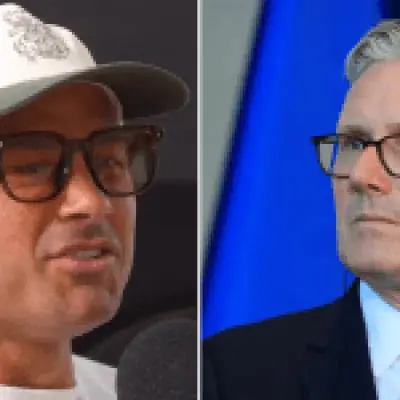
Andy Burnham, widely expected to become the next prime minister, delivered a major speech at the People's History Museum in Manchester, promising the "biggest rebalancing of power our country has seen" and a "circuit breaker" from the current Labour government's approach. However, analysts warn that while the rhetoric was strong, concrete details on funding and implementation remain scarce.
Implicit critique of Starmer's record
Burnham's address implicitly criticized Keir Starmer's leadership, condemning "two decades of falling living standards since the 2008 financial crash" and vowing to end the whips' system that "create[s] fear or close[s] down debate." This directly references Labour MPs suspended for defying orders on votes under Starmer.
He promised the "biggest rebalancing of power" by handing mayors control over Whitehall budgets for housing, social security, and education. Yet, as Owen Jones notes, similar pledges by George Osborne a decade ago resulted in devolving cuts and weakening redistribution, favoring richer areas with stronger tax bases.

Council housing pledge draws applause
The biggest applause came for Burnham's commitment to the largest council housebuilding programme since the postwar period, evoking Nye Bevan's vision. Currently, over 1.3 million people are on social housing waiting lists in England, with many forced into expensive private rentals. However, Burnham's adherence to arbitrary fiscal rules raises questions about funding. He did not mention raising taxes on wealth, despite suggesting reviewing them. According to the Joseph Rowntree Foundation, average disposable incomes are set to fall by £740 a year by 2029, partly due to the Iran war's aftershocks.
Public ownership ambiguity
Burnham pledged to give local government powers to take "greater public control" over energy, housing, water, and transport, citing Manchester's bus policy. However, this does not necessarily mean full public ownership. A pamphlet on Manchesterism by Mathew Lawrence outlines a bond-for-share exchange and new public corporations, but Burnham has not confirmed this plan.
Positive signs include reports that Housing Secretary Steve Reed is designing a state-owned housing developer. Burnham also committed to reversing high street decline by cutting business rates for hospitality, leisure, and retail, but without conditions on living wages or union access.
Need for substantive change
Jones concludes that Starmerism failed due to its inability to address a broken economic model, not just vibes. Burnham's choice of chancellor will be critical; only Ed Miliband might overcome Treasury orthodoxy. Without raising taxes on the wealthy or altering fiscal rules, Burnham risks offering empty hope. The speech signaled a shift in direction, but the urgent need for concrete action remains.