Andy Burnham’s potential ascent to prime minister has sparked nervousness among utilities companies and excitement from campaigners, as he considers a 10-year programme of taking control over “the essentials of life”. A spokesperson for Burnham said he wanted “stronger accountability and better standards” and is “exploring all possible options for giving the public more control over essential services like water and energy.”
Campaigners Disappointed by Labour’s Inaction
Former Undertones frontman and campaigner Feargal Sharkey backed Keir Starmer in 2024 hoping he would clean up rivers and bring water into public ownership. Two years on, Sharkey is disappointed. “This privatisation has been an unmitigated, catastrophic disaster,” he said, adding that the Labour government has chosen to “kick the can down the road. There is no more road.”
Sharkey now hopes Burnham will begin the job. The water industry, he argues, is a classic case where “shareholders always win, and bill payers always lose.”
Nationalisation: Key Arguments and Challenges
Advocates of nationalisation argue that private owners of monopolies extract money in dividends, fees, and interest that should be spent on infrastructure. The water industry counters that it brings investment without adding to public borrowing. However, Common Wealth, a thinktank led by Burnham ally Mat Lawrence, argues that higher private borrowing costs make bills more expensive.
Even if Burnham accepts the argument, his government faces complicated decisions. A bill to expropriate assets at no cost is unlikely as it would spook international investors. The government could wait for companies to breach licence conditions—as Thames and South East Water have done—before taking control. Chris Hayes, an economist at Common Wealth, said, “It depends how adversarial you want to be. I find it hard to believe they’d be keen to start a load of fights.”
Cost of Nationalisation Disputed
The total cost of nationalising the water sector is hotly disputed. Sharkey said companies would be worthless if the government imposed real costs of cleaning up rivers. The Labour government has argued the cost would be £100bn. Campaigners like Common Wealth and We Own It argue upfront costs would be matched by revenue-generating assets.
Oxford professor Dieter Helm, who advised previous governments, noted Burnham took control of bus planning in Manchester but left operations to private companies. He said, “If you want the state to control, then you don’t have to own anything to control them.” Helm favours local regulators for each of England’s 10 river basin catchment areas.
Thames Water: The Immediate Problem
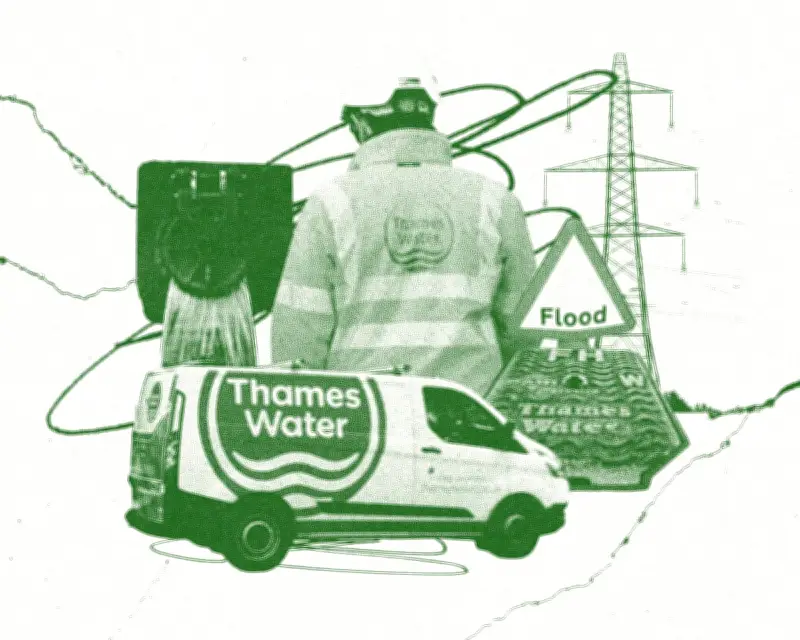
Thames Water, serving 16 million customers, has been on the brink of collapse for years. It has been in breach of its licence for two years. Experts believe the government is legally able to impose a special administration regime (SAR) at any point, but Starmer’s government has not done so, apparently fearing costs potentially in the tens of billions of pounds.
A government source said officials might struggle to win court backing for SAR on performance grounds, and creditors have kept Thames afloat. However, SAR might be a decisive and popular move for Burnham. Thames argues SAR will cost millions and delay turnaround, but Helm said the government would recover that money in an eventual sale.
If there are rival bids, the government may have to compete on price to nationalise—a bill that could exceed £4bn, based on previous withdrawn bids. If the government tries to override creditors’ demands through legislation, they face potential lawsuits under the Human Rights Act. Several creditors are large US hedge funds like Elliott Management or Silver Point Capital, likely to take aggressive legal action.
A Thames spokesperson said: “We continue to work with all parties to reach an agreement that supports Thames Water’s long-term financial stability and ensures the uninterrupted delivery of our biggest infrastructure upgrade in 150 years.” A spokesperson for the creditors said: “Nationalising Thames Water is not the right answer and will not fix the company’s complex problems.”
Energy Bills and Private Investment
RenewableUK chief executive Tara Singh, a former No 10 adviser, said a failed water monopoly is not the same as major companies bringing jobs and investment to meet climate goals. She sees a role for state-owned GB Energy to “derisk” pioneering technologies, but says capital-intensive heavy lifting should be shouldered by private investors.
The government’s ambition to create a virtually zero carbon electricity grid by 2030 requires private investment of up to £40bn every year, and rewiring the grid in the 2030s needs £90bn. Energy secretary Ed Miliband dismissed nationalisation as a route that “wouldn’t be a solution to the problem we face” because the party wants “every penny to go to help cut people’s bills.”
Helm concluded: “The reason nobody wants to do anything about it is someone will have to pay. You do really need a step change. These infrastructures really are the critical bits of the economy. To do this it’s going to cost.”