Mounting Allegations of Misconduct on Victoria's Big Build
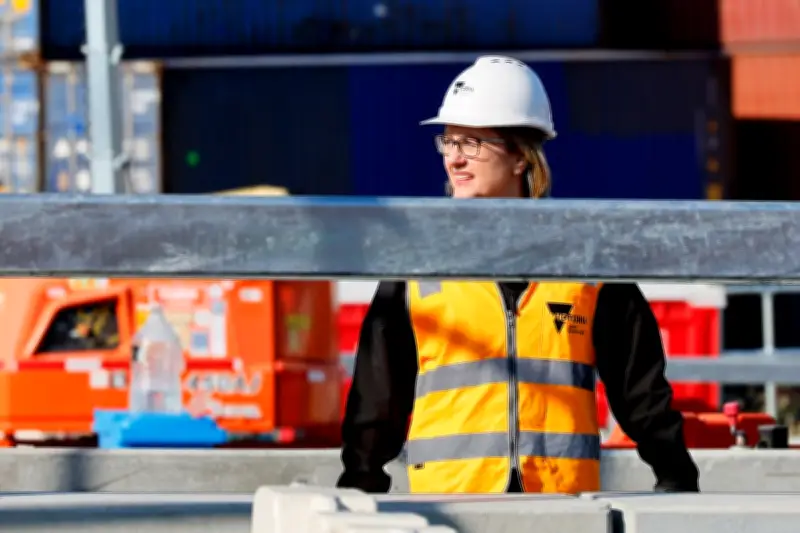
Revelations of organised crime, underworld figures, and unsavoury characters profiting from Victoria's massive infrastructure spend—the Big Build—continue to emerge. Evidence of intimidation, extortion, fraud, and bribery on government construction sites, funded by taxpayers at escalating costs, has raised serious questions about oversight and accountability.
Premier Jacinta Allan has blamed inflation for rising costs and claimed existing agencies have the matter under control. However, Deborah Glass, Victorian ombudsman from 2014 to 2024, argues that only a royal commission can get to the bottom of these claims.
Existing Agencies Ill-Equipped to Handle Systemic Corruption
Glass notes that no Victorian integrity agency is empowered or resourced to deal with misconduct on this scale. Police investigations are ill-equipped to address systemic corruption, which requires the transparency of public exposure. She states, 'These revelations can only be explored by a royal commission. Yes, they are expensive, don't deliver quick results and are often rightly disparaged as lawyers' fests. But nothing else will give us answers.'

Victoria's anti-corruption commission, Ibac, cannot currently investigate 'grey corruption'—misconduct that is not necessarily criminal but involves bending rules to benefit mates, political organisations, or networks, and abusing public funds. This contrasts with counterparts in New South Wales, Queensland, and Western Australia, which have broader remits.
Decisive Action Delayed Until After Next Election
Every Ibac commissioner since its inception in 2013 has called for reform, but successive Victorian governments have resisted. Premier Allan recently claimed she was taking 'decisive action' to give Ibac the powers it needs, but not until the end of 2027—after the next state election. Glass calls this 'decisively too late.'
The Victorian government has staked its political legacy on the Big Build, including huge rail and road projects. Glass argues that the scale of these projects should have demanded stringent checks and balances for every contractor and subcontractor, but instead, the narrative has been driven by political expediency.
Secrecy and Cost Overruns Highlight Governance Failures
Glass points to her last major investigation as ombudsman into the Suburban Rail Loop, an orbital rail link announced before the 2018 election with a recently estimated cost over $200bn. The project was developed in excessive secrecy, without the knowledge of the responsible department's secretary. Its business case was 'proved up' by consultants, and the announcement blindsided the agency set up to remove short-term politics from infrastructure planning.
Glass writes, 'It played well with the electorate, allowing the then premier to counter any criticism by claiming he had a mandate. But what did the electorate actually know in 2018 when they ostensibly voted overwhelmingly for a project that will take decades to build at an unimaginable cost? They certainly weren't told it had been cooked up in secrecy, or that its likely cost would, in the words of the now former secretary, “crowd out” better uses of funds.'
Financial Impact on Public Services
Thanks in large part to the Big Build, Victorians are paying some $24m a day in interest on the state's debt. Glass notes the obvious impact on public services, including health, housing, and education. 'In Victoria, it seems, when you've started digging a big expensive hole, you just keep on digging,' she concludes.