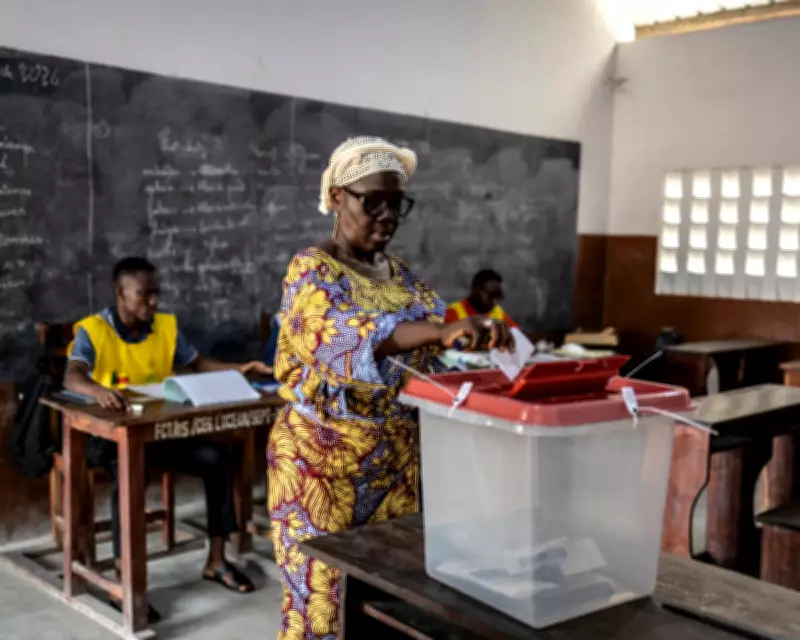
Benin Heads to the Polls in High-Stakes Presidential Election
This Sunday, the West African nation of Benin holds a presidential election that comes just four months after a failed military coup attempt. The vote is widely seen as more of a coronation than a competitive contest, with Finance Minister Romuald Wadagni positioned as the overwhelming favorite to succeed outgoing President Patrice Talon.
Constitutional Changes and Political Landscape
President Patrice Talon, the businessman-turned-politician who has led Benin since 2016, is constitutionally barred from seeking a third term after serving two five-year terms. However, a controversial constitutional amendment has reshaped the political landscape, allowing the next president to potentially serve two seven-year terms instead.
Romuald Wadagni emerged as the ruling coalition's candidate without any primary elections, with Africa Confidential reporting that other potential contenders were systematically sidelined, placated, or removed from contention. The 49-year-old finance minister, who speaks fluent English after years as a technocrat in the United States, is credited as the architect of Benin's recent fiscal stability during the Talon era.

Campaign Promises and Regional Context
Wadagni has campaigned on promises of implementing free schooling and creating more jobs—appealing pledges in a country where young people constitute more than half of the population. If elected, he would become one of Africa's youngest leaders on a continent where the average presidential age is 65.
The election presents Benin with an opportunity to demonstrate peaceful democratic transition in a region where neighboring countries face significant challenges. West and Central Africa is home to some of the world's longest-serving leaders, including Cameroon's 93-year-old Paul Biya and Equatorial Guinea's 83-year-old Teodoro Obiang Nguema. Additionally, at least three of Benin's neighbors are currently ruled by military juntas.
Political Repression and Shrinking Democratic Space
Despite economic progress under Talon's leadership, critics accuse him of being a strongman who has systematically crushed political dissent. This discontent reportedly trickled down to some military personnel and contributed to December's attempted coup, though many believe soldiers also acted in response to increasing jihadist attacks along Benin's borders with Burkina Faso, Niger, and Nigeria.
Dieudonné Dagbéto, head of Amnesty International Benin, has raised serious concerns about the country's democratic space. "Civic space continues to shrink in Benin with a wave of attacks on independent media outlets and people still being arbitrarily arrested and detained for dissent," Dagbéto stated. "Despite progress, women and marginalized groups face discrimination, while forced evictions jeopardize the human rights of thousands of people."
Several newspapers have been closed indefinitely by authorities after publishing information critical of the government. Journalist Hugues Sossoukpè, who had been living in exile in Togo since 2021, was arrested on Ivorian soil by Beninese agents last July and remains imprisoned in Ouidah, labeled as a "dangerous cyberactivist who advocates terrorism."
Electoral System Changes and Opposition Challenges
There are growing concerns that Benin is becoming a de facto one-party state. In 2024, parliament significantly raised electoral thresholds, now requiring political parties to secure at least 10% of the vote to obtain parliamentary seats and presidential candidates to be sponsored by at least 15% of the country's mayors and lawmakers.
These changes helped the ruling coalition win all 109 seats in January's legislative elections, as opposition parties found it extremely difficult to meet the new requirements. Only 36% of approximately 7.8 million registered voters participated in the January poll, raising concerns about similar low turnout in this weekend's presidential election.
The main opposition to Wadagni comes from former culture minister Paul Hounkpè of the Cowry Forces for an Emerging Benin (FCBE), a fringe opposition party. Hounkpè is widely viewed as a token candidate who cut a deal with the ruling coalition to meet the sponsorship threshold.

The lead opposition party, the Democrats, is not presenting any candidates after being unable to meet the new requirements. While they have not called for an election boycott, they have refused to endorse any candidate. The party recently suspended nearly two dozen members for anti-party activities after they reportedly endorsed the ruling coalition candidate.
"The disqualification of our duo [candidate and running mate] is a programmed exclusion," the Democrats stated after the constitutional court affirmed their exclusion last October. "It proves that the 2026 election is being organized to exclude any serious challenger to the ruling power."
As Benin prepares for this crucial election, the country stands at a crossroads between maintaining its reputation as a stable democracy in a turbulent region and succumbing to the authoritarian trends affecting many of its neighbors.