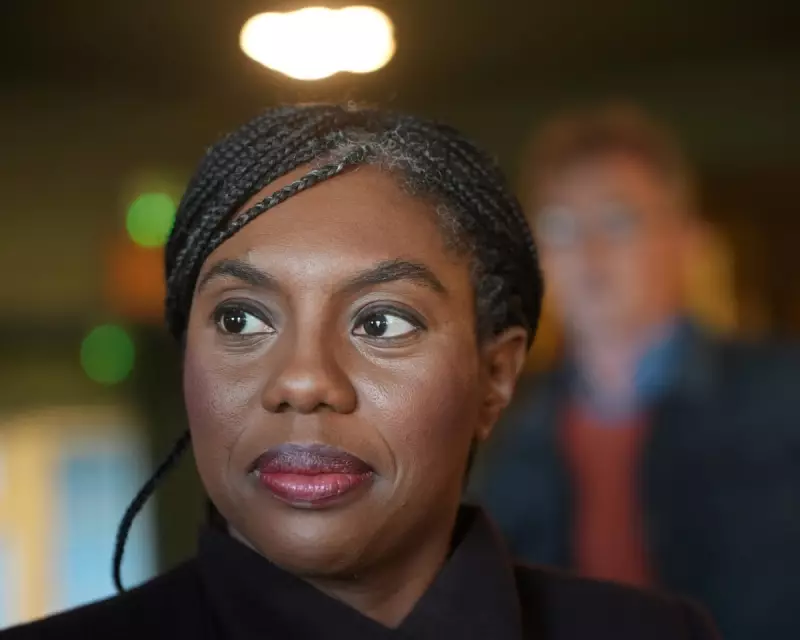
In a striking departure from the prevailing mood at Westminster, Conservative leader Kemi Badenoch has publicly defended the United States' military operation to capture Venezuelan President Nicolás Maduro. Her comments, made during a detailed interview on BBC Radio 4's Today programme, place her at odds with the majority of British politicians who have been reluctant to endorse the raid.
A Shift from Fence-Sitting to Full Defence
Over the preceding days, a consensus of criticism had formed across the UK's political spectrum. In the House of Commons, Foreign Secretary Yvette Cooper performed a delicate balancing act, emphasising Britain's commitment to international law while avoiding direct condemnation of the US action. MPs from all major parties demanded a stronger response to President Donald Trump's decision.
Badenoch's initial weekend response was non-committal, mirroring Labour leader Keir Starmer's stance that more information was needed. Even as recently as yesterday, her position remained ambiguous. However, this morning she delivered a clear verdict: what Trump did was "morally … the right thing to do."

She rooted her justification in personal experience, stating, "I grew up under a military dictatorship [in Nigeria], so I know what it’s like to have someone like Maduro in charge. I know what it’s like to have people celebrating in the street. So I’m not condemning the US." When pressed if sending special forces to seize Maduro was correct, she affirmed, "Morally, yes."
Challenging the 'Rules-Based International Order'
Badenoch's defence extended beyond the specific raid into a broader critique of the post-Cold War global system. She argued that faith in a rules-based order sustained by international law is now "overrated," suggesting the world no longer operates in that way.
"As we all know, international law is what countries agree to," she explained. "Once people decide they don’t agree, there is no international law. There’s no world police, no world government, no world court." She pointed to the presence of Russian, Iranian, and Hezbollah forces in Venezuela, asking why critics of the US raid were silent on those earlier breaches of sovereignty.
This represents a significant divergence from Keir Starmer's position. While acknowledging the raid raised "serious questions about the rules-based order," Badenoch fundamentally questioned its current robustness. She echoed sentiments from Trump's deputy chief of staff, Stephen Miller, about a world governed by strength and power, recalling the US walking away from the World Trade Organization over rule-breaking by other nations like China.
Political Repercussions and the Day's Agenda
Badenoch's stance is a bold political move, directly contradicting both public and parliamentary opinion. She drew a distinction with Margaret Thatcher's condemnation of the 1983 US invasion of Grenada, arguing the Venezuela case was different due to the nature of Maduro's "brutal regime," which the UK does not recognise as legitimate.
Her interview was part of a series of start-of-year talks with major party leaders. Meanwhile, the political day continues with several key events:
- 9am: Keir Starmer chairs a cabinet meeting, largely focused on political strategy for upcoming May elections.
- 10.30am: Foreign Office minister Stephen Doughty gives evidence on disinformation and democracy.
- Afternoon: Starmer travels to Paris for a Ukraine security summit with European leaders, Ukrainian President Volodymyr Zelenskyy, and Trump advisers.
- 2pm: The Commons business committee examines progress on Post Office Horizon scandal compensation.
Badenoch's comments signal a potential shift in how some UK political figures view global intervention and the primacy of international law, setting the stage for further debate on Britain's role in a changing world order.