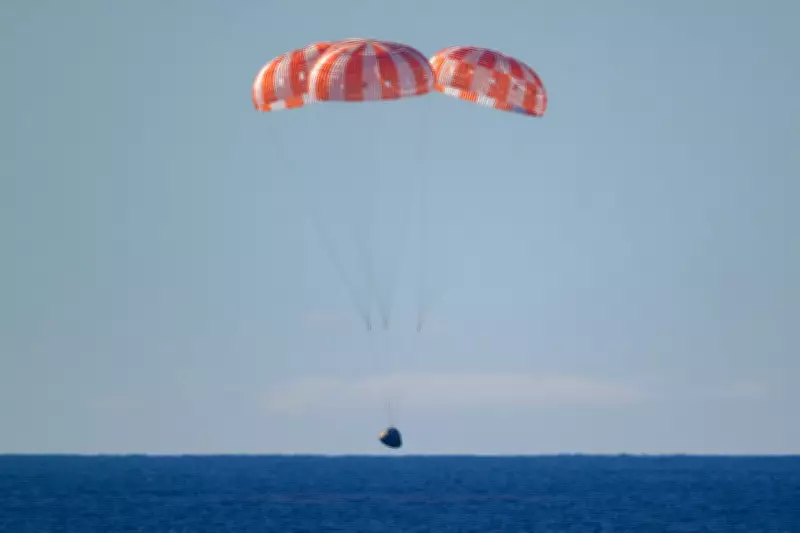
Artemis II Crew Returns in Jubilant Splashdown Amid NASA Funding Crisis
The Artemis II mission concluded with a triumphant splashdown in the Pacific Ocean on April 10, 2026, marking NASA's first crewed lunar journey in over five decades. Astronauts Reid Wiseman, Victor Glover, Christina Koch, and Jeremy Hansen of the Canadian Space Agency returned safely after a record-breaking flyby, hailed as "ambassadors for humanity" by NASA Administrator Jared Isaacman.
Celebration and Achievement in Houston
At the Johnson Space Center in Houston, jubilation erupted as the Orion capsule, named Integrity, completed its 10-day odyssey. The mission shattered distance records and reestablished U.S. leadership in space, with NASA associate administrator Amit Kshatriya declaring, "This time we return to stay." The crew's poetic reflections during the flight inspired global audiences, emphasizing the historic nature of their voyage.
Budget Cuts Cast a Pall on Future Missions
However, the celebratory mood was shadowed by proposed budget cuts from the Trump administration. Plans to slash NASA's funding by 23%, including a 46% reduction for space science, have raised alarms. Casey Dreier of the Planetary Society criticized the "extinction-level" proposals as "discordant" and "a baffling piece of political ideology," noting they contradict NASA's recent achievements and bipartisan congressional support.

Political Discord and Program Uncertainties
Despite Isaacman's support for the budget adjustments, arguing they are "sufficient" for mission priorities, analysts highlight inconsistencies. Dreier pointed out errors in the budget request, such as funding for already-canceled programs, calling it a "sloppy" copy-paste effort. The Artemis program, already delayed and over budget, faces heightened challenges as it aims for a 2028 lunar landing and permanent base construction.
Looking Ahead to Artemis III and Beyond
NASA remains focused on future missions, with Artemis III scheduled to test lunar landing systems next year. Isaacman emphasized that this is "just the beginning," envisioning frequent moon missions. Yet, the proposed cuts threaten to undermine these ambitions, creating a stark contrast between the agency's successes and political pressures.
Experts warn that while Artemis II proves U.S. capability in deep space exploration, sustained funding is crucial for maintaining momentum in the new space race with China. The mission's success offers hope, but the path forward remains fraught with budgetary and political hurdles.