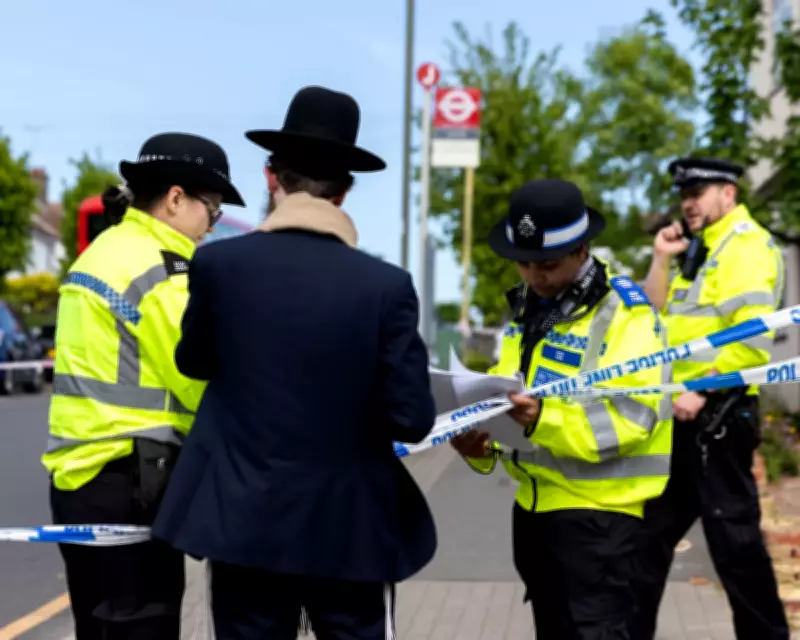
Antisemitic hate crimes in London have reached a two-year high, with 140 offences recorded in April, according to data from the Metropolitan police. In response, the force is deploying 100 additional officers to protect Jewish communities, establishing a dedicated community protection team that combines neighbourhood policing with counter-terrorism expertise.
Rise in Offences
April's total represents a significant increase from 98 incidents in March and 67 in February. It is the highest monthly figure since the Metropolitan police revised its hate crime counting methodology in March 2024. Of the 140 offences, 51 (36%) occurred in Barnet, a north London borough with large Jewish populations in areas such as Golders Green, Hendon, and Finchley.
Specific Incidents
Among the crimes were attempted arson attacks at Finchley Reform Synagogue on 15 April and at the former premises of the charity Jewish Futures in Hendon three days later. Another attempted arson targeted a memorial wall in Golders Green on 28 April. Golders Green was also the scene of a double stabbing on 29 April, which is being investigated as a terrorism-related incident.

In Camden, 17 antisemitic offences were recorded, while Hackney reported 16, Haringey 10, and Westminster 7. Overall, at least one antisemitic hate crime occurred in 21 of London's 32 boroughs in April.
Community Protection Team
The Metropolitan police stated that the new community protection team marks the "beginning of a new, more sustainable and consistent model of protection built around local knowledge, visibility and partnership, rather than relying solely on repeated short-term surges." This initiative comes as British Jews face "some of the highest levels of hate crime alongside significant terrorist and hostile state threats."
Historical Context
Data from before March 2024, under the previous counting method, showed a spike in antisemitic hate crimes following the Hamas terrorist attack on Israel on 7 October 2023 and the subsequent Israel-Gaza war. Offences surged from 61 in September 2023 to 518 in October, with 411 in November, 228 in December, 198 in January 2024, and 174 in February.
Government Response
On Monday, a spokesperson for Prime Minister Keir Starmer said the government was "determined to make Jewish people in this country feel safe again," following an antisemitism summit at Downing Street attended by ministers, police, community groups, and representatives from business, media, arts, and university sectors.
In a speech at the summit, Starmer stated that the Arts Council "must act using its powers to suspend, withdraw and clawback funding" if arts organisations platform antisemitism. He also announced that universities will be expected to publish information about levels of antisemitism on their campuses and their efforts to tackle it. Additional commitments include increased funding for communal security and support for a new Jewish Culture Month.
Community Reactions
The Board of Deputies of British Jews and the Jewish Leadership Council (JLC) welcomed the announcements but urged the government to go further. They called for the proscription of the Islamic Revolutionary Guards Corps, faster responses to alleged incitement at pro-Palestinian protests, and the use of public order powers to restrict or ban marches where deemed necessary. They also demanded quicker arrests and prosecutions in cases involving incitement against Jews and an end to what they described as a "postcode lottery" in policing.
In a joint statement, the Board of Deputies and the JLC said: "Our community is strong, proud and resilient. We call on all parts of our society to stand with us against extremism."
Upcoming Rally
A rally under the banner "Standing strong – extinguish antisemitism" is scheduled to take place in central London on 10 May.