Antisemitic Violence Escalates, Targeting Jewish Communities Worldwide
In a disturbing trend, attacks on synagogues and Jewish-owned establishments have surged across the United Kingdom, Europe, and the United States, inflicting fear and trauma on local Jewish populations. These incidents, far from impacting political figures like Israeli Prime Minister Benjamin Netanyahu, directly endanger ordinary Jewish citizens, underscoring a global rise in antisemitic hostility.
Recent Incidents Highlight Growing Threats
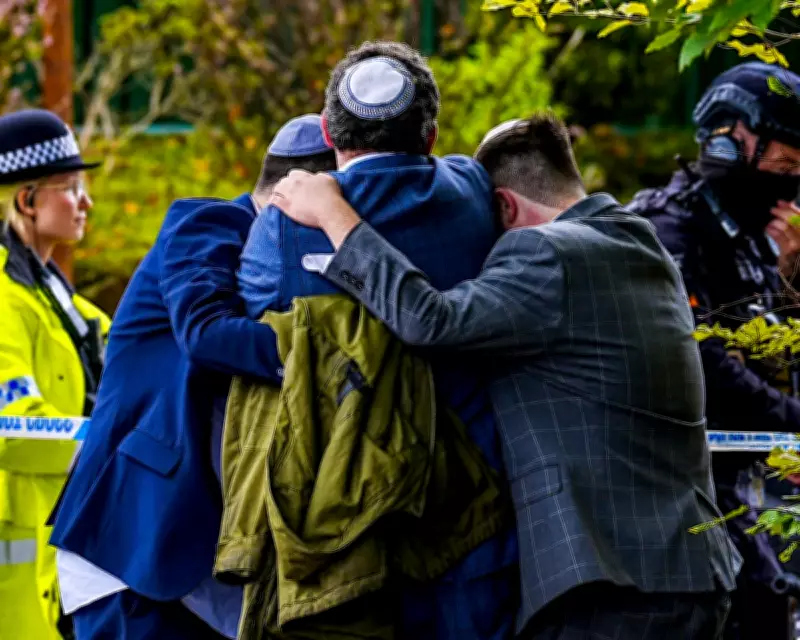
December 2025 witnessed a harrowing assault on a synagogue in Manchester, where members of the Jewish community faced violence, captured in a photograph by Peter Byrne. This event is part of a broader pattern of aggression. In March, authorities arrested four men in London and Hertfordshire for allegedly gathering intelligence on Jewish targets, including synagogues and individuals.
Simultaneously, gunmen targeted three synagogues in Toronto, while a bomb struck a house of worship in Liège. The attack on Temple Israel in Michigan involved a gunman driving an explosive-laden car into the building before opening fire, endangering over a hundred children in an on-site school. Subsequent days saw arrests in Rotterdam for a device explosion outside a synagogue and a bombing at a Jewish school in Amsterdam.

Rhetoric Fuels Dangerous Conspiracies
Public discourse has exacerbated tensions, with figures like Nigel Farage of Reform UK promoting antisemitic tropes. In a paid video, Farage referenced secret societies such as the Bilderbergers and Rothschilds, alongside George Soros, echoing long-debunked conspiracy theories. Similarly, a GB News pundit mischaracterized the Michigan synagogue as an "Israeli temple," implying it was a legitimate target due to perceived alignment with Israel.
In the United States, Donald Trump's former counter-terrorism strategist, Joe Kent, resigned, alleging that Israel manipulated the U.S. into conflict with Iran—a claim rooted in antisemitic narratives. These statements, from influential voices, normalize hatred and ignore historical facts, such as Israel's opposition to the Iraq war.
Impact on Jewish Communities and Misguided Responses
Jewish communities now grapple with unprecedented levels of antisemitism, validated by statistical data and personal experiences. The threat is palpable, with incidents ranging from violent assaults to vandalism, such as bricks thrown through windows of Jewish shops in London adorned with blood-red graffiti.
Alarmingly, some progressive groups and anti-war activists have responded with indifference or justification, framing attacks as opposition to Israel rather than antisemitism. For instance, a social justice advocate criticized the police response to the Michigan attack, accusing Jews of "power & privilege," while others at rallies display Iranian regime flags, despite its record of targeting Jewish sites.
The Fallacy of Anti-Zionism as Justification
Many attempt to rebrand antisemitic violence as "anti-Zionist," but this distinction is often meaningless to victims. Zionism, for most Jews, signifies belief in Israel's right to exist as a refuge, not endorsement of specific government policies. Attacks on synagogues or businesses do not become acceptable if linked to Zionism, just as violence against U.S. supporters would not be condoned in response to American foreign actions.
This pattern uniquely affects Jewish diaspora communities. Unlike other groups, such as Russian Orthodox churches amid tensions with Vladimir Putin, Jewish institutions require constant security. The exception highlights a deep-seated prejudice that transcends political disagreements.
A Call for Empathy and Action
As Jonathan Freedland notes, Jews perceive these attacks as echoes of a deadly past, thought to be behind them. The sound of breaking glass or gunfire evokes historical persecution, demanding urgent attention from allies and policymakers. Combating this violence requires recognizing antisemitism in all its forms and protecting vulnerable communities from harm.