Andy Burnham's Arrival at Westminster Signals a New Labour Era
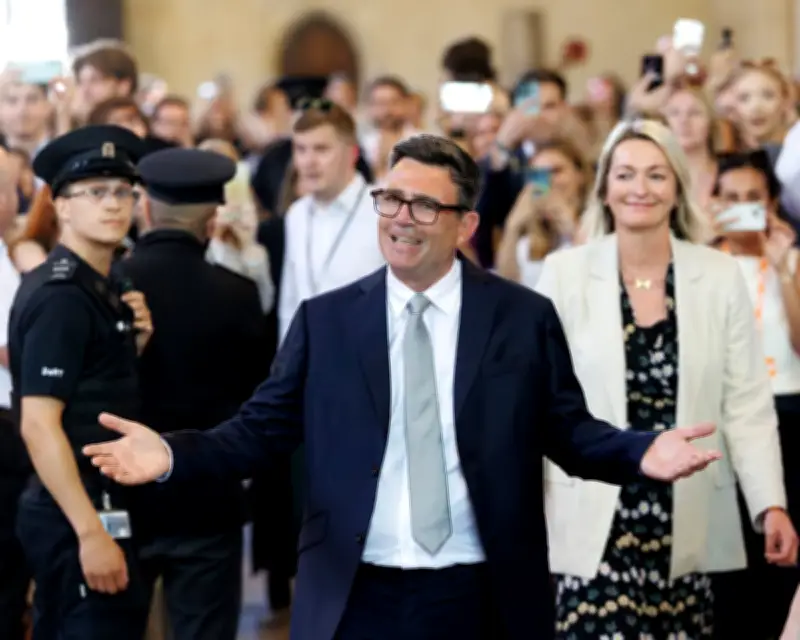
Andy Burnham, the newly elected MP for Makerfield, arrived at Westminster on Monday to take his seat, hours after Sir Keir Starmer stepped down as Labour leader. The Guardian's editorial argues that political careers often end when circumstances demand qualities a politician cannot supply, a fate that seems especially true for Starmer. Burnham's entrance was met with enthusiasm from MPs who regard his ascent as inevitable, though one Tory MP jokingly shouted “he’s not the messiah,” capturing a mood of relief mixed with perhaps unrealistic hope.
Starmer's Achievements and Limitations
Sir Keir Starmer's achievements were real: he won a large parliamentary majority in 2024, provided more cash for the NHS, and was steadfast in his support of Ukraine. He restored a measure of seriousness after years of Tory psychodrama. However, the 2024 victory was more brittle than it seemed. Labour’s vote actually fell from 2019, and Nigel Farage’s decision to stand candidates fractured rightwing votes. Starmer won power but did not change the political weather. His problem was that he offered incremental repair when the country wanted a moral vision. He could not explain what had gone wrong, who had benefited, or what needed to change.
Burnham's Stronger Grasp of Grievances
Burnham has a stronger grasp of the grievances that underpin politics. His enemies are legible, and his story is simple enough for voters to repeat: Britain worked better before privatisation; London has taken too much power for itself; communities have been ripped off; public control can restore fairness and pride. Reports that Burnham wants to break with Treasury orthodoxy are welcome. Cutting budgets of unprotected departments while waiting for interest rates to fall is not a strategy; it is drift.

The Productive State: A Policy Blueprint
The influential thinktank Compass, close to Burnham, published a policy paper – The Productive State – on Monday. The authors, Mathew Lawrence and Alex Williams, argue that the state should lower the cost of essentials through public investment, ownership, and coordination of key services so that real disposable income rises without relying endlessly on state subsidies. They propose that energy and water should be placed under national public corporations, while housing and transport would be organised at the city-region scale, with care and local services run through municipal providers. The political attraction of such a programme is obvious: it links the cost of living, growth, fiscal plausibility, and public control in a way that mirrors Burnham’s rhetoric. It also gives him the machinery of civic pride and regional renewal.
The Path to Leadership and Scrutiny
No other MP looks able to get the 81 nominations required to enter the Labour leadership race. If Burnham is to become prime minister without a contest, he should seek the scrutiny that a contest would otherwise provide. A lengthy session before parliament’s liaison committee, as suggested by the veteran broadcaster Michael Crick, would be a good place to start. The public will not reward Labour for creating a new model of the state. They will reward it for making life cheaper, easier, and more secure. Burnham’s politics has offered voters a compelling diagnosis of what has gone wrong in Britain. Unlike Starmer, he has a story. The question is whether it has a convincing ending.