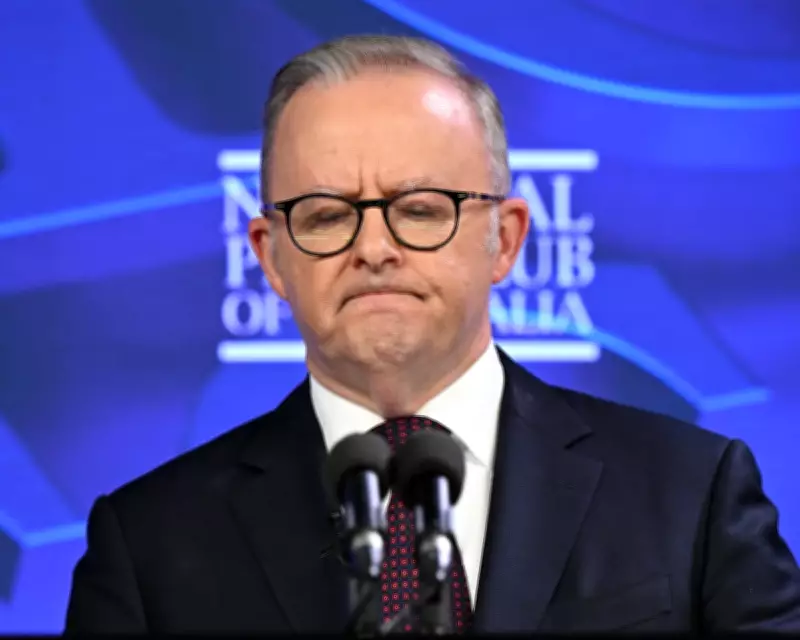
Albanese Faces Pressure to Clarify Australia's Position on Iran War
In the turbulent era of Donald Trump's presidency, Australian voters are demanding more than the typical political rhetoric from Prime Minister Anthony Albanese and the Labor Party. Instead of what critics label as cynical jibber-jabber, there is a growing expectation for clear and nuanced explanations of Australia's stance on the ongoing war in Iran. This call for transparency comes as Admiral David Johnston, Australia's chief of defence, demonstrates how to deliver difficult messages with straightforwardness.
Defence Chief Sets a Standard for Clarity
Admiral David Johnston, with nearly 50 years of military service, recently addressed journalists in Canberra ahead of the release of a new national defence strategy. Reflecting on his experience, including handling media during sensitive incidents like unintended civilian casualties in Iraq, Johnston provided a masterclass in communication. He explained the complex calculations behind Australia's strategic decisions, particularly as Trump wages an unpopular war and criticizes allies like Australia for insufficient support.
Johnston emphasized that Australia is prioritizing its presence in the Indo-Pacific region over more active involvement in the Gulf, noting that China is closely monitoring the US's military redeployments. Without resorting to weasel words, he expressed confidence in Australia's ability to deploy a ship to the Strait of Hormuz if needed, but questioned the strategic wisdom of such a move. This approach stands in stark contrast to the often vague or evasive language from politicians.
Labor's Response and Missed Opportunities
While Labor has insisted that the White House only requested a limited defensive deployment of the E-7 Wedgetail aircraft to the United Arab Emirates, Johnston offered a more expansive view. He detailed how the Wedgetail is collecting crucial intelligence on airborne threats in the Gulf, with crews carefully filtering information to avoid contributing to offensive operations by the US and Israel. Defence Minister Richard Marles later cited Johnston's insights to explain Australia's focus on the Indo-Pacific, highlighting the effectiveness of clear communication.
However, Prime Minister Albanese has been criticized for his cautious nature, often following others' leads on sensitive topics. For instance, when asked about the extension of the Wedgetail deployment, he provided minimal explanation, stating only that it would stay in the region for a period of time. Similarly, his initial response to war crimes charges against decorated soldier Ben Roberts-Smith was terse, deferring to the courts, while Australian Federal Police Commissioner Krissy Barrett offered a more supportive and transparent statement.
The Need for Transparency in Defence
Defence in Canberra is not known for transparency, with bureaucrats often reluctant to provide straightforward information. A recent move to end an annual report on delays and cost blowouts in major defence projects, which has highlighted about $80 billion in projects running 30 years behind schedule, has sparked controversy and may be overturned by the Senate. This anti-transparency trend underscores the importance of leaders like Johnston who speak clearly and informatively.
As the world grapples with the consequences of Trump's decisions, there is a pressing need for the Australian government to emulate Johnston's approach. By speaking more clearly and more often, Albanese and his team can better serve voters and navigate the complexities of global conflicts. The lessons from this week's events suggest that clarity, not evasion, should be the cornerstone of Australia's foreign policy communication.