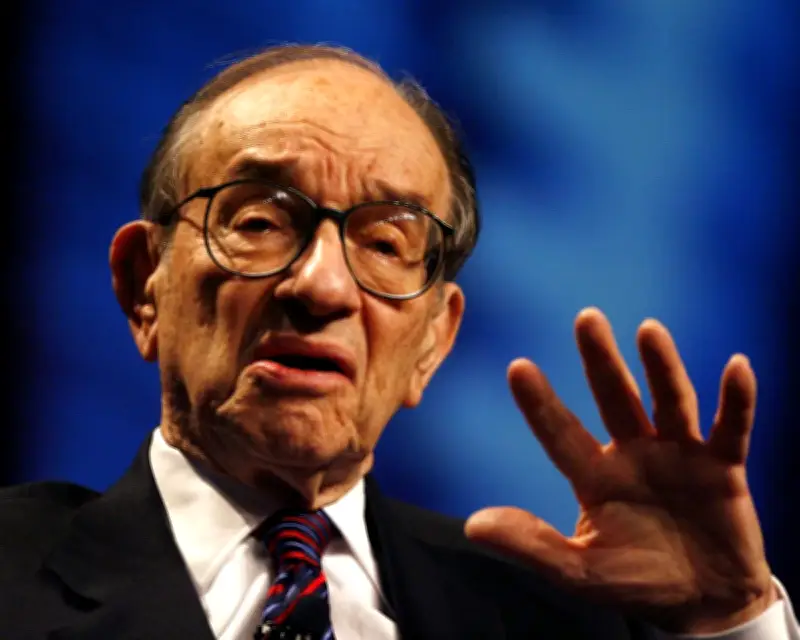
Alan Greenspan, the former chairman of the US Federal Reserve who was once celebrated as a maestro of economic policy but whose legacy was tarnished by the 2008 financial crisis, has died at the age of 100. He served as Fed chair from 1987 to 2006, overseeing a period of economic boom and crisis.
Early life and career
Born in New York in 1926, Greenspan grew up during the Great Depression. His parents divorced soon after his birth, and he lived with his mother and grandparents in Washington Heights. He studied clarinet and saxophone at Juilliard and played in a swing band before earning degrees in economics from New York University.
Rise to prominence
Greenspan entered public service as an adviser to President Richard Nixon and later chaired the Council of Economic Advisers under President Gerald Ford. President Ronald Reagan appointed him Fed chair in 1987. Within months, he faced the Black Monday crash, guiding the Fed to stabilize markets. His reputation grew during the 1990s boom, and he was praised for handling the 1997 Asian financial crisis and the aftermath of the 9/11 attacks.

Criticism and legacy
The 2008 financial crisis led to a reevaluation of Greenspan's legacy. A congressional commission found that his support for deregulation contributed to the crisis. In 2008, he admitted to a "flaw" in his ideology, saying he had been "partially" wrong about self-regulation. Despite his free-market views, he intervened as Fed chair, including supporting bailouts.
Personal life
Greenspan was married to artist Joan Mitchell briefly in the 1950s and later to NBC journalist Andrea Mitchell in 1997. He wrote several books, including his memoir The Age of Turbulence (2007). He received an honorary knighthood in 2002.