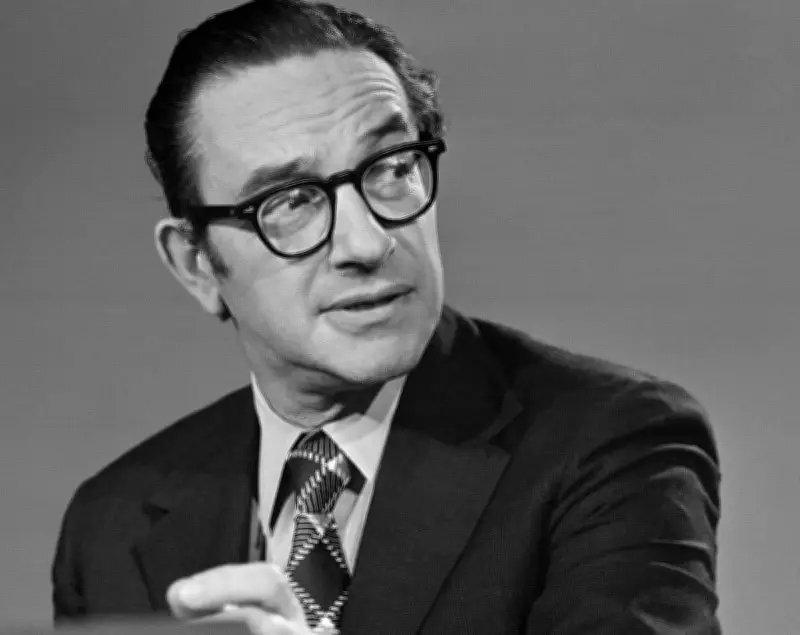
Alan Greenspan has died at the age of 100. The former Federal Reserve chair was a smart guy – but he had a huge blind spot. Here’s what I wish I’d said to him, writes Robert Reich.
The most powerful person in the US
When Greenspan chaired the Federal Reserve for more than 18 years, from 11 August 1987 to 31 January 2006, he not only ran the US (and most of the world’s) economy but was also in many ways the most powerful person in the US. He maintained an iron grip over the Fed and almost singlehandedly decided on interest rates.
He essentially fired George HW Bush by raising interest rates so high that the economy took a dive, and voters blamed Bush. This convinced Bill Clinton to reduce the federal budget deficit, destroying much of the agenda Clinton ran on. As Reich wrote in his memoir, Locked in the Cabinet: “Greenspan has the most important grip in town: Bill’s balls, in the palm of his hand.”

Responsibility for the 2008 crisis
If any single person was responsible for the financial crisis of 2008, it was Greenspan. That crisis – the worst collapse since 1929, leading to the worst recession in decades, with millions losing jobs, savings, and homes – resulted from the deregulation of Wall Street that Greenspan advocated.
Greenspan pushed Clinton and Congress to repeal the Glass-Steagall Act, which since the 1930s had separated investment banking from commercial banking, preventing banks from gambling with personal savings. He also argued vigorously against regulating derivatives – essentially, financial bets on financial bets – that proved to be weapons of mass financial destruction.
Greenspan's acknowledgment
Greenspan finally acknowledged that the crisis caused him to rethink his free-market ideology. “I have found a flaw,” he told a congressional committee. “I made a mistake in presuming that the self-interest of organizations, specifically banks and others, were such that they were best capable of protecting their own shareholders and their equity in the firms … I was shocked.”
Reich comments: “Shocked? Shocked that the free market would succumb to greed, self-dealing, betting and fraud? Shocked that decades of deregulation of Wall Street would plunge the country and the world into crisis? Please.”
A missed breakfast conversation
Near the start of the Clinton presidency, Reich realized Greenspan was the Darth Vader of the American economy. He had the opportunity to confront him when Greenspan invited him to breakfast. Greenspan likely wanted to ensure Clinton would reappoint him and assumed Reich had Clinton’s ear on economic policy.
They had never met before, but Reich instinctively knew him. The breakfast was pleasant, but Greenspan deftly avoided talking about the deficit, inflation, or public investment. Reich left feeling pampered and charmed, never asking the questions he intended.
Here’s a version of the conversation Reich had anticipated. In it, Greenspan admits he is driven to stamp out inflation even at the cost of high unemployment, slow growth, and cuts to programs for the poor. He prioritizes the interests of bond traders and lenders over working people. When challenged, he asserts that the president will reappoint him because he needs Wall Street’s confidence, which only Greenspan can deliver.
The imagined exchange ends with Reich calling Greenspan a “robber baron” and Greenspan retorting, “Go suck on a pickle, you Bolshevik dwarf.”
Robert Reich, a former US secretary of labor, is a professor of public policy emeritus at the University of California, Berkeley. He is a Guardian US columnist and his newsletter is at robertreich.substack.com. His new book, Coming Up Short: A Memoir of My America, is out now.