
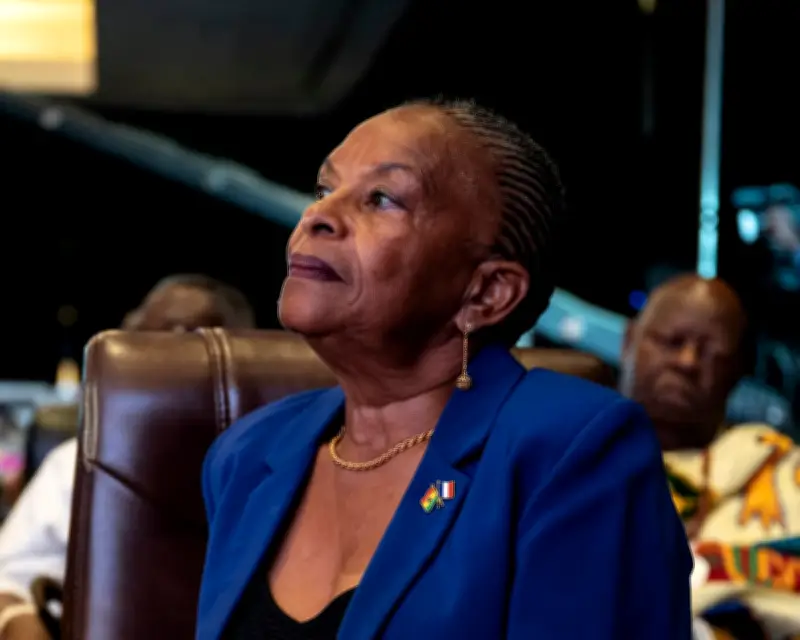
European nations are starting to pay attention after a landmark UN resolution on reparations for slavery, but the recent Accra summit revealed a stark gap between global demands and European offers. From 16 to 19 June, representatives from 80 countries, multilateral institutions and civil society gathered in Ghana to define the next chapter of reparative justice, following the UN resolution of 25 March recognising the trafficking of enslaved Africans and racialised chattel enslavement as crimes against humanity. For the first time, France, Germany, the Netherlands and Denmark attended.
European presence marks a political shift but ambitions fall short
Liliane Umubyeyi, co-founder and executive director of African Futures Lab, noted: "There is no doubt that the presence of these four European countries marked a political shift. But their ambitions fell dramatically short of the moment." France offered the clearest sign of change. President Emmanuel Macron acknowledged the UN resolution "loud and clear" and announced an international scientific commission with Ghana to develop recommendations on reparations through historical truth telling. The Netherlands and Germany reiterated existing commitments on restitution of looted cultural heritage. Denmark limited its contribution to support for restoring Fort Osu, a site through which about 100,000 enslaved Africans were trafficked to Danish colonies. The UK, Portugal and Spain, which also played significant roles in slavery, were absent.
Global reparative justice framework calls for systemic transformation
The Global Reparative Justice Framework adopted in Accra is not limited to symbolic remembrance or returning stolen artefacts. It links slavery and colonialism to today's racial, economic, financial, climatic, technological and political inequalities, arguing that justice requires transforming institutions that reproduce these inequalities. Europe, by contrast, largely offered memorialisation and heritage restoration. Macron's intervention was met with scepticism. Critics noted France has yet to dismantle structures defining its neocolonial relationship with Africa, prioritising French financial, political and military interests over African rights and aspirations.
Europe's existential contradiction and the path forward
Umubyeyi argued that the international order securing European dominance is eroding, with the US sidelining Europe in major global affairs. "Whether in the context of the Russia-Ukraine war, the genocide in Gaza, or the recent war of aggression carried out by the US and Israel in Iran, Europe has struggled to make its influence felt in a world order increasingly defined by raw power, championed by Trump and Putin." She emphasised that another vision is emerging: an international order grounded in reparative justice. Europe has sought to present itself as a champion of human rights and democracy while refusing to fully acknowledge that much of its wealth and standing were built on five centuries of violence, conquest and domination. "That fundamental contradiction can no longer be managed through carefully worded statements and symbolic gestures." As former French justice minister Christiane Taubira argued, dialogue on reparations demands sincerity and courage. Umubyeyi expressed hope that such courage and sincerity will guide European governments when they return to the UN general assembly in September for further discussions on the global framework for reparative justice.




