
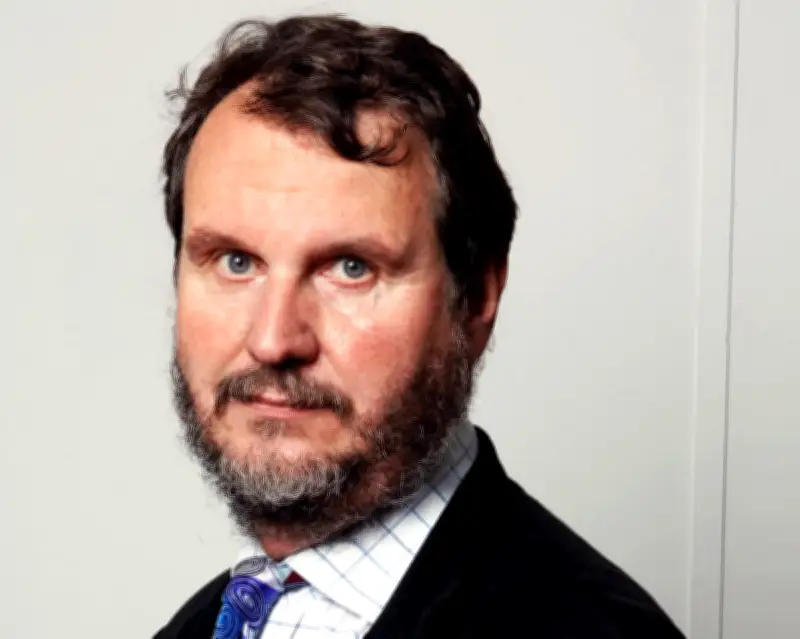
David Hencke, the award-winning investigative journalist whose scoops for the Guardian brought down government ministers, has died from liver cancer aged 79. His byline appeared on many of the paper's most significant stories during his 33-year career.
Key investigations that shook Westminster
In 1994, Hencke was instrumental in exposing the cash-for-questions scandal, in which Conservative MPs Neil Hamilton and Tim Smith accepted payments from Harrods owner Mohamed Al Fayed to ask parliamentary questions. The revelations led to their resignations and the collapse of lobbyist Ian Greer's political consultancy. Hamilton and Greer abandoned a libel action against the Guardian, which ran the front-page headline "A Liar and a Cheat" with Hencke's byline alongside David Leigh and David Pallister.
Four years later, Hencke broke the story of a £373,000 undisclosed loan from Treasury colleague Geoffrey Robinson to Peter Mandelson, enabling Mandelson to buy a house in Notting Hill. This triggered Mandelson's first resignation as a minister. The scoop earned Hencke the scoop of the year award in 1998.
Investigative approach and character
Hencke was known as an equal opportunities investigator, driven by the thrill of the chase rather than political bias. Norman Tebbit, a former Conservative minister, once told him: "You're the sort of chap who looks for information by hunting through people's bins. But I don't mind because you're not biased: you don't care whose bins you're looking through." In reality, Hencke meticulously scrutinised official documents and leaked reports from a wide network of political contacts, including Labour cabinet figures and Tories like John Major.
His integrity allowed him to maintain friendships even as he exposed wrongdoing. Sir John Bourn, the government's auditor general and a frequent leaker, was forced to resign after Hencke revealed his lavish travel expenses. Former Tory cabinet minister Tony Newton ruefully acknowledged: "There's always a grain of truth in a Hencke story."
Early life and career
Born in Streatham, south London, on 26 April 1947, Hencke was the only child of Enid (née Rose) and Charles Hencke. His father was a manufacturers' agent and textile importer of German Christian descent; his mother's family was Jewish from Lithuania. After failing the 11-plus exam, he attended the all-boys Tulse Hill comprehensive and later became one of the first students at Warwick University, where he studied history and politics and edited the subversive newspaper Giblet.
In his second year, he met Margaret Langrick, daughter of Nottinghamshire miners, who suggested journalism as a career and moved him leftwards politically. After graduating, he became a trainee at the Northamptonshire Evening Telegraph group. His first award-winning scoop revealed secret plans for Wellingborough's ring road.
He moved to the Western Mail in Cardiff and then to London in 1973 to work for the Times Higher Education Supplement, where he leaked Prime Minister James Callaghan's major speech on education calling for a national curriculum. This brought him to the attention of the Guardian, and he was appointed a general reporter in September 1976 by editor Peter Preston.
Westminster years and later work
Hencke became planning correspondent in 1978 and social services correspondent in 1982 before Preston gave him a Westminster brief in 1986 with a roving remit. His investigations included the exposure of cabinet minister Jonathan Aitken's covert links with a Saudi arms dealer, which led to Aitken's imprisonment for perjury.
After retiring from the Guardian in 2009, he continued investigative work for Tribune magazine and the Exaro website. In 2019, he was successfully sued by former Liberal Democrat MP John Hemming over a defamatory article. He filed his last stories the day he entered hospital earlier this month and gave his last broadcast interview from a wheelchair a fortnight before his death.
Personal life
Hencke married Margaret in 1969 and nursed her devotedly after she suffered a stroke, including taking her on a round-the-world cruise shortly before her death in 2025. The experience led him to report on inadequate wheelchair provision on cruise ships. They had a daughter, Anne, and five grandchildren: Tegan, Leon, Ryan, Daryan and Atayna. Hencke died on 26 June 2026.




