
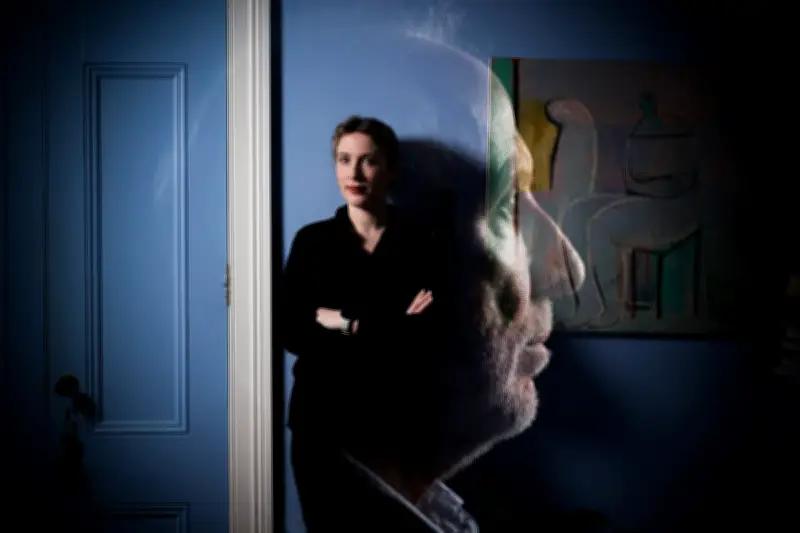
Psychologists and authors Ross G Menzies and Rachel E Menzies have published a new book, Being: Why it’s harder to be human than a hamster or a herring, in which they argue that accepting our cosmic insignificance and the possibility that we lack free will can help humans navigate the challenges of existence.
Ross Menzies, a renowned psychologist, notes that a century and a half ago, average life expectancy was in the 30s. 'So how can I whinge if I develop something today and get told that I’ll be dead by Christmas?' he jokes. 'If I can see that I am just one of the 107 billion that have lived, and that I will go to dust like all those before me, it is easier to face the difficult times that we are in.' He emphasizes that 'diminishing the self is one of the most important things that we can do.'
The illusion of free will
The Menzies propose that surrendering the belief in free will can reduce pain. 'Once you accept the fact that you are made up of atomic particles that must act in a determined way, that there are distributed causes that are playing out across time, then it is far easier to be gentler to the self and to others,' Ross says. This aligns with Stoic philosophy, which held that we are part of an interconnected universe with predetermined laws.
Rachel Menzies, known for her work on death anxiety, adds: 'I think Stoicism often gets a bad rap.' She explains that Stoic philosophers were actively engaged in society as politicians and senators, recognizing what was within their control and what wasn't. The book draws on thinkers like Aaron Beck and Heidegger, as well as examples from ancient and contemporary culture.
The inner voice and human suffering
The book opens by exploring the inner voice, a distinctive human trait that often provides harmful and destructive narratives. 'Early behavioural therapy was trying to show people that the inner voice was flawed,' Ross says. The Menzies argue that this voice is shaped by factors beyond our control, such as family conditioning and cultural messages.
Rachel notes that 'something as simple as the order in which we are born, or growing up with parents who are warm and supportive versus critical and unpredictable, continues to influence mental health and romantic relationship decades into the future.' Ross adds that poor attachment in early life 'predicts premature death from all causes.'
Social connection in a lonely world
The Menzies advocate for social prescribing—meaningful group activities like community gardening or choir—to address mental and physical ailments. 'One of our central needs is to connect with other people. We need love, we need a feeling of belonging,' Rachel says. However, she acknowledges the paradox: 'We will never be able to fundamentally connect with another person because they live behind a different set of eyes.'
Ross concludes: 'It is an extraordinary win to have existence and be sensate.' The book aims to remind readers that they are part of a universe, joined to other humans. Despite the difficulties, Rachel finds optimism in the fact that 'we keep trying.'




