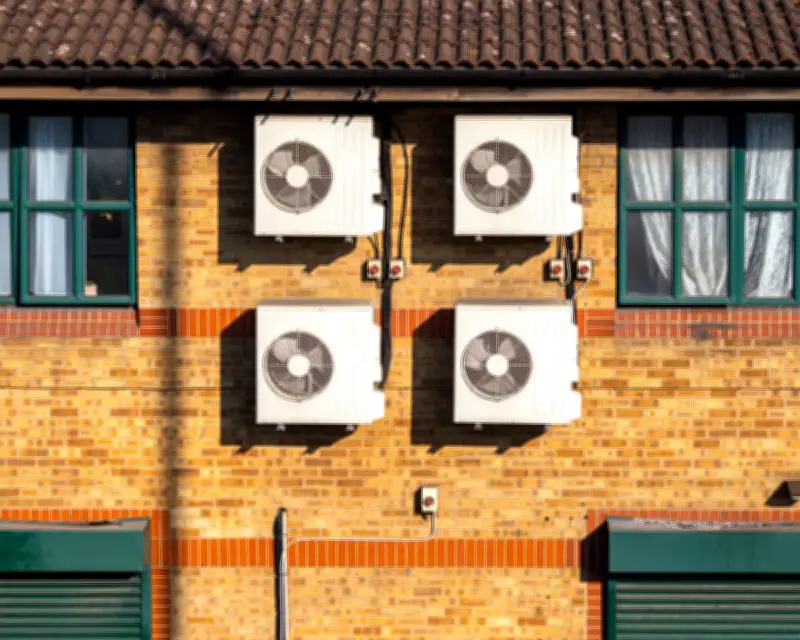
The Guardian has published an editorial arguing that Britain's homes are increasingly uninhabitable due to rising temperatures, with no national strategy for dealing with oppressive heat. The piece cites geographer Sam Johnson-Schlee's book Hot House, which warns that trust in homes as safe havens is under threat. This summer, high temperatures have forced makeshift solutions like keeping curtains drawn, placing foil over windows, or installing air conditioning for those who can afford it.
Councils failing to mandate cooling
Planning experts warn that only about half of councils require new buildings to include cooling strategies, potentially turning many homes into 'death traps' as temperatures rise. Britain's historically mild climate allowed developers to build without insulation, relying on coal for heating. Consequently, homes are drafty in winter and sweltering in summer, lacking shutters and shaded communal spaces common in Mediterranean climates.
Victorian design flaws
Unlike Barcelona's masterplanner Ildefons Cerdà, who designed housing blocks with cool courtyards and chamfered edges for breezes, Victorian builders erected terrace houses without cross-ventilation, ignoring solar orientation. The editorial calls for a overdue new approach, noting that insulation would help keep properties cool, but schemes to encourage it have floundered. The green homes grant, launched in 2020 by Boris Johnson, collapsed after six months due to an impossible timetable and rushed design, according to the public accounts committee.

Air conditioning surge
With no national strategy, homeowners have turned to air conditioning. There are now twice as many air-conditioned homes in Britain as three years ago. While useful, air conditioning should be part of a broader cooling strategy, as mass adoption raises urban temperatures by expelling hot air, worsening conditions for those without it.
London's heat-ready plan
Mayor Sadiq Khan's heat-ready plan offers a welcome alternative, focusing on London's distinct heat island effect. It proposes retrofitting homes with shutters, installing air conditioning in schools and public buildings, planting more trees for shade, and providing more swimming spots. The editorial praises this as a sensible roadmap for other cities.
Political and fiscal challenges
However, Khan's plan collides with a fiscal climate hostile to public investment, requiring billions with no clear financial returns. Prime Minister Andy Burnham has remained quiet on the climate crisis, despite his place-based vision. The editorial urges that the terrifying impact of extreme heat on homes should make this an urgent priority.