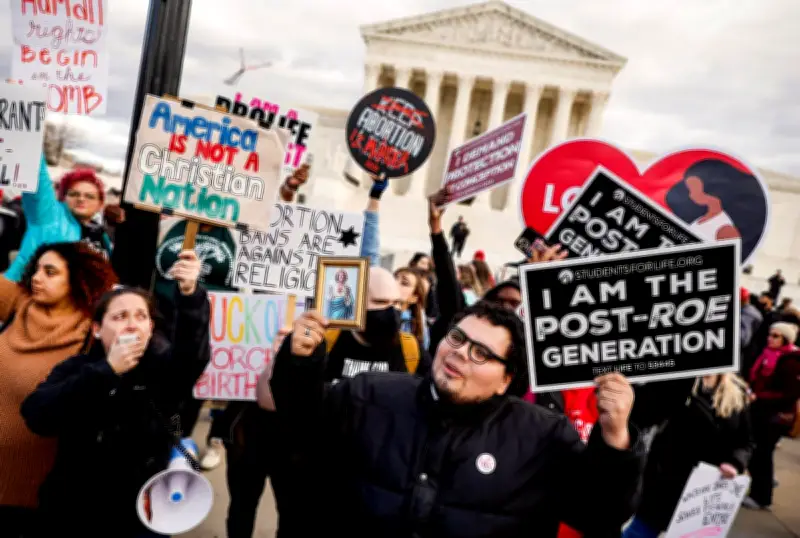
The Trump administration is placing religious freedom at the forefront of its health policies, a shift that critics argue could reshape reproductive health, LGBTQ+ healthcare, and vaccine policy. The US Department of Health and Human Services (HHS) announced on Sunday a reorganization of its Office for Civil Rights, elevating conscience and religious freedom as top priorities. The US Department of Justice (DOJ) issued a report on Friday focusing on religious liberty, with multiple references to abortion, vaccines, and gender-affirming care.
HHS Reorganization and Religious Freedom
The reorganized HHS office will require federal agencies, state and local governments, healthcare providers, and health plans to emphasize “protecting the free exercise of religion and conscience and the right to be free from coercion in HHS-conducted or funded programs,” according to a public notice. Dorit Reiss, a professor at UC Law San Francisco, noted that this move “privileges a conservative form of Christianity and, for example, protect discrimination against LGBTQ people.” She added that the administration is likely to use its funding authority to pressure states, local governments, and private groups.
An HHS official stated that the new structure is focused on “protecting conscience rights, addressing race-based discrimination in a color-blind manner, combating antisemitism and anti-Christian bias, and restoring biological truth.”

Critics Warn of Impact on Reproductive Health and LGBTQ+ Care
Liz Sepper, a law professor at the University of Texas at Austin, argued that the move is framed as religious liberty but primarily targets reproductive healthcare. “Most of the religious conscience statutes the office says it is planning to enforce are laws about refusing reproductive healthcare to patients and to beneficiaries of insurance,” she said. Sepper highlighted that the most common violation of the church amendment, one of the laws mentioned in the HHS reorganization, is discrimination against abortion providers. “I would guarantee that we will not see the Trump administration’s HHS go to work to stop that kind of discrimination,” she added.
Statutes allowing hospitals and individual providers to refuse certain healthcare could be broadly interpreted to include politicized areas like vaccines or gender-affirming care, Sepper said. The DOJ report took aim at vaccine mandates, quoting anti-vaccine activists and parents opposed to childhood vaccinations. Reiss noted that such interventions are not traditional for the federal government, as school vaccine requirements are typically set at the state level.
Potential New Rules and Legal Implications
The Trump administration is expected to release a new rule on religious conscience. Sepper said these moves are “at least preparing the administrative functions for when the rule comes out.” The US Supreme Court, in its opinion on the Emergency Medical Treatment and Labor Act (EMTALA), “kind of punted” on Idaho’s abortion ban and its conflict with EMTALA, suggesting providers could have a conscience right to refuse emergency medical care. “I think we could see the administration take that perspective,” Sepper said.
Sepper emphasized that the conscience laws HHS enforces are usually focused on providers, not patients. “That really means they’re focused on the rights of a very small segment of the population, and the rights of those providers to refuse medical care come into conflict with the rights and interests of the American people to receive medical care that’s nondiscriminatory or that doesn’t impose someone else’s religion on them,” she said.
Shift in Civil Rights Priorities
The HHS civil rights office has downplayed areas of discrimination that were previously top priorities, such as discrimination against disabled people and transgender patients. “The question becomes: Are you dedicating lots of resources to enforcement of religious refusal laws in the place of enforcement of national origin discrimination protections, for instance, or translation services or accommodations for disability?” Sepper asked.