The Trump administration has issued a directive requiring federally funded health programs to adopt new priorities, including a focus on 'parental authority' in education and a shift away from proven overdose-prevention strategies such as harm reduction. Experts warn this move signals heightened political interference in public health and could worsen the opioid overdose crisis.
New CDC Priorities Spark Concerns
The U.S. Centers for Disease Control and Prevention (CDC) informed state, territorial, tribal, and local health programs on Wednesday that they must agree to a list of new priorities within five business days, or by July 1. The notice did not originate from CDC program staff, who were reportedly unaware of the requirement, according to a source familiar with the memo. It remains unclear whether all programs received the notice, but those focused on immunizations, HIV, hepatitis, and tobacco did.
While the requirement is not explicitly tied to funding, the grant note references a previous CDC statement that funding may be canceled if programs fail to comply with the agency's terms. Emily Hilliard, a spokesperson for the U.S. Department of Health and Human Services (HHS), stated that 'grantees were directed to review their work plans and ensure their activities align with the Department’s priorities and produce meaningful public health outcomes.'

Impact on Overdose Prevention and Vaccine Mandates
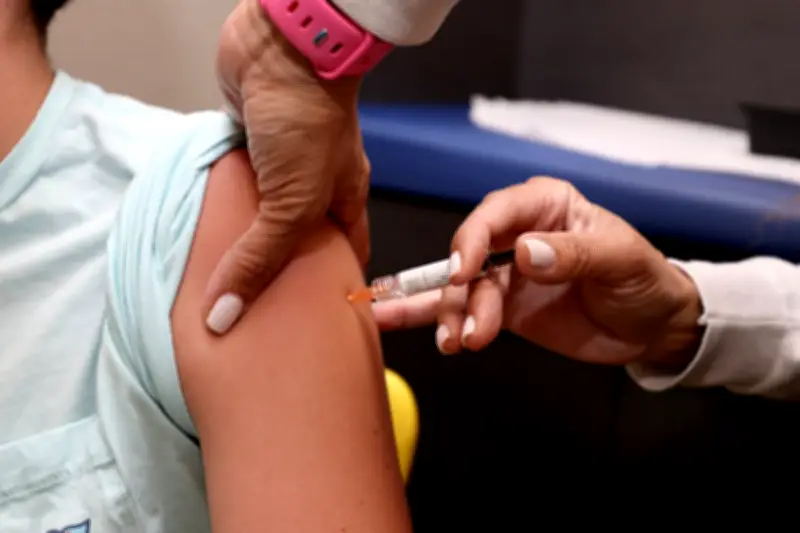
The new priorities include 'parental authority' and policies giving parents 'greater control over their children’s education,' according to a copy of the memo obtained by the Guardian. This could signal an attack on vaccination requirements for school attendance, which are set at the state and local levels. The Trump administration, led by HHS Secretary Robert F. Kennedy Jr., a longtime vaccine critic, has already signaled a focus on ending these mandates.
Dorit Reiss, a vaccines expert and professor at UC Law San Francisco, warned that the requirements may pressure states to reconsider vaccine mandates. 'It might be a next step in the fight against vaccines and vaccine mandates,' she said. 'Parental control of child education is not in the CDC’s purview, and federal vaccine grants are usually focused on access, not mandates.' Withholding federal funding for state health programs due to vaccine mandates would be 'essentially begging for a lawsuit,' Reiss added, though she noted that 'doesn’t mean they won’t try.'
Harm Reduction Programs Deprioritized
The CDC memo also deprioritizes housing first, harm reduction, and safe consumption programs for substance use—strategies proven to reduce drug overdoses and support individuals with substance use disorder. Nabarun Dasgupta, a street drug researcher and senior scientist at the University of North Carolina at Chapel Hill’s Injury Prevention Research Center, described the move as 'a warm-up' and 'a warning shot,' suggesting it is a 'prelude' to imposing similar restrictions on other federal funding.
'The main thing that harm reduction programs do is bring those people into care and into services that allow them to make those better choices about what they put in their bodies,' Dasgupta said. 'These directives weaken the most critical frontline care of engaging with people who are falling through the cracks.' He highlighted the emergence of medetomidine, a drug adulterant on the East Coast that does not produce a high but can cause heart attacks during withdrawal, representing a significant shift in street drugs. 'This new form of adulterant really is a gamechanger in terms of being able to provide care, and in this exact setting is when you actually need harm reduction more than ever,' he added.
Potential Legal and Public Health Consequences
The CDC is also prioritizing evidence-based programs to reduce homelessness, drug use, and 'public disorder,' though the latter is not defined in the memo. A July 2025 executive order from the White House targeted unstably housed and mentally ill individuals, creating a pathway to criminalize more people, experts have said. Reiss noted that some new policies 'are in tension with public health' and would undermine work, including 'prioritizing parental control over, potentially, children’s health and community health.'

Dasgupta warned that moving away from harm reduction and housing first could lead to increased hospitalizations. 'If we use an abstinence-first model, if we move away from harm reduction, if we move away from housing first, then you’re going to end up filling ICUs and emergency rooms with people in this severe form of withdrawal that they weren’t expecting,' he said. The overdose crisis already saw a record 107,941 known drug overdose deaths in 2022, partly driven by fentanyl.