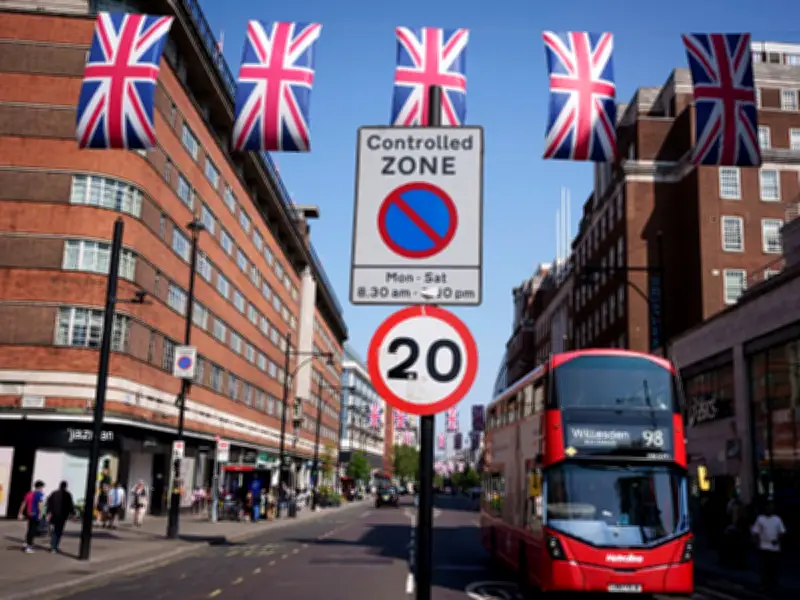
Transport for London's Chief Safety, Health and Environment Officer Lilli Matson has told government ministers they are being too "hesitant" on road safety and should take inspiration from Sadiq Khan's approach to 20mph speed limits.
Matson made the comments to the House of Commons Transport Committee, urging the government to make 20mph the default speed limit in built-up areas across England. She said the Department for Transport's road safety strategy, announced earlier this year, represented a "missed opportunity" by not putting speed reduction at its heart.
London's 20mph rollout and Vision Zero
Over half of London's roads now have 20mph speed limits as part of City Hall's Vision Zero strategy, which aims to eliminate deaths and serious injuries on the transport network by 2041. TfL research shows that fatalities and casualties reduced by 34 per cent on such roads following the implementation of 20mph limits between 1989 and 2013.

Matson told MPs: "In Central London, we made 20mph the default on the main road network in 2020. That has delivered very tangible reductions in people being killed or seriously injured very quickly and changed the feel of the roads for people who want to use them." She added that the government's strategy "did not pull through clearly enough" to put speed reduction at its heart.
Government's current rules and missed opportunity
Under current rules, local authorities and National Highways are responsible for setting speed limits in England, with a default limit of 30mph. Ministers could advise reducing this to 20mph in built-up areas, but have not yet done so. Matson said: "To move forward, you need clear and unequivocal determination you're actually going to do something, which is what we are [doing] at the London level. This strategy is a bit hesitant at the national level, and there is the potential to go further - if you don't do that, you will find people finding reasons not to do it."
Matson urged the government to make 20mph the default, with boroughs needing to "demonstrate why a road is safe even if the speed limit is not the safest option" if they opt for a higher limit. TfL directly controls only the 'Red Routes', about five per cent of London's roads, but provides data analysis, technical guidance, and funding through Local Implementation Plans to help boroughs introduce 20mph limits. Twenty-one of London's 33 local authorities have done so.
Political opposition to 20mph limits
The issue is party political, with critics labelling the policy anti-motorist. In April, the Conservative Party announced they would "end the blanket use of 20mph limits and only use when necessary." Reform UK London Assembly Member Keith Prince told the Local Democracy Reporting Service: "Other than around schools, 20mph zones have been a complete disaster for London. Keeping cars, vans, buses and lorries on the road for longer than they need to be is bad for pollution and bad for London's struggling economy. There is no real-world evidence that 20mph zones are any safer than 30mph. Yet again, it's ideology over fact from our Mayor."
City Hall Conservatives' transport spokesperson Thomas Turrell added: "Sadiq Khan's anti-car road policies are leaving London clogged up as one of the most congested cities in the world. This has caused a collapse in bus passenger numbers. Sadiq Khan and TfL need to stop lecturing and start listening."
Support for 20mph limits
Adrian Berendt, Director and Community Champion for the 20s Plenty for Us organisation, said: "You cannot have a safe system without 20mph as a default." Caroline Russell, Green Party London Assembly Member, told the LDRS: "Every death and serious injury on the road is a tragedy that should not be accepted as inevitable. Wales has shown that ambitious action can make roads safer, with the introduction of 20mph speed limits contributing to a significant reduction in collisions and casualties, including almost 900 fewer people injured on Welsh roads in the year since the change was introduced. We should learn from this progress and have Vision Zero as a national target."

A DfT spokesperson said: "Local authorities are responsible for setting speed limits in their areas, as they know their roads best. Through our new Road Safety Strategy, we are reviewing national guidance on speed limits to help authorities make informed decisions." Officials confirmed there are no plans to introduce a default 20mph limit in England.