An early release scheme for thousands of prisoners paused by Andy Burnham after an outcry from victims could still take place this autumn, despite warnings by probation officers of potential chaos. The prime minister ordered an urgent review into the proposed early release of about 6,000 prisoners, due to begin in September with an initial group of about 700, saying he wanted to “minimise risk to the public” and would not hesitate to make changes.
Prison capacity crisis
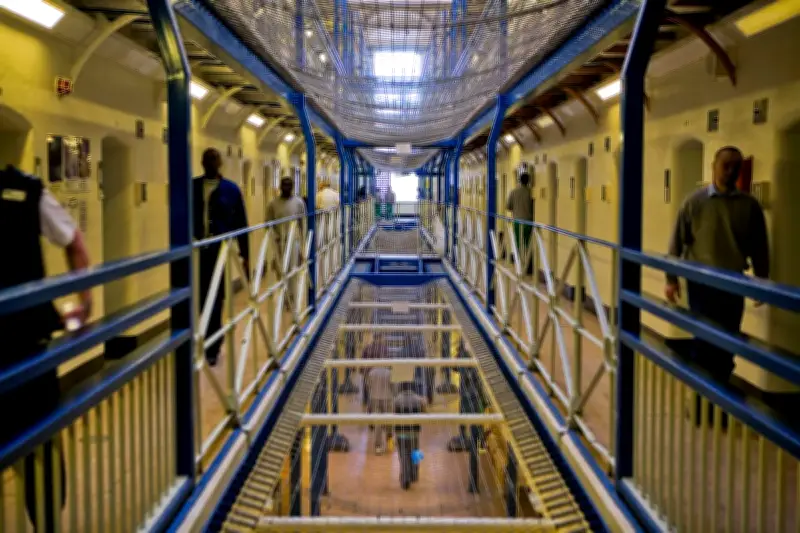
With government officials accepting that the prison system remains near capacity, and no appetite to use alternatives such as police cells beyond emergencies, it is unclear what options exist beyond continuing with the plan, even in a different form. Officials have warned that without the scheme, prisons in England and Wales will run out of capacity by November. The most likely outcome appears to be a tweak to the early release system, with some offenders held back.
Victims groups object
Victims groups had objected to the proposal for 6,000 people to be freed early under the new Sentencing Act, with Debbie Adlam, the mother of the police officer Andrew Harper, saying the proposed inclusion of two of her son’s killers – Jessie Cole and Albert Bowers – was “another letdown” for their family. Burnham confirmed that Henry Long, the main perpetrator, “will not be subject to any early release” under the scheme. After news of the pause emerged, Adlam told ITV News that this was “not enough”. She said: “It’s a good start, and it really is a good basis to begin working on some sensible alternatives and looking at options for going forward, because there’s so many people this affects, it’s not just us.”

Probation union concerns
Probation officers have warned that a “sense of chaos” had descended across the Prison Service, with staff unable to make preparations for the mass release. Tania Bassett, Napo’s national officer, said that after the trade union asked the Prisons Service if staff should continue with preparations for the early release scheme, it was now informing them it has been paused. She said: “Napo’s concern is this will mean probation staff stop doing pre-release work. Whatever the prime minister’s final decision is, he has created a delay as well as confusion amongst the staff tasked with dealing with this. He needs to be more decisive about critical public protection issues and we urge him to treat this situation with the upmost urgency.”
Pre-release preparations
According to the union, preparations for release require probation staff to carry out extensive work that usually takes at least six to eight weeks. This includes reviewing risk assessments, making referrals for accommodation, carrying out home visits, coordinating with victim liaison officers and domestic abuse support officers and developing multi-agency safeguarding plans. It can also take several weeks to ensure that tagging measures are in place before an offender is placed in accommodation. Unless probation staff received “imminent, concrete direction” about who will be considered, established release plans could collapse, a union official said.
Sentencing Act changes
The Sentencing Act 2026 introduced an “earned progression model” that replaces automatic halfway release for prisoners serving standard determinate sentences in England and Wales with a tiered, behaviour-based system. It will allow most prisoners to be released after serving a third of their sentence behind bars rather than 50%, with the rest of their sentence served under strict supervision in the community with the help of electronic tagging. Prisoners serving time for sexual or violent offences where the automatic release stage is set at two-thirds will become eligible for release at the halfway point, provided they have not committed serious breaches of prison rules. This applies to Bowers and Cole, two of Harper’s killers who were jailed for 13 years in 2020 for manslaughter.

Government review
In the latest of a flurry of policy announcements since he took over in No 10 on Monday, Burnham said: “I am working closely with the new justice secretary and have instructed my team to put a pause on the changes that were due to start in September. No prisoners will be let out under this policy until we have conducted an urgent review and done everything we can to minimise risk to the public. Where changes are needed, we will not hesitate to make them.” Alex Norris, the new justice secretary, told reporters on Thursday the government needed “time to get it right”. He said: “We’ve put an important pause on this policy. It gives us a little bit of time to look at this, to make sure we do our best by you.”