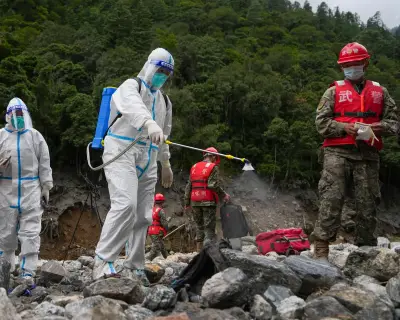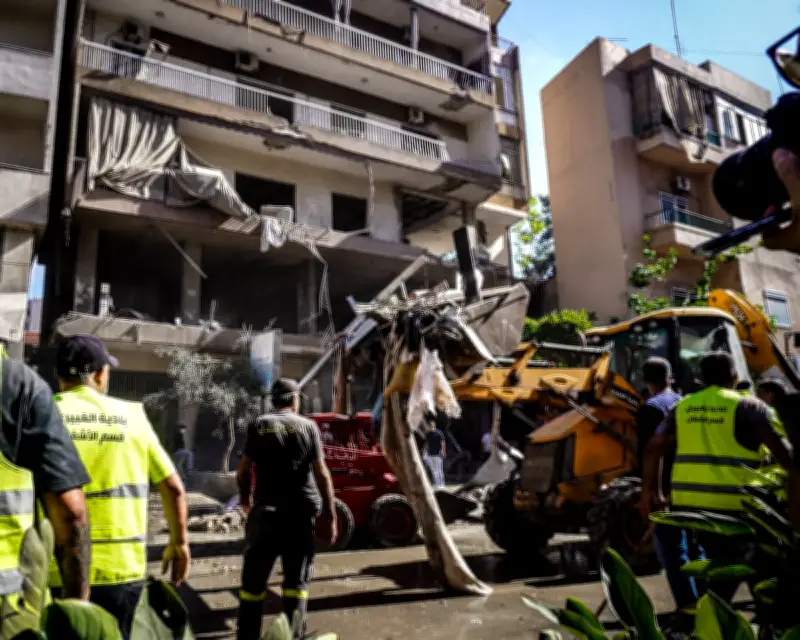
The aftermath of an Israeli strike on Beirut, 14 June 2026. Photograph: Mahmoud Harb/Jna Press/Nexpher/ZUMA Press Wire/Shutterstock
Even if Iran benefits from this deal with Washington, any peace is likely to be temporary
Sina Toossi
The regime has learned it must extract concessions rather than promises from the US, but any permanent deal still depends on ending the war in Lebanon.

To understand why Iran agreed to the memorandum of understanding (MOU) with the United States to end the war, one must first understand how Iranian leaders believe they emerged from the war itself. For Iran’s leadership, this conflict did not begin with military strikes. It was the culmination of a years-long campaign of sanctions, covert operations, assassinations, economic pressure, and efforts to weaken and ultimately overthrow the Islamic Republic. Even episodes of domestic unrest, including the anti-government protests that culminated in the deadly January crackdown, are often understood in Tehran as part of this broader struggle. That worldview has profoundly shaped how Iranian decision-makers interpret both the war and its aftermath.
This perception is critical to understanding the confidence now evident in Tehran. The objectives of the war were hardly a mystery. A week into the war, Donald Trump demanded Iran’s “unconditional surrender”. Both Trump and Benjamin Netanyahu openly called for regime change. The destruction of Iran’s missile capabilities, the dismantling of its regional influence, and the capitulation or collapse of the Islamic Republic were repeatedly presented as desired outcomes. None of those objectives were achieved.
Iran suffered significant damage. It lost senior military commanders, including supreme leader Ayatollah Ali Khamenei, and its economy remains under severe strain. Yet the state survived, its missile and other asymmetric capabilities endured, its social and political cohesion held together, and it demonstrated an ability to exact substantial military, economic and geopolitical costs on its adversaries.
That is the context in which Tehran approached the MOU. For Iran’s leaders, the agreement is an effort to consolidate battlefield gains and lock in an outcome they believe was achieved through resistance. That logic also helps explain the reported structure of the agreement itself.
The central lesson many Iranian officials believe they learned from negotiations with Washington is simple: never trade real concessions for future promises. Much as American hawks often describe their approach to Iran, Tehran’s operative principle today is one of zero trust and verifiable implementation.
Iran was attacked twice by Israel and the US while negotiating with the Trump administration. Before that, it spent years implementing the 2015 nuclear agreement, only to watch the US abandon it. The result is an overwhelming emphasis on sequencing. Tehran wants sanctions relief, oil waivers, access to frozen assets and other tangible measures implemented first. Only afterwards would it pursue negotiations over more significant and difficult-to-reverse concessions, particularly on Iran’s nuclear programme.
The debate now unfolding inside Iran is equally revealing. Contrary to many assumptions, the primary divide is not between supporters and opponents of diplomacy. Even many critics of the memorandum are not rejecting negotiations outright. Rather, the debate centres on what lessons Iran should draw from the war itself.
The dominant segment of Iran’s security-oriented media ecosystem argues that the war fundamentally altered regional perceptions of Iranian power. Before the conflict, they contend, Israel and the US had become accustomed to an Iran that responded cautiously and prioritised strategic patience over direct confrontation. This reinforced a perception of Iran as weak and a “paper tiger”. The war, in their telling, changed that equation. Iran demonstrated both a willingness and an ability to impose meaningful costs on its adversaries.
The concern among many critics of the agreement is not that diplomacy occurs, but that the way it is pursued could gradually erode the leverage created by the war. Their argument is less “do not negotiate” than “do not negotiate in a way that conveys weakness and invites more pressure”.

This is why Lebanon has become so important. Iranian officials have repeatedly emphasised that ending the war in Lebanon is not a peripheral component of the memorandum but one of its central pillars. For Tehran, Lebanon has become the principal test of whether Washington can actually deliver on commitments made during negotiations.
The Israeli strike on Beirut on the day of the MOU brought that question into sharp relief. Many Iranian commentators interpreted the strike primarily as a test from both the US and Israel: would Iran, now that it was nearing an agreement with Washington, revert to its prewar pattern of restraint, or insist that diplomacy and more assertive Iranian actions proceed in tandem?
If Israel can continue military operations in Lebanon while negotiations move forward, what confidence should Iran have that other provisions of the agreement will ultimately be respected? These questions now sit at the centre of Iran’s internal debate.
Ultimately, the prevailing view among Iran’s decision-makers is not that they have reached a lasting settlement with the US, or even that this agreement will necessarily endure. It is that they have forced Washington into a temporary arrangement that consolidates wartime gains, provides economic relief, and positions Iran more favourably for whatever comes next.
For Tehran, the memorandum is not the end of the conflict; it is the end of one phase and the beginning of another. The final whistle has not blown, it is only half-time.
Sina Toossi is a senior non-resident fellow at the Center for International Policy, where his work focuses on US-Iran relations, US policy toward the Middle East and nuclear issues