Hosepipe bans across large parts of England have ignited a culture war, with gardeners expressing fury at water companies and AI datacentres rather than at vulnerable people exempt from the restrictions. Thames Water became the latest company to impose a ban on Tuesday, affecting over 10 million people. Since mid-July, Welsh Water, Anglian Water, Affinity Water, Southern Water, and Cambridge Water have all announced bans, with South East Water extending its ban to cover an additional 1.5 million people.
Gardeners defy bans amid anger at water firms
Harry, a 24-year-old gardener in Essex, plans to defy the ban, saying, “Unless they turn the taps off, I’m still going to use it. It’s another thing that makes people say they want to leave the UK, these silly little rules.” He and others blame water companies, which lose almost 3 billion litres of drinking water daily through leaking pipes, according to water regulator Ofwat. Greenpeace UK says this is five times more than even a nationwide hosepipe ban could save.
Conservative MP Suella Braverman called the ban “another act of lunacy in Labour’s two-tier Britain,” while Conservative chair Kevin Hollinrake labelled it a “kick in the hosepipe.” The controversy stems from exemptions for some benefit claimants on water companies’ priority services registers, including those with three or more children, medical conditions requiring significant water use, or disabilities.

Disabled people face scrutiny over exemptions
Maddy Alexander-Grout, a disability advocate from Southampton, says disabled people feel watched and scrutinised. She notes that the WaterSure tariff, at the heart of the controversy, was introduced in 1999. Disabled people need hosepipes to cool down due to conditions like Hashimoto’s disease, clean wheelchairs, or wash off bodily fluids. “Disabled people are getting the brunt of everything,” she says.
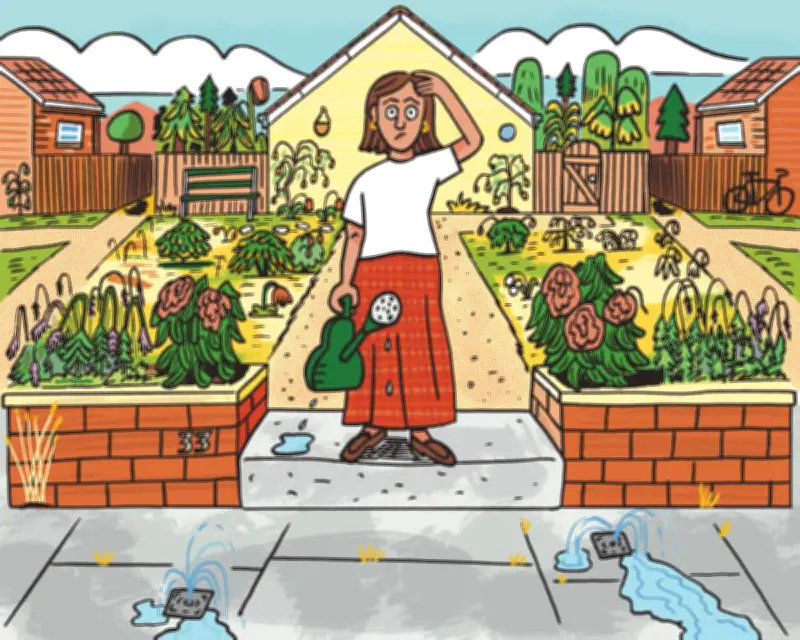
Laura Greasley, a Norfolk resident, collects grey water and uses water butts but faces a leaking pipe outside her home for a year. She says, “It’s exceptionally frustrating to have leaks outside your house, wasting litres of water, and seeing that it doesn’t appear to be prioritised.”
AI datacentres guzzle water
Harry also criticises AI datacentres, which require enormous amounts of water to cool servers. There are over 450 AI datacentres in the UK, with more planned. Water UK says more than two-thirds are in the south and south-east, where bans are in place. The Government Digital Sustainability Alliance warns AI could increase global water usage from 1.1 billion to 6.6 billion cubic metres by 2027, equivalent to over half the UK’s total water usage.
Climate crisis drives water shortages
Daniel Johns of Water Resources East says river levels have reached “all-time lows,” with the UK recording its hottest year in 2025. A House of Lords report warns of a 5-billion-litre-a-day water shortfall by 2055. Water companies have “no choice” but to impose bans, as hot weather leads to record water use.
Vanessa Speight, a water systems professor at the University of Sheffield, says the average age of examined pipes is 80 years, with some much older. Privatisation has monetised water systems, making pipe replacement uneconomical. “We can’t live like a wet country any more; we have to live like a drier country,” she says. Fixing pipes would likely make hosepipe bans unnecessary.
Gardeners adapt to changing climate
Tim Parry, an Isle of Wight gardener, suggests planting drought-tolerant species like Canary Island date palm and Chusan palm. He notes that plants often have sentimental value, such as roses grown with a grandfather’s ashes. “I fear for what the future holds,” he says, as drought-like conditions have scorched gardens since late June.