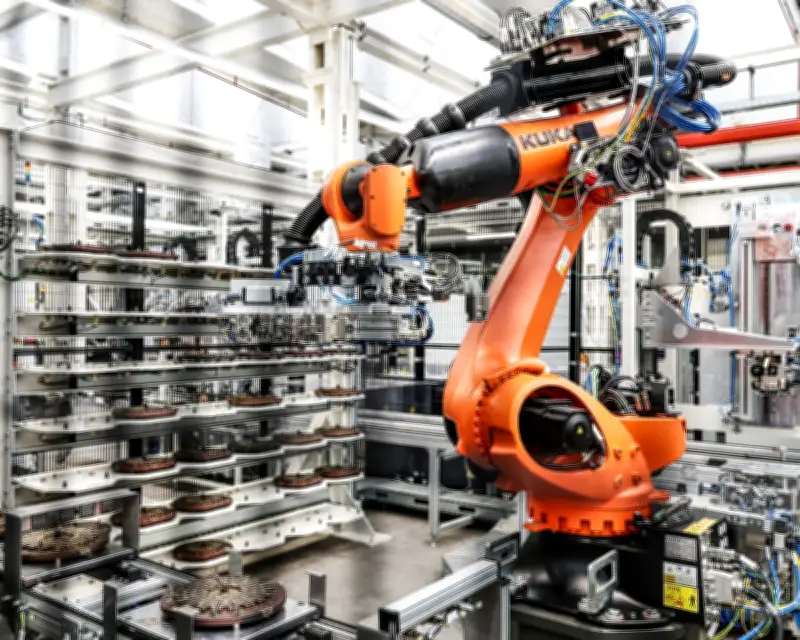
Electrifying the world—through electric vehicles, electric heating and cooling, and modernised heavy industry—could be the next major step in phasing out fossil fuels, replacing the 80% of global energy that still comes from hydrocarbons. Because electrical energy is far more efficient than combustion, the shift could save billions for consumers and businesses, with global energy demand potentially halved, according to one estimate.
From Nerdish Backwater to Centre Stage
For decades, electrification has been a niche topic in global climate action. But at the preparatory talks in Bonn, Germany, ahead of the UN Cop31 climate summit, the subject finally took centre stage. Murat Kurum, Turkey’s environment minister and co-host of the November summit, told the Guardian: “Without electrification, we won’t be able to reach any of the targets [of the Paris agreement], so we must go through this transformation. Whether you call it the missing piece of the puzzle or the most important tool that we have in our toolkit, this is the case.”
Turkey, with support from Australia, the co-president of Cop31, has proposed setting a target of 35% of final energy to come from electricity by 2035. “This is the most important pillar in reducing emissions—you need to increase electrification in cities, in manufacturing, in [all aspects of life], and will serve us in the bigger picture, the bigger targets [of the Paris agreement],” Kurum added.

Talks Marred by Stalling and Geopolitical Tensions
The push for electrification was the highlight of two weeks of talks in Bonn that otherwise offered little cause for optimism. After a cordial start, the negotiations descended into near-farce by the final days, with some countries refusing to agree on wording that would base decisions on “the best available science,” despite this being a cornerstone of climate agreements for over 30 years. The talks, intended to lay the groundwork for Cop31, concluded on Thursday evening with many issues unresolved.
UN climate chief Simon Stiell admonished countries as the talks drew to a close: “We have seen side-stepping and stalling. We’ve seen geopolitical tensions wash through these halls. We simply cannot afford to reopen previous decisions, to renegotiate existing targets, or to backslide. It’s cooperation, not fierce competition, that we need.”
Disputes Over Science and the 1.5C Goal
The biggest rows centred on climate science and the 1.5°C target. In the “research and systematic observations” strand, Saudi Arabia and the Arab group, joined by India, objected to language reaffirming climate science, arguing that research from rich countries dominates IPCC submissions. Other countries accused them of seeking to delay and derail. Sivendra Michael, speaking for Pacific Island nations, said: “We are hearing voices in these rooms that are doing their best to undermine science. Anyone blocking references to science, they are not our friends.” He added: “There are powerful interests desperate to protect their wealth and influence. We are seeing certain countries holding the [UN] process hostage as vulnerable people suffer heat stress and storms, droughts and famine.”
Questions were also raised by many of the same countries over the inclusion of the 1.5°C target in negotiating texts, but they faced furious opposition. Surangel Whipps, president of Palau, told a separate conference: “We know we won’t make the 1.5C target, but what we need to do is not give up.”
Progress on Just Transition, Stalemate on Finance
Greater harmony was evident on the “just transition,” a key issue for campaigners ensuring workers affected by the low-carbon shift are supported. Camila Mercure, climate policy coordinator at Fundación Ambiente y Recursos Naturales, said discussions had been constructive: “While [the talks] exposed significant differences among parties, they also showed there is a pathway to a meaningful outcome [on a just transition] at Cop31. Governments must now engage constructively to make that happen.”

However, climate finance remains a major stumbling block as developed countries cut overseas aid and prioritise military spending. Poor countries were furious that rich nations were dragging their feet on tripling adaptation funding. Pooja Dave, adaptation policy coordinator at Climate Action Network International, said: “What we saw was clear bad faith and unwillingness by developed countries to make progress on the global goal on adaptation. You cannot implement the GGA without finance.”
Electrification Technology Ready for Takeoff
At last year’s Cop30 summit in Brazil, attempts to reaffirm a commitment to “transition away from fossil fuels” were blocked, but over 50 countries held their own conference in April to discuss a phaseout. The electrification target marks a step change after years of neglect at Cops, partly because technology lagged behind renewable generation. Now, China has mass-produced electric vehicles, lowering prices, while heat pumps have also become cheaper, saving consumers hundreds on energy bills. Industrial processes are increasingly switching to cheap renewable energy.
Prof Jan Rosenow of Oxford University said electric technology is now ready for widespread uptake, offering efficiencies three to five times greater than fossil fuels. “I call it electro-efficiency,” he said. “It’s the inbuilt efficiency of electric technology compared with fossil fuels.” In a forthcoming paper, Rosenow estimates that a global switch to electrification could halve energy demand, generating trillions of dollars in savings for governments, businesses, and consumers.
Country Progress and Challenges Ahead
Some countries are already far ahead. Japan has nearly reached the 35% electrification target proposed by the Cop31 presidency. China is close to 30%, but the US lags at 22%, India and Brazil at about 20%, and the global average is 21%. Even if widely accepted as necessary to meet net-zero goals, the Cop measures on electrification face an uphill struggle within the UN process.
While the US is the only major country absent from the talks, the influence of Donald Trump’s presidency was felt. One negotiator said: “Saudi Arabia has taken more of an obvious role [in disrupting progress], and part of that is because the US used to play a role in holding them back.” Saudi Arabia, allied with Gulf states as the Arab group, has been joined by India, Russia, and even Kenya on some issues. “People feel they can do this because of what they see coming from the US now,” the negotiator added.