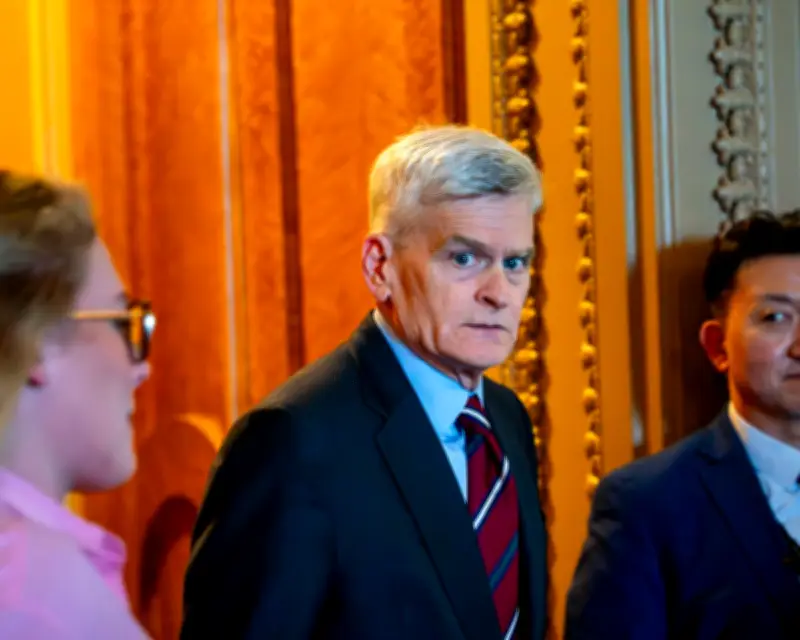
Outgoing Louisiana Senator Bill Cassidy has sharply criticized the interim nuclear agreement reached between the Trump administration and Iran, denouncing it as "the worst foreign policy blunder in decades." In a statement posted on X, Cassidy invoked former President Ronald Reagan, saying, "Reagan is rolling over in his grave."
Cassidy's Criticism
Cassidy, who lost his primary election last month after former President Donald Trump intervened to oust him, detailed his objections to the 14-point accord. He argued that the deal fails to curb Iran's nuclear ambitions and rewards Tehran for threatening the Strait of Hormuz. "Iran's nuclear ambitions were not curbed, and they have learned that threatening the strait of Hormuz works and will undoubtedly leverage it in the future," Cassidy wrote. "Now, Iran gets to build brand-new infrastructure under this deal."
Cassidy contrasted the current situation with the pre-war status quo: "Before the war, the strait was open, Iran was being crushed by sanctions, and 13 service members were still alive. Now, 13 Americans are dead, families have paid billions at the pump, sanctions will be lifted, and the bombing has stopped."

Republican Reactions
Cassidy is not alone in his skepticism. Senator Ted Cruz, who previously voiced reservations about a potential Iran deal, told the Daily Wire that elements of the deal appear "ill-advised." Cruz warned, "History teaches that giving billions of dollars to theocratic lunatics who want to murder us is a bad idea."
Senator Lindsey Graham initially expressed concern that Iran's view of the agreement differed from the American negotiating team's claims. However, after a conversation with U.S. Special Envoy Steve Witkoff, Graham softened his stance, stating on social media that signing the memorandum of understanding (MOU) would be beneficial as it would begin to reopen the Strait of Hormuz and stop hostilities. Vice-President JD Vance thanked Graham for his statement.
Senator Thom Tillis expressed concern over reports that the deal includes a $300 billion fund for Iran. "I'm hearing a $300 billion number and that's concerning to me," Tillis told MS Now reporters, adding that he needs details on the methodology and is not interested in a short-term agreement.
Administration Defense
Senior administration officials defended the deal, arguing it helps prevent Iran from obtaining a nuclear weapon by requiring the destruction of its enriched uranium stockpile through down-blending. However, critics contend the deal is weaker than the 2015 Obama-era agreement.
The MOU, signed by both presidents on Wednesday, gives both sides 60 days to negotiate a comprehensive final agreement. The conflict with Iran has cost thousands of lives and disrupted the global economy, leading a handful of Republicans to break with Trump on the issue. Earlier this month, the House of Representatives voted 215 to 208 in favor of a war powers resolution, with four Republicans joining Democrats to curb Trump's authority in Iran.
Trump defended the ceasefire deal at the G7 summit, promising that if Iran misbehaves, he would "go back to dropping bombs right smack in the middle of their head."