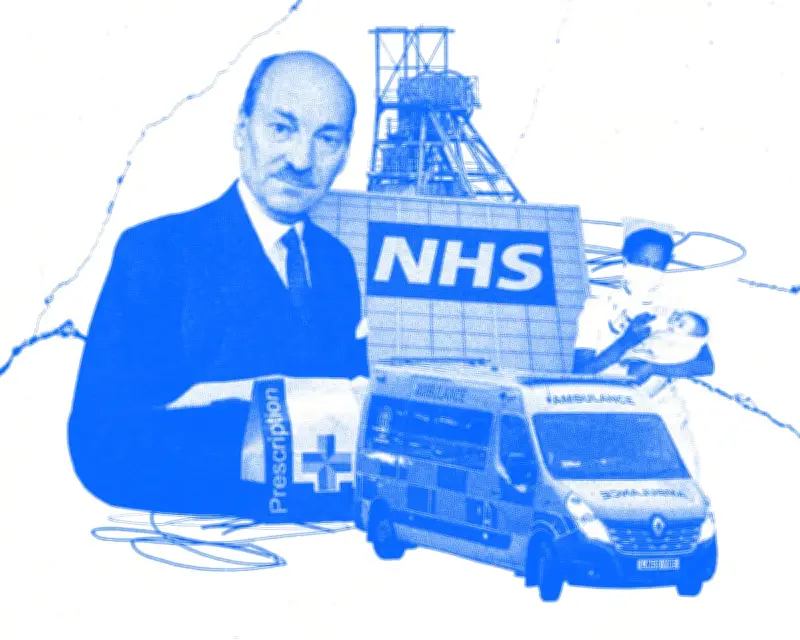
Andy Burnham's potential plans for expanding state ownership draw inspiration from Clement Attlee's postwar government, which nationalised 20% of the economy and created the NHS by 1951. The UK in 2026 faces similar challenges to 1945: onerous debts, private companies prioritising profits over investment, and a prime minister considering nationalisation as a solution.
Attlee's nationalisation programme: a blueprint for state ownership
Attlee's government, committed to taking over the 'commanding heights of the economy', nationalised the Bank of England in 1946, followed by civil aviation, coal, Cable and Wireless, British Rail, road haulage, electricity, gas, and iron and steel by 1951. Compensation was generous, paid via government bonds, ensuring a smooth process despite strained public finances.
The Labour Party's Clause IV, dating to 1918, called for common ownership of production means. The 1934 programme targeted banking, land, and basic industries that had 'failed the nation'. The Great Depression and Soviet command economy's performance boosted support, but World War II was pivotal: central government directed industry, making socialism a 'realisable policy' per George Orwell.

Lessons from nationalisation: efficiency and image
Contrary to myth, nationalised industries in the 1970s showed comparable productivity growth to private manufacturing between 1973 and 1979. Gas, telecoms, and airways performed strongly. However, Herbert Morrison's arm's-length public corporations appeared bureaucratic and remote, damaging public image. The NHS faced fierce doctor opposition, resolved by Nye Bevan's 'filling their mouths with gold' compensation.
By the 1970s, nationalisation became synonymous with bailing out 'lame ducks' like British Leyland. The National Enterprise Board focused on small hi-tech firms but mostly supported British Leyland. Burnham, unlike recent Labour leaders, sees state ownership as more than a last resort, echoing Attlee's vision.
Attlee's government nationalised 20% of the economy, a feat Burnham would need to match. The postwar consensus on state ownership lasted three decades, but privatisations in the 1980s and 1990s reversed most, except the NHS. Burnham's plans may face similar financial constraints, requiring creative compensation like Attlee's bonds.