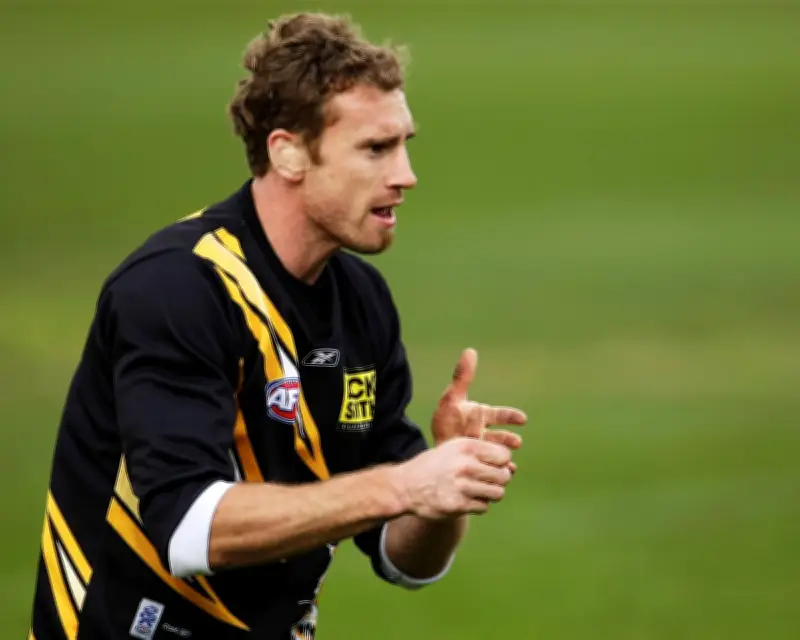
The AFL is facing an existential threat from chronic traumatic encephalopathy (CTE), as highlighted by a recent ABC Four Corners episode and a coroner's report into the death of former Richmond player Shane Tuck. Tuck, who died by suicide in 2020, was found to have CTE, a degenerative brain disease linked to repeated head trauma.
Four Corners Exposes CTE Crisis
Monday's Four Corners episode examined the life and death of Nick Lowden, who at 23 became the youngest footballer diagnosed with CTE. Lowden, who played in the under-18 TAC Cup and SANFL, first suffered a serious concussion in junior football. His mother recalled his distress: "Why am I like this? What's wrong with me? What's wrong with my brain?"
CTE affects participants in collision and combat sports, soldiers, and domestic violence victims. It was first identified in boxers nearly a century ago. The disease causes progressive brain damage, leading to cognitive decline, mood swings, and eventually dementia.

Coroner's Report Details Shane Tuck's Final Hours
Coroner John Cain's inquest into Shane Tuck's death documented in 408 subheadings what CTE does to the brain. The report described Tuck's final 24 hours in detached, clinical terms, which the article describes as "crushing." Tuck's family spoke of a young man who didn't understand what was happening to him, drawing on his athlete's instinct to fight before eventually retreating.
Former AFL players like Danny Frawley and Polly Farmer have also been diagnosed with CTE, but the impact at the grassroots level is harder to gauge. Peter Hanlon's feature series for the Age on the 40th anniversary of a violent country grand final between Colac-Coragulac and South Warrnambool highlighted the mental health challenges faced by players who endured multiple concussions in suburban and country football.
AFL's Response Criticized as Inadequate
The AFL's concussion guidelines were shaped for nearly a decade by Dr. Paul McCrory, who in 2016 dismissed "the carry on and hoo-ha" around CTE. McCrory was later exposed as a plagiarist, and his multimillion-dollar AFL study into concussion was criticized for lack of governance. On Four Corners, AFL general manager Laura Kane admitted the league still lacks a CTE policy but claimed commitment to research. She said many of Cain's coronial recommendations were "on track," adding that "repeated head trauma is extremely undesirable."
The article argues that Kane's words were inadequate, noting they were "the well-thumbed words of a league all too aware that lawyers are circling." The AFL's focus has been on elite-level head injuries, but nearly three-quarters of a million people play Australian rules football at all levels, from Auskick to senior clubs.
Prevention Through Reduced Exposure
Neuropathologist Michael Buckland calls CTE a "disease of exposure" and advocates reducing exposure to head trauma, similar to skin cancer prevention. Boston University's Ann McKee, a world-leading expert, wants to ban tackling until adulthood. While neurologists disagree on specifics, most agree that starting contact sport later and having fewer matches at the senior level is crucial. These measures conflict with the AFL's commercial interests.
The article concludes that the AFL failed to answer the central question on Four Corners: whether the sport is inherently unsafe for all who play it. Parents, former players, and lawyers are asking this question, and the AFL may soon have to answer in a courtroom.