
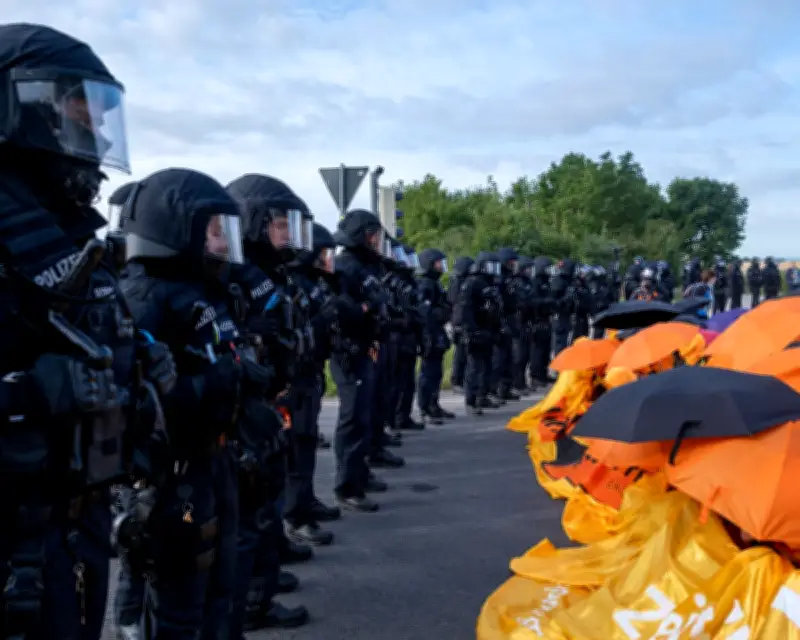
At 5am on a Saturday morning, I found myself jogging across a field with a few hundred strangers to block a highway near Erfurt, Germany. We were one of several groups setting up roadblocks to prevent delegates from reaching the far-right Alternative für Deutschland (AfD) party conference. Facing a row of police in riot gear, I felt a mix of fear and determination.
Why I joined the protest
As a Canadian journalist who has called Germany home for nearly 30 years and a father of two daughters, I could no longer remain impartial. The AfD terrifies me. The party backs what it calls 'remigration,' which critics warn could extend beyond deporting undocumented migrants to a broader vision of who belongs in Germany. Some AfD figures have discussed removing German citizens with migrant backgrounds. The Bavarian AfD parliamentary group has called for a deportation police force modeled on US Immigration and Customs Enforcement (ICE).
Polls now make the AfD Germany's most popular party, with support approaching 30%. This autumn, crucial elections in two eastern German states could see the AfD win both. In Saxony-Anhalt, polling suggests it is close to an absolute majority, which would make it the first far-right party to take state office since the Nazi dictatorship.
Civil disobedience movement Widersetzen
The blockades were organized by Widersetzen, a coalition of trade unionists, climate activists, anti-racist groups, queer organizations, and local networks committed to civil disobedience. The name means both 'sit down' and 'resist.' Despite conservative media portraying them as dangerous leftist radicals, my blockade felt more like a street party. A young man next to me wore a bright pink T-shirt with a unicorn and the ironic legend 'Alpha Male.' A medical student brought her urology textbook to study in downtime. The only violence I saw came from police, who used clubs and pepper spray on protesters who ran through a gap in the cordon. A few demonstrators were hurt, but none seriously.
Hope in the face of far-right rise
Instead of fear, I felt hope. For years, the AfD's rise has seemed inevitable. Chancellor Friedrich Merz has moved right on immigration and social issues, using dog-whistle language while cutting social funding and boosting military spending. Yet the AfD has only grown stronger. What struck me most was Widersetzen's ground game: activists went door to door for months, building alliances with community groups—exactly the sort of shoe-leather politics mainstream parties have neglected in the east.
After the blockade broke up, I walked through Erfurt with hundreds of protesters. People waved from windows and cheered. An older woman leaning on her garden fence gave us a thumbs up, tears in her eyes. In the heartland of the AfD, we felt like the majority.
Impact of the protests
Widersetzen didn't stop the AfD conference; delegates slipped into the convention center before dawn. But the movement achieved something Germany's mainstream parties have failed to do: convince thousands of ordinary people that democracy requires putting your body on the line. It won't stop the AfD alone, but after years of inevitability, this felt like the beginning of a fightback.




