
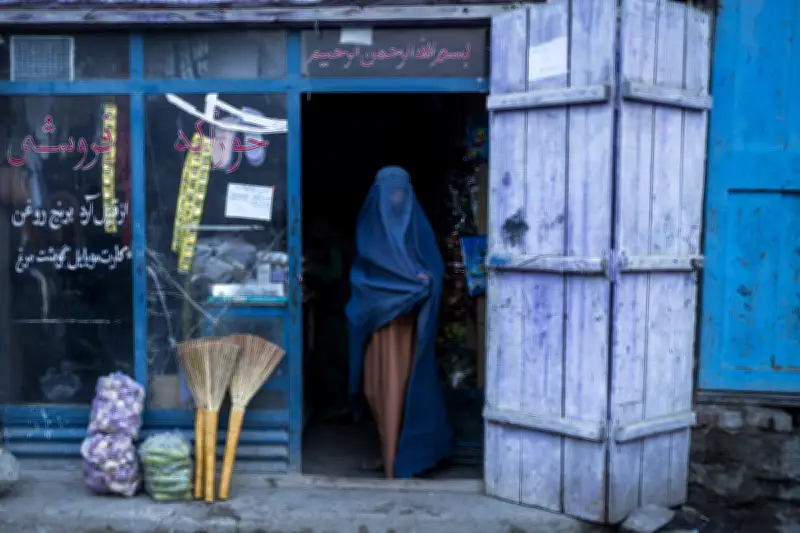
A new decree issued by the Taliban leadership in April 2026 has effectively eliminated any independent right for women to end a marriage in Afghanistan, leaving many trapped in abusive and unwanted relationships. The decree, signed by Supreme Leader Hibatullah Akhundzada, outlines 12 grounds for judicial separation but places each path under the authority of men—requiring the husband's consent, judge's discretion, witness testimony, or male relatives' power.
Fatima's case illustrates the system's brutality
Fatima, a young woman from northern Afghanistan, arrived at a district court in late 2025 with her parents, hoping to escape a marriage to a man with severe intellectual and physical disabilities. She had never met him before their arranged wedding in summer 2024, and only on the wedding day did her family learn his condition. After months of caring for him, cooking, cleaning, and tending livestock, Fatima begged her parents to help her seek a divorce. In court, the judge asked her husband only one question: "Who is this woman?" He replied, "She is my wife." The judge then ordered the groom's family to take her back. Two Taliban soldiers pointed weapons at Fatima's parents as she was dragged away.
Legal framework blocks women's escape
Even before the Taliban, Afghan women faced a difficult road to divorce, but some narrow gateways remained—such as when a husband failed to provide necessities, disappeared for three years, or had a terminal illness. The new decree follows much of this framework but makes stark changes. It explicitly allows children to be given in marriage at any age, legalizing child marriage. It forces women with missing husbands to wait until the husband is presumed dead. Crucially, even in cases of abuse or neglect, judges and arbiters "cannot, solely on the woman's request and without the husband's consent, grant divorce," according to the decree.
Khul divorce offers little relief
The decree approves khul, a form of divorce where a woman pays her husband to consent, but sets no limit on the amount. Ruqya, 16, was engaged to a 31-year-old relative living in Turkey. After he insulted her parents and continued communicating with another woman, her family sought khul. The fiancé's family demanded 800,000 Afghanis (about £9,300). Ruqya's family sold their home and arranged a marriage for her younger sister to raise money, but still couldn't meet the demand. "When I look at my mother and father, I feel like I destroyed them," Ruqya says. "My mother says: 'If you had accepted [your marriage], at least we would still have our house.'"
Women forced to pay for freedom
Mina, 22, from Herat, worked double shifts in an embroidery workshop in Iran for two years to pay 250,000 Afghanis to end her engagement to a man with a drug addiction who had slit his wrists in front of her. "I bought my own freedom," she says. Leila, 24, from northeastern Afghanistan, says her father sold his car and two milking cows to pay 250,000 Afghanis for her khul. Sima, 26, from Kabul, says her family paid 400,000 Afghanis to end a one-year engagement to her maternal cousin.
Abused women have no recourse
Habiba, 27, has spent four years trying to escape her abusive husband, who became increasingly violent after the Taliban takeover. She went to police and court, but her husband refused to appear. When Taliban officials visited her home, her husband's family slaughtered a sheep for them and apologized; the inspectors left satisfied. She was ordered to return to the house or pay 1.6 million Afghanis to her husband. "I am still here," she says. "I am waiting for this government to fall, or for money to appear." For Fatima, the abuse has worsened. A relative who saw her privately says her face was badly bruised. Her father says, "My hands are tied. I don't know how to save my daughter from that situation."




