
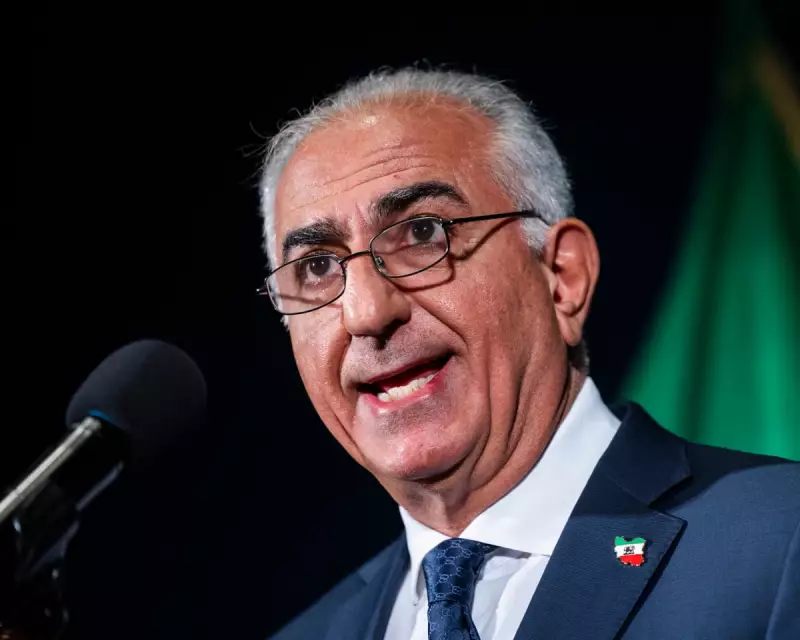
Reza Pahlavi, the exiled son of Iran's last monarch, has publicly declared his ambition to lead the country through a future transition of power, stating the current Islamic regime is destined to fall. His comments come amid a backdrop of sustained mass protests and a violent government crackdown that has reportedly claimed thousands of lives.
A Bid for Leadership Amidst Unrest
Speaking at a press conference in Washington on Friday, Pahlavi laid out his case, claiming he possesses a "comprehensive plan for an orderly transition, which is ready to be implemented immediately." He argued that his lineage and connection to the Iranian people place him in a singular position to guide the nation away from the rule of Supreme Leader Ayatollah Ali Khamenei.
"I am uniquely positioned to ensure a stable transition," Pahlavi stated, adding, "That’s the verdict delivered loudly and clearly by the people in the face of bullets." His credentials, however, are likely to be contested by other opposition figures, given he has not set foot in Iran since his family fled during the 1979 Islamic Revolution.
Call for 'Targeted' Western Support
Pahlavi directly appealed to Western nations for assistance in hastening the regime's end, though he emphasised this did not require a military invasion. Instead, he advocated for "targeted intervention" designed to cripple the state's repressive machinery, such as focusing on the leadership of the Islamic Revolutionary Guard Corps.
"What they need from the world is resolute, targeted support to protect lives, amplify their voices and hasten the collapse that is already on the way," he told reporters. He was unequivocal about the regime's fate, asserting, "But let me be clear, with or without the world’s help, the regime will fall. It will fall sooner, and more lives will be saved if the world turns its words into action."
He made a startling claim that 12,000 protesters had been killed in a 48-hour period during the state's suppression of demonstrations that began on 28 December. While human rights groups have confirmed a death toll in the thousands, their figures are lower than Pahlavi's estimate.
Monarchical Ambiguity and Historical Echoes
The recent protests have seen some demonstrators chant Pahlavi's name and "long live the Shah," an ironic twist given his father's autocratic rule was toppled by a popular revolution. When pressed by the Guardian on whether he seeks to restore the monarchy, Pahlavi avoided a direct answer.
He proposed a future referendum to decide the form of a successor government and did not rule out a return to a monarchical system. Evoking his father's rhetoric, he spoke of "the bond between me and the Iranian people," claiming it has endured despite his decades in exile. He also alleged that "large segments" of security forces had refused orders to fire on civilians and had whispered their loyalty to him.
The international response has been mixed. Former US President Donald Trump initially vowed that "help is on the way" if executions continued, but later appeared to step back, thanking the regime on his Truth Social network for allegedly cancelling a wave of scheduled hangings. This followed warnings from regional allies that military intervention could destabilise the Middle East further.
As Iran's internal crisis deepens, Reza Pahlavi's very public positioning marks a significant attempt to shape the narrative around the country's potential future, even as the path forward remains fiercely contested both inside and outside its borders.




