More than four months after the fatal shooting of prominent right-wing activist Charlie Kirk, the prime suspect, Tyler James Robinson, is preparing for his trial while remaining in custody. The case, which has sent shockwaves through the American political landscape, is moving forward with key hearings scheduled.
The Shooting and Charges
Charlie Kirk, 31, a close ally of former US President Donald Trump, was killed by a single gunshot on September 10, 2025. The attack occurred as he addressed an outdoor campus event at Utah Valley University, which was attended by approximately 3,000 people. The shot was fired from a rooftop some distance from the stage.
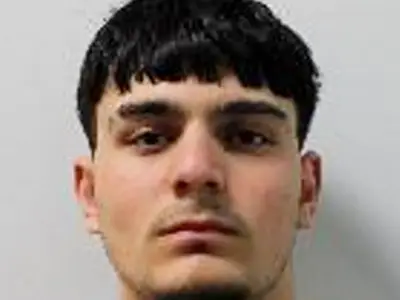
Tyler James Robinson, now 22, was swiftly identified as the suspect. He faces serious charges including aggravated murder, felony discharge of a firearm, and obstruction of justice. If convicted of the murder charge, Robinson could potentially face the death penalty. His defence team is set to argue at an upcoming hearing that a prosecutor should be removed from the case because their 18-year-old child was present at the event where Kirk was killed.

Who Is Tyler Robinson?
Robinson, described by Utah Governor Spencer Cox as having raised suspicions while speaking with relatives after the shooting, appears to have had an unremarkable background prior to the incident. State records indicate he had no known criminal history.
He was a registered voter with no official political party affiliation and was listed as an 'inactive' voter, meaning he did not participate in the last presidential election. Academically, he was a high-achieving student, scoring in the 99th percentile on standardised tests and earning a prestigious scholarship to Utah State University in 2021. However, he attended for only one semester.
At the time of the shooting, he was a third-year student in the electrical apprenticeship programme at Dixie Technical College in St George, Utah. Neighbours and former schoolmates described him and his family as quiet and normal. "Great family, good kids," said one neighbour, Steven Green, who knew the family from their local Mormon church. A high school acquaintance, Canaan Timothy, recalled Robinson as "just your average kid" who was interested in music.
The Evidence and Alleged Motive
Investigators have pieced together a compelling chain of evidence. Utah County attorney Jeff Gray stated that Robinson's DNA was found on the trigger of the suspected murder weapon. It is alleged that Robinson discarded the rifle and his clothing after the shooting and asked his roommate to help conceal evidence.
Perhaps the most damning evidence comes from a note. Authorities allege Robinson left a message under a keyboard, which his romantic partner later found after he sent a text instructing them to look there. The note read: 'I had the opportunity to take out Charlie Kirk, and I’m going to take it.'
While a precise motive remains officially unconfirmed, clues point to political ideology. Governor Cox revealed that a family member told investigators Robinson had recently discussed Kirk's scheduled appearance and expressed dislike for his viewpoints. The suspect had reportedly become more political in recent years.
This theory is bolstered by evidence found with the weapon. Investigators recovered bullet casings engraved with what appear to be anti-fascist messages. One casing bore the phrase 'Here fascist! CATCH,' while another was etched with 'Bella ciao,' the title of a famous Italian anti-fascist song from the Second World War. A third casing had a more juvenile inscription: 'If you read this, you are gay LMAO.'
The murder weapon, a .30-caliber bolt-action Mauser rifle, was found wrapped in a towel in a wooded area along the suspected escape route.
The Road to Trial
Governor Cox has characterised Kirk's murder as a 'watershed in American history,' comparing it to the political assassinations of the 1960s. The case continues to develop as the judicial process unfolds.
Robinson's next hearing is scheduled for September 29, 2026, at 10am and will be conducted via WebEx. As the proceedings advance, the world will be watching a case that sits at the volatile intersection of politics, ideology, and violence in modern America.