
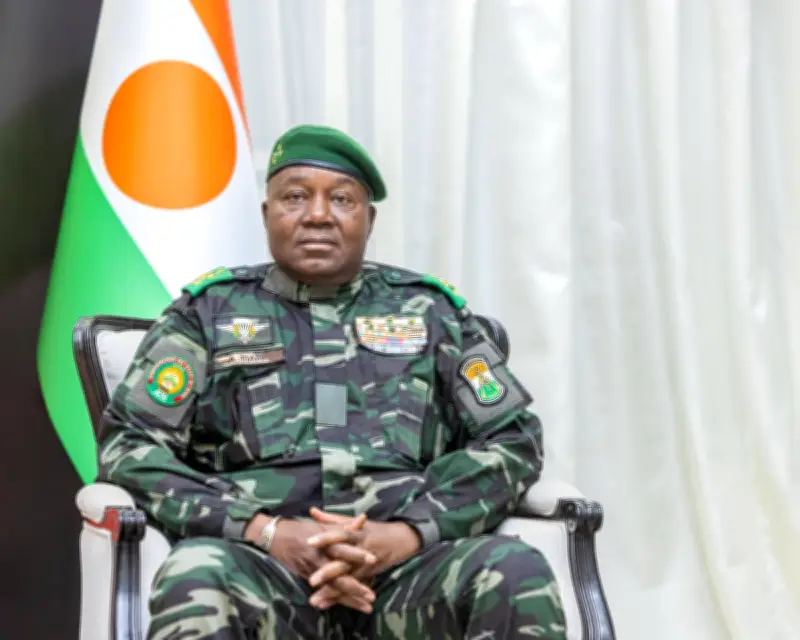
Niger's military regime has launched a widespread crackdown on LGBTQ+ individuals under a new penal code enacted in February, leading to at least 40 arrests and 16 men imprisoned, including high-ranking military officials. The law criminalizes same-sex relations with up to 10 years in prison and fines of up to 100 million West African CFA francs (£130,000).
Witch-hunt and toxic climate
A source familiar with the situation, who spoke on condition of anonymity, described the atmosphere as 'truly toxic,' stating that 'LGBTQ+ populations are keeping a low profile and have gone into hiding because they are at risk. We have lost contact with many and the recent arrests have exacerbated tensions.' The source noted that organizations providing HIV services to men who have sex with men have had to stop working.
New penal code and political context
Niger's new penal code, enacted in February, marks the first time homosexuality has been criminalized in the country's history. It follows similar laws in neighboring Mali and Burkina Faso. Gen Abdourahamane Tchiani, who seized power in a July 2023 coup and was sworn in as president in 2025, has pushed anti-imperialist rhetoric and formed the Alliance of Sahel States with Burkina Faso and Mali, breaking away from Ecowas.
Larissa Kojoué, a political scientist and pan-African activist, dismissed the idea of homosexuality being linked to Western culture. 'Political leaders are using this to advance their own political agenda,' she said. 'They claim “African values”, sovereignty and culture, all the while happily undermining human rights for people.' She added that there is 'no culture that encourages violence against innocent people' but on the continent 'you can do whatever you want with LGBTQ+ people and get away with it.'
Impact on HIV prevention
The crackdown has severely disrupted HIV prevention efforts. Men who have sex with men no longer have access to condoms, testing services, or PrEP medication. The anonymous source warned of the risk of HIV infections spreading: 'When people go into hiding, we won’t see them and they won’t be able to protect themselves. So you see the impact [this penal code] has. We are truly saddened by it.'
Last week, Niger was among eight countries that voted against the UN's political declaration on HIV/Aids, which was adopted by 149 votes. The declaration noted that HIV infections increased between 2010 and 2025 in several regions. While western and central Africa saw a 49% decline in new infections between 2010 and 2022, sub-Saharan Africa remains disproportionately affected, representing 64% of all people living with HIV globally. There were an estimated 32,000 new infections in Niger in 2023.
Broader trend in Africa
Niger's law is part of a trend across sub-Saharan Africa towards more punitive legislation against LGBTQ+ people. Examples include Uganda's 2023 Anti-Homosexuality Act, which made homosexual acts punishable by death; a new law in Senegal doubling the maximum prison term to 10 years for same-sex relations; and a bill in Ghana criminalizing groups promoting gay rights. Globally, half of the 66 countries that criminalize consensual same-sex acts are African.
Front Line Defenders, an international human rights group, said it was 'deeply concerned' about developments in Niger and called on authorities 'to repeal all provisions that criminalise individuals on the basis of their sexual orientation or gender identity, as well as the individuals supporting and defending them.'




