
A study published in May concluded that New Orleans has reached a "point of no return" due to the climate crisis, recommending eventual relocation of residents. The finding sparked immediate backlash from local officials and community leaders who dismissed it as alarmist.
Local Officials Reject Study's Conclusions
Helena Moreno, New Orleans' mayor, criticized the research as "more focused on generating publicity and clickbait headlines" than offering solutions. She pointed out that other cities face similar risks without being declared lost causes. Gordon Dove, head of Louisiana's coastal restoration agency, called it "the most ridiculous study I have ever seen" and questioned the credibility of lead researcher Torbjörn Törnqvist.
Some residents posted defiant videos near levees with captions like "STOP TELLING US TO MOVE," while others accused the study of enabling "modern day redlining of an entire city." Concerns were raised about potential impacts on investors, insurers, and young families.
Researchers Stand by Findings
Törnqvist, a Tulane University expert on the Mississippi Delta, reported more constructive reactions than negative ones from locals who contacted him. He emphasized that New Orleans has an "expiration date" due to rapid sea level rise and coastal erosion. "We will be surrounded by open water and New Orleans will be like a fortress in the Gulf of Mexico," he said, comparing it to Venice.
The study warns that the Louisiana coastline could move up to 62 miles inland within a century, swallowing the New Orleans region. Törnqvist argued that Louisiana Governor Jeff Landry's decision to cancel a $3 billion project to restore the coastline with Mississippi River sediment amounts to a "death penalty" for the city.
Relocation Remains a Distant Prospect for Most
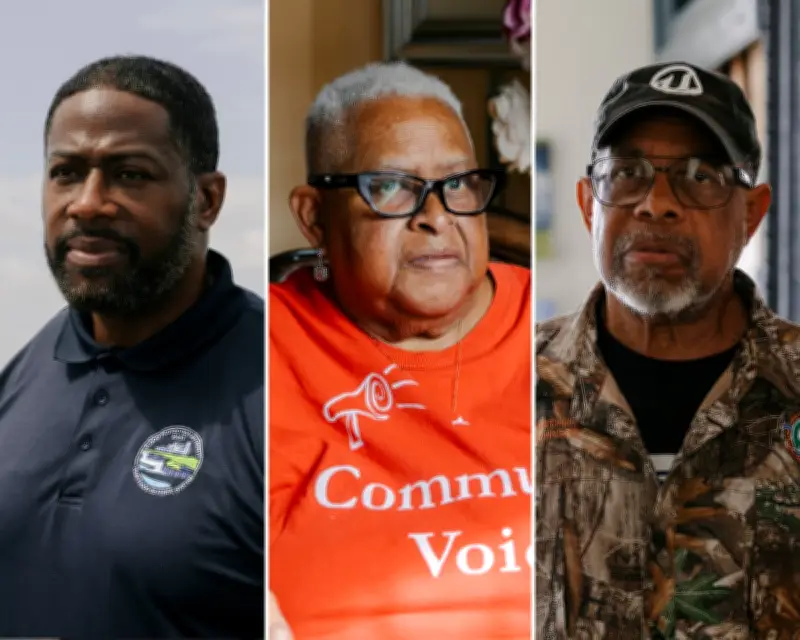
Despite the dire predictions, many residents are determined to stay. "Nobody wants to leave home," said Debra Campbell, chair of A Community Voice, a non-profit with 9,000 members. Her group is exploring potential escape routes in Vicksburg and Natchez, Mississippi, where they have discussed acquiring properties for climate refugees.
Campbell noted that most in her majority-Black Seventh Ward neighborhood want to remain unless forced out by hurricanes or flooding. "We're only going to leave if we're forced to leave," she said, but acknowledged that a storm like Hurricane Katrina could make return impossible. "This place will be underwater and no longer exist."
Insurance Costs Driving Some Away
New Orleans is already losing population, shrinking in four of the last five years to just over 360,000 residents. High home insurance rates—some of the highest in the country—are a key factor. Steve Picou, a musician and environmental planner, moved to Opelousas, Louisiana, after his annual insurance premium jumped from $900 to $9,000 over two decades.
"The whole concept of relocation is overwhelming for people," Picou said. "But there's no escaping this climate." He urged towns to prepare as "receiver communities" for climate migrants.
Risk Assessment Confirms Vulnerability
Data from Cotality, a property intelligence company, rates New Orleans at the most severe climate risk score of 100—the highest in the country. In comparison, Natchez and Vicksburg score about 75, and inland cities like Montgomery, Alabama, score around 50. Howard Botts, Cotality's chief scientist, described New Orleans as "a bowl surrounded by levees" where water accumulates rapidly if pumps fail.
Federal Investment and Adaptation
The federal government has spent $15 billion on flood protections since Katrina, and Jeff Williams, regional director of the Southeast Louisiana Flood Protection Authority, believes continued investment can sustain the city. "I don't believe it's a lost cause—it's a question of investment," he said. The Lake Borgne Surge Barrier, a 1.8-mile-long structure, has performed well against recent hurricanes like Ida in 2021.
However, Williams acknowledged the Sisyphean challenge: levees are sinking into soft soils, requiring an additional $1 billion to raise them by a foot or two. "We're just in the risk reduction business," he said.
No National Blueprint for Retreat
AR Siders, an expert in coastal relocation at the University of Delaware, noted that the US lacks a strategy for climate displacement. "There is no blueprint at all for this," she said, warning that many towns face a "slow death" as the default outcome. She called for long-term planning, including gradual shifts of New Orleans' center northward to higher ground.
Arthur Johnson, CEO of the Lower Nine Center for Sustainable Engagement and Development, emphasized the need for investment rather than retreat. "If you talk about leaving, it can be an excuse to not have economic development," he said, questioning where affordable housing would be found.
Cultural and Emotional Ties Bind Residents
New Orleans is famed for jazz, Mardi Gras, and Creole culture, but its residents cherish it as a place of memories and belonging. Campbell summed up the prevailing sentiment: "Nobody wants to leave home." Yet the study and rising costs are forcing difficult conversations about the future.




