
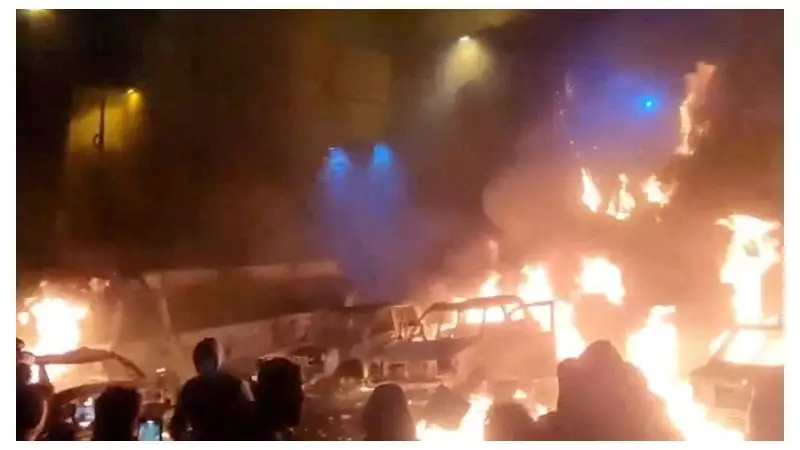
Iran's Islamic regime is facing a level of internal pressure and vulnerability unmatched in its history, yet Supreme Leader Ayatollah Ali Khamenei exhibits no indication of backing down, according to analysis.
A Familiar Pattern of Protest and Repression
The people of Iran have walked this path repeatedly. Major waves of dissent erupted in 2009 over alleged electoral fraud, again in 2019 triggered by fuel price hikes, and in 2022 following the death of Mahsa Amini and abuses by the morality police.
With each episode, the authorities have refined a brutal suppression strategy. This includes deploying the Revolutionary Guard and Basij militia thugs, killing protesters, conducting mass detentions, carrying out public executions, and systematically shutting down internet access.
The internet blackout is a particularly powerful tool. It isolates citizens, preventing them from knowing if others are joining demonstrations or if it is safe to continue. Following pre-announced protests over two nights, individuals are left in an information vacuum, unsure whether to risk stepping out.
The Mechanics of Control and Isolation
In this void, state television becomes the dominant narrative, broadcasting threats of the death penalty for demonstrators labelled as 'vandals' or 'terrorists', and showing pro-government rallies alongside footage of controlled but ominous crackdowns.
Maintaining momentum for a leaderless protest movement across Iran's 31 provinces is immensely challenging under such conditions. While Reza Pahlavi, the exiled son of the former Shah, garners some street support and calls for strikes from the US, his messages struggle to penetrate the digital blockade.
This shutdown grants the regime a dangerous freedom to suppress dissent with minimal global oversight, a tactic used devastatingly in 2019 when at least 1,500 protesters were killed. Current casualty figures are unclear due to the information blackout, but the potential for severe escalation remains.
Vulnerability Versus a Regime's Will to Survive
The primary constraint on an indefinite internet blackout is economic; it would further cripple an already struggling economy. However, analysts suggest the state has significant remaining capacity for repression and shows no sign of relenting.
For a genuine revolution to succeed, it would likely require defection from within the elite and security apparatus, a decision that backing the 86-year-old Supreme Leader is no longer tenable. There is little evidence this critical shift is occurring.
External factors add complexity. Former US President Donald Trump has pledged a harsh response if the regime opens fire on protesters, while Israel might view the internal turmoil as an opportunity for a strategic strike.
Ultimately, while the Islamic theocracy appears more fragile than ever, it is a system forged in revolution. Ayatollah Khamenei, a veteran of that struggle, is perceived as determined not to display any weakness that could precipitate its collapse.




